
Rigetti signs letter of intent with US government for quantum research
The full-stack quantum computing company deepens its federal ties as government interest in quantum technology accelerates.
Rigetti Computing is expanding its footprint in government-backed quantum research, formalizing its intent to collaborate with US federal agencies on advancing quantum computing capabilities.
The move puts the California-based company at the center of a growing push by the US government to develop quantum technologies with national security implications, particularly around fault-tolerant quantum computing and cryptographic resilience.
What Rigetti is actually building
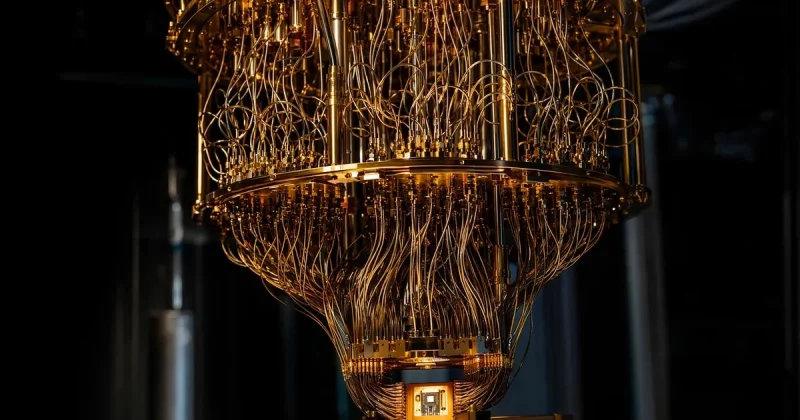
Rigetti isn’t some startup pitching slide decks. The company, founded in 2013, operates its own in-house superconducting quantum processor fabrication facility. Think of it as the rare quantum company that designs the chips and builds them under the same roof, a vertical integration play in a field where most competitors outsource at least part of the hardware stack.
On April 28, 2025, Rigetti received a $5.48 million award from the Air Force Office of Scientific Research. The funding targets the development of its Alternating-Bias Assisted Annealing technology, known as ABAA, a chip-fabrication process designed to reduce defects in superconducting qubits.
In English: qubits are the fundamental units of quantum computing, like bits are for classical computers. But qubits are notoriously fragile. Tiny imperfections in how they’re manufactured can cause errors that make the whole system unreliable. ABAA is Rigetti’s approach to making those qubits cleaner and more consistent at the hardware level.
The AFOSR project isn’t a solo effort. Rigetti is working alongside a consortium that includes Iowa State University and the University of Connecticut, pooling academic and commercial expertise to tackle what remains one of quantum computing’s hardest problems: building machines that can scale without drowning in errors.
The ultimate goal is fault-tolerant quantum computers. These are systems robust enough to correct their own errors in real time, which is the threshold the entire industry needs to cross before quantum computing becomes genuinely useful for complex real-world applications. We’re not there yet. But the path runs directly through the kind of hardware-level improvements Rigetti is pursuing.
Rigetti’s deepening government relationship
This isn’t Rigetti’s first rodeo with federal agencies. The company’s subsidiary, Rigetti & Co LLC, has been registered as a federal contractor since May 2017, carrying a primary NAICS code of 541512, which falls under Computer Systems Design Services.
That eight-year track record as a registered government contractor matters. It signals institutional familiarity with the procurement process and an existing security and compliance infrastructure, both of which make a company far more attractive for sensitive research partnerships.
The $5.48 million AFOSR award is specifically interesting because of where it comes from. The Air Force Office of Scientific Research funds basic research with long-term defense applications. When the Air Force writes checks for quantum chip fabrication, it’s because the Pentagon sees quantum computing as a strategic priority, not just a cool science project.
And the timing aligns with a broader federal push. The US government has been steadily increasing its quantum investments, driven largely by concerns about quantum computers eventually breaking the encryption standards that protect everything from banking transactions to classified military communications. The thinking is straightforward: if adversaries develop capable quantum computers first, current cryptographic defenses become obsolete overnight.
Rigetti is also active on the commercial side. In February 2025, the company signed a Collaboration Agreement with Quanta to advance commercialization of its quantum technology. That dual-track approach, government research funding plus commercial partnerships, gives Rigetti multiple revenue pathways while the broader quantum market matures.
What this means for investors
Here’s the thing about quantum computing stocks: they trade on narrative as much as on fundamentals. Rigetti is a publicly traded company, and government contracts, even relatively modest ones like a $5.48 million research award, serve as powerful validation signals in a sector where most commercial revenue remains years away.
The letter of intent with the US government adds another layer to that narrative. Government partnerships in quantum computing aren’t just about the dollar amounts attached to individual contracts. They’re about positioning. Companies that build deep relationships with federal agencies now are the ones most likely to win larger contracts as quantum budgets scale up.
Look at the competitive landscape. IBM, Google, and IonQ are all jockeying for government quantum work. Rigetti’s advantage is its full-stack approach: owning the fabrication process gives it more control over hardware improvements and potentially faster iteration cycles. The ABAA technology, if it delivers on reducing qubit defects, could differentiate Rigetti’s processors from competitors relying on standard fabrication methods.
The risk, as always with quantum, is timeline uncertainty. Fault-tolerant quantum computing could be five years away or fifteen. No one really knows. And $5.48 million, while meaningful for a company of Rigetti’s size, isn’t the kind of mega-contract that moves the financial needle dramatically on its own.
What investors should watch is whether this letter of intent and the AFOSR award lead to follow-on contracts with larger scope and bigger budgets. In government contracting, initial awards often function as proving grounds. Deliver well on a small project, and the door opens to much larger ones. For Rigetti, the strategic value of these federal relationships may ultimately matter more than any single contract’s dollar figure, especially as quantum-related defense spending looks poised to accelerate through the rest of the decade.