
Roar Gaming’s Bane loses control of Nightmare ability in TI2026 qualifier
A game-breaking Dota 2 bug rendered Bane's core ability unusable during a high-stakes TI2026 China qualifier match, and neither Valve nor PGL has responded
Imagine showing up to the biggest job interview of your year, and your laptop just refuses to open PowerPoint. That’s roughly what happened to Roar Gaming’s support player LOyd during the TI2026 China Closed Qualifier, except the stakes were a shot at The International and the broken tool was one of Bane’s most important abilities.
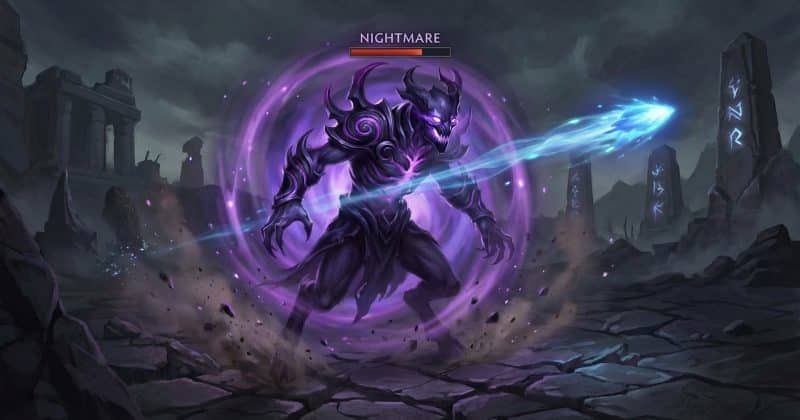
During the first map of Roar Gaming’s upper bracket quarterfinal against Cloud Rising, LOyd’s Nightmare ability became stuck in its “End Nightmare” state, making it completely unusable for the remainder of the game. The match was described as effectively unplayable.
What actually happened
Bane’s Nightmare is one of the hero’s defining abilities. It puts a target enemy (or ally) to sleep, disabling them for several seconds. It’s a setup tool, a save mechanism, and a playmaking spell all rolled into one. Without it, you’re playing Bane with one arm tied behind your back.
The bug appears to have been a client- or server-side issue within Dota 2 itself. This wasn’t a player error, a misclick, or some kind of exploit. The game simply broke. LOyd’s Nightmare toggled into its “End Nightmare” state, which is the sub-ability that normally appears when you want to manually wake a Nightmared target early, and it stayed there. Permanently. No amount of clicking could fix it.
The qualifier, organized by PGL and running from June 15 to 18, 2026, is one of the most important competitive windows on the Dota 2 calendar. Teams at this stage are fighting for progression toward The International, the annual tournament that has historically offered the largest prize pools in esports.
No response from Valve or PGL
As of publication, neither Valve nor PGL has issued any statement about the incident. No acknowledgment of the bug. No indication of whether the match result will be reviewed. No word on a potential remake.
LOyd, whose full name is Loyd Yun Bing Jie, was put in an impossible position. Cloud Rising, Roar Gaming’s opponents, were effectively playing against a four-and-a-half hero team.
What this means for competitive Dota 2
This incident highlights a persistent tension in Dota 2 esports. Valve maintains tight control over the game client but relies on third-party organizers like PGL to run its qualifying infrastructure. When something goes wrong at the software level during a PGL-run event, the question of who is responsible for addressing it gets murky fast.
For Roar Gaming, the damage is immediate and tangible. An upper bracket loss in a double-elimination qualifier doesn’t end your run, but it forces you into the lower bracket where every subsequent series becomes do-or-die.