
Nexo Earn with Nexo
Sen. Rounds emphasizes urgency of AI adoption ahead of Senate hearing

Sen. Rounds emphasizes urgency of AI adoption ahead of Senate hearing

The South Dakota Republican is pushing AI integration across military, financial, and security domains as competition with China intensifies

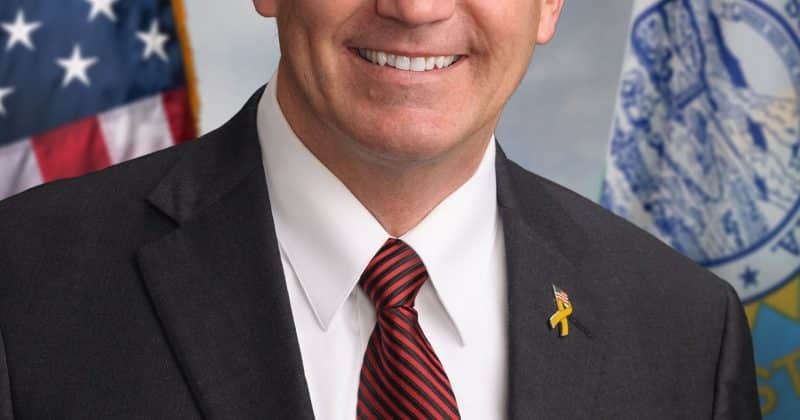
Senator Mike Rounds wants the US to treat AI adoption like a race it can’t afford to lose. Speaking at a Senate Armed Services Committee hearing on May 13, the South Dakota Republican argued that the country must accelerate its use of artificial intelligence to stay ahead of global adversaries across military, economic, and security fronts.

The hearing, which featured Secretary of Energy Chris Wright among its witnesses, served as a stage for Rounds to frame AI not as a futuristic ambition but as a present-tense strategic necessity. His message was blunt: the US needs to move faster, or risk ceding ground to rivals, particularly China.

From defense hawk to AI caucus co-chair

Rounds has co-chaired the Senate AI Caucus since at least 2024, a bipartisan group that has quietly become one of the more consequential forums for AI policy on Capitol Hill.

Advertisement

In July 2025, Rounds reintroduced the Unleashing AI Innovation in Financial Services Act, a bipartisan bill designed to create regulatory innovation labs where financial firms can test AI-driven products without immediately running into the full weight of existing regulations.

Since 2024, Rounds has sponsored multiple AI-related bills that align with the Senate AI Working Group’s broader roadmap. His portfolio spans financial services, defense applications, and responsible deployment frameworks.

The sandbox amendment gains traction

Just one day after the Armed Services Committee hearing, on May 14, the Senate Banking Committee took up the Clarity Act. During that session, Rounds introduced an amendment to establish AI regulatory sandboxes, and it passed with a 15-9 vote.

The Clarity Act itself deals with how digital assets and emerging technologies are classified and regulated. Adding an AI sandbox provision to it represents a deliberate merger of two policy streams that have historically been treated separately: crypto regulation and AI governance.

What this means for investors

Rounds’ comments at the Armed Services Committee hearing were specifically framed around competition with adversaries, which in Washington parlance means China. The US defense budget already allocates significant resources to AI-related programs, and Rounds’ advocacy could accelerate that spending trajectory.

For crypto-native investors, the embedding of AI provisions into legislation like the Clarity Act is particularly relevant. It suggests that lawmakers increasingly view AI and digital asset regulation as interconnected policy domains.

Investors should track the Clarity Act’s progress through the full Senate, and pay close attention to whether the sandbox provisions survive markup.

Disclosure: This article was edited by Editorial Team. For more information on how we create and review content, see our Editorial Policy.

Sen. Rounds emphasizes urgency of AI adoption ahead of Senate hearing

Sen. Rounds emphasizes urgency of AI adoption ahead of Senate hearing

The South Dakota Republican is pushing AI integration across military, financial, and security domains as competition with China intensifies

Senator Mike Rounds wants the US to treat AI adoption like a race it can’t afford to lose. Speaking at a Senate Armed Services Committee hearing on May 13, the South Dakota Republican argued that the country must accelerate its use of artificial intelligence to stay ahead of global adversaries across military, economic, and security fronts.

The hearing, which featured Secretary of Energy Chris Wright among its witnesses, served as a stage for Rounds to frame AI not as a futuristic ambition but as a present-tense strategic necessity. His message was blunt: the US needs to move faster, or risk ceding ground to rivals, particularly China.

From defense hawk to AI caucus co-chair

Rounds has co-chaired the Senate AI Caucus since at least 2024, a bipartisan group that has quietly become one of the more consequential forums for AI policy on Capitol Hill.

Advertisement

In July 2025, Rounds reintroduced the Unleashing AI Innovation in Financial Services Act, a bipartisan bill designed to create regulatory innovation labs where financial firms can test AI-driven products without immediately running into the full weight of existing regulations.

Since 2024, Rounds has sponsored multiple AI-related bills that align with the Senate AI Working Group’s broader roadmap. His portfolio spans financial services, defense applications, and responsible deployment frameworks.

The sandbox amendment gains traction

Just one day after the Armed Services Committee hearing, on May 14, the Senate Banking Committee took up the Clarity Act. During that session, Rounds introduced an amendment to establish AI regulatory sandboxes, and it passed with a 15-9 vote.

The Clarity Act itself deals with how digital assets and emerging technologies are classified and regulated. Adding an AI sandbox provision to it represents a deliberate merger of two policy streams that have historically been treated separately: crypto regulation and AI governance.

What this means for investors

Rounds’ comments at the Armed Services Committee hearing were specifically framed around competition with adversaries, which in Washington parlance means China. The US defense budget already allocates significant resources to AI-related programs, and Rounds’ advocacy could accelerate that spending trajectory.

For crypto-native investors, the embedding of AI provisions into legislation like the Clarity Act is particularly relevant. It suggests that lawmakers increasingly view AI and digital asset regulation as interconnected policy domains.

Investors should track the Clarity Act’s progress through the full Senate, and pay close attention to whether the sandbox provisions survive markup.

Disclosure: This article was edited by Editorial Team. For more information on how we create and review content, see our Editorial Policy.