
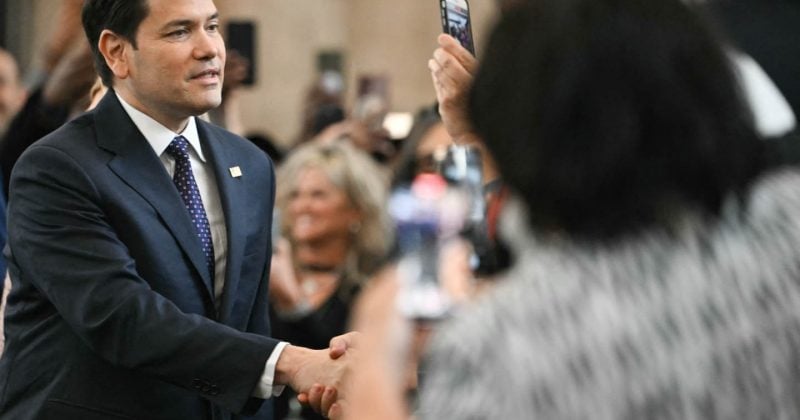
Rubio and Trump frame Russia’s airspace struggles as potential path to ending Ukraine war

Rubio and Trump frame Russia’s airspace struggles as potential path to ending Ukraine war

The secretary of state says Moscow is enduring a 'strategic catastrophe' as the conflict enters its fifth year with no peace deal in sight, raising questions about broader macro risk appetite.

Secretary of State Marco Rubio and President Trump publicly discussed what they characterized as a shifting battlefield dynamic in the Russia-Ukraine war, with Rubio pointing to Russia’s growing inability to defend its own airspace as a potential lever for ending the conflict.

The war, now in its fifth year since Russia’s February 2022 invasion, has ground on without any active bilateral peace talks as of late May 2026.

What Rubio is actually saying

Rubio’s core argument is straightforward: Ukraine has gotten meaningfully better at conducting long-range strikes deep into Russian territory, and that capability is putting real pressure on Moscow. He’s characterized Russia’s position as a “strategic catastrophe.”

Advertisement

On June 25, 2026, he directly denied Russian claims that a formal peace agreement had emerged from the 2025 Alaska summit between the two sides.

“There was a proposal in Alaska, but there was no agreement.”

Rubio has also acknowledged the danger of the current moment, describing the risk of escalation in early June 2026 as “real” and “more real than it was 2 years ago.”

The macro picture and why crypto cares

The Russia-Ukraine war has been a persistent background factor in global markets since 2022. Energy price shocks in the war’s early months contributed to the inflationary environment that prompted aggressive rate hikes, which in turn helped trigger the 2022 crypto crash.

Right now, markets are stuck with no deal, no active talks, and a top US official saying escalation risk is higher than it’s been in two years.

What investors should actually watch

The absence of any direct connection between these peace efforts and digital assets or blockchain technology means crypto isn’t going to move on the specific diplomacy. It will move on the second-order effects: what happens to oil prices, what the Fed does in response to supply chain disruptions, and whether institutional investors decide the world just got riskier or safer.

Geopolitics remains the macro variable that most crypto analysis ignores. If oil spikes on escalation fears or safe-haven flows push yields lower, crypto will feel it, regardless of what any on-chain metric says.

Disclosure: This article was edited by Editorial Team. For more information on how we create and review content, see our Editorial Policy.

Rubio and Trump frame Russia’s airspace struggles as potential path to ending Ukraine war

Rubio and Trump frame Russia’s airspace struggles as potential path to ending Ukraine war

The secretary of state says Moscow is enduring a 'strategic catastrophe' as the conflict enters its fifth year with no peace deal in sight, raising questions about broader macro risk appetite.

Secretary of State Marco Rubio and President Trump publicly discussed what they characterized as a shifting battlefield dynamic in the Russia-Ukraine war, with Rubio pointing to Russia’s growing inability to defend its own airspace as a potential lever for ending the conflict.

The war, now in its fifth year since Russia’s February 2022 invasion, has ground on without any active bilateral peace talks as of late May 2026.

What Rubio is actually saying

Rubio’s core argument is straightforward: Ukraine has gotten meaningfully better at conducting long-range strikes deep into Russian territory, and that capability is putting real pressure on Moscow. He’s characterized Russia’s position as a “strategic catastrophe.”

Advertisement

On June 25, 2026, he directly denied Russian claims that a formal peace agreement had emerged from the 2025 Alaska summit between the two sides.

“There was a proposal in Alaska, but there was no agreement.”

Rubio has also acknowledged the danger of the current moment, describing the risk of escalation in early June 2026 as “real” and “more real than it was 2 years ago.”

The macro picture and why crypto cares

The Russia-Ukraine war has been a persistent background factor in global markets since 2022. Energy price shocks in the war’s early months contributed to the inflationary environment that prompted aggressive rate hikes, which in turn helped trigger the 2022 crypto crash.

Right now, markets are stuck with no deal, no active talks, and a top US official saying escalation risk is higher than it’s been in two years.

What investors should actually watch

The absence of any direct connection between these peace efforts and digital assets or blockchain technology means crypto isn’t going to move on the specific diplomacy. It will move on the second-order effects: what happens to oil prices, what the Fed does in response to supply chain disruptions, and whether institutional investors decide the world just got riskier or safer.

Geopolitics remains the macro variable that most crypto analysis ignores. If oil spikes on escalation fears or safe-haven flows push yields lower, crypto will feel it, regardless of what any on-chain metric says.

Disclosure: This article was edited by Editorial Team. For more information on how we create and review content, see our Editorial Policy.