
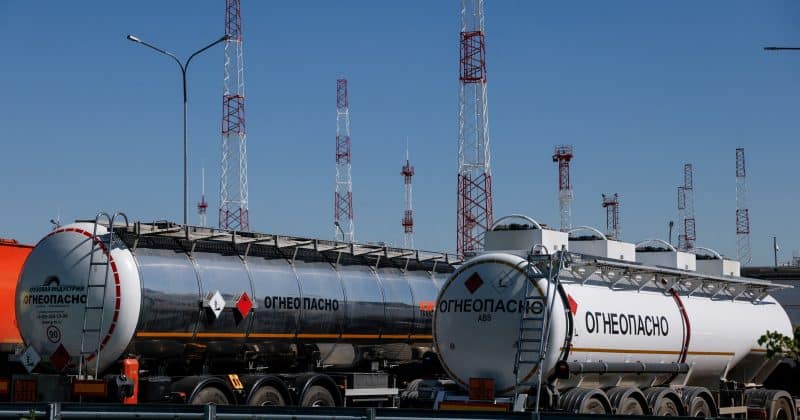
Russia bans diesel exports to prevent domestic shortages after drone attacks

Russia bans diesel exports to prevent domestic shortages after drone attacks

Ukrainian drone strikes have knocked out up to 25% of Russia's refining capacity, forcing Moscow into fuel rationing and potential imports from Asia

Russia is moving to ban diesel exports as Ukrainian drone strikes continue to cripple the country’s refining infrastructure.

The decision follows months of escalating disruptions to Russian refineries, with drone attacks knocking out up to 25% of the country’s refining capacity at various points. Moscow has already banned gasoline exports starting in April 2026 and extended restrictions on jet fuel exports through November 30, 2026.

The refinery problem Moscow can’t fix fast enough

Major facilities like Rosneft’s Syzran plant have been hit, and the damage has cascading effects across Russia’s entire fuel supply chain.

The Russian government has responded with a grab bag of stopgap measures. Domestic refinery output has been pushed to maximum. Maintenance schedules have been delayed.

Moscow is also actively discussing fuel imports via sea routes, potentially subsidized volumes from Asian suppliers.

Advertisement

Rosneft CEO Igor Sechin sent a letter to President Putin in May 2026 proposing changes to domestic crude delivery priorities and fuel distribution rules.

Rationing, long lines, and rising prices

On the ground, Russian consumers are already feeling the squeeze. Fuel sales have been limited to between 10 and 50 liters per vehicle, creating long queues at gas stations across the country.

Gasoline prices have risen 6.6% year-to-date, averaging approximately 69 rubles per liter by mid-June 2026.

Deputy Prime Minister Alexander Novak and Sechin are both advocating for reforms that would prioritize domestic fuel distribution over export revenue.

The government is also considering subsidies to cap consumer prices.

What this means for global energy markets

Russia has been one of the world’s largest diesel exporters, particularly to European markets. Even after the EU formally banned most Russian oil product imports following the 2022 invasion of Ukraine, Russian diesel has continued to flow into global markets through various intermediaries and rerouting schemes, influencing global pricing benchmarks.

A comprehensive ban on Russian diesel exports would tighten global supply. European diesel prices could face additional upward pressure, with direct cost increases for logistics, shipping, agriculture, and construction sectors.

If Russia begins importing fuel from Asia, that redirects supply that would otherwise serve other markets in the region, potentially tightening availability and pushing up prices in Southeast Asia and beyond.

Bitcoin mining operations that rely on diesel-powered generators, particularly in regions with unstable grid access, face higher operating costs when diesel prices spike, which can influence hash rate distribution and miner profitability.

Disclosure: This article was edited by Editorial Team. For more information on how we create and review content, see our Editorial Policy.

Russia bans diesel exports to prevent domestic shortages after drone attacks

Russia bans diesel exports to prevent domestic shortages after drone attacks

Ukrainian drone strikes have knocked out up to 25% of Russia's refining capacity, forcing Moscow into fuel rationing and potential imports from Asia

Russia is moving to ban diesel exports as Ukrainian drone strikes continue to cripple the country’s refining infrastructure.

The decision follows months of escalating disruptions to Russian refineries, with drone attacks knocking out up to 25% of the country’s refining capacity at various points. Moscow has already banned gasoline exports starting in April 2026 and extended restrictions on jet fuel exports through November 30, 2026.

The refinery problem Moscow can’t fix fast enough

Major facilities like Rosneft’s Syzran plant have been hit, and the damage has cascading effects across Russia’s entire fuel supply chain.

The Russian government has responded with a grab bag of stopgap measures. Domestic refinery output has been pushed to maximum. Maintenance schedules have been delayed.

Moscow is also actively discussing fuel imports via sea routes, potentially subsidized volumes from Asian suppliers.

Advertisement

Rosneft CEO Igor Sechin sent a letter to President Putin in May 2026 proposing changes to domestic crude delivery priorities and fuel distribution rules.

Rationing, long lines, and rising prices

On the ground, Russian consumers are already feeling the squeeze. Fuel sales have been limited to between 10 and 50 liters per vehicle, creating long queues at gas stations across the country.

Gasoline prices have risen 6.6% year-to-date, averaging approximately 69 rubles per liter by mid-June 2026.

Deputy Prime Minister Alexander Novak and Sechin are both advocating for reforms that would prioritize domestic fuel distribution over export revenue.

The government is also considering subsidies to cap consumer prices.

What this means for global energy markets

Russia has been one of the world’s largest diesel exporters, particularly to European markets. Even after the EU formally banned most Russian oil product imports following the 2022 invasion of Ukraine, Russian diesel has continued to flow into global markets through various intermediaries and rerouting schemes, influencing global pricing benchmarks.

A comprehensive ban on Russian diesel exports would tighten global supply. European diesel prices could face additional upward pressure, with direct cost increases for logistics, shipping, agriculture, and construction sectors.

If Russia begins importing fuel from Asia, that redirects supply that would otherwise serve other markets in the region, potentially tightening availability and pushing up prices in Southeast Asia and beyond.

Bitcoin mining operations that rely on diesel-powered generators, particularly in regions with unstable grid access, face higher operating costs when diesel prices spike, which can influence hash rate distribution and miner profitability.

Disclosure: This article was edited by Editorial Team. For more information on how we create and review content, see our Editorial Policy.