
Russia closes seven railway border crossings with Baltic states and Finland starting July 1

Russia closes seven railway border crossings with Baltic states and Finland starting July 1

The temporary shutdown of rail checkpoints with three NATO members signals deepening isolation along Russia's western frontier

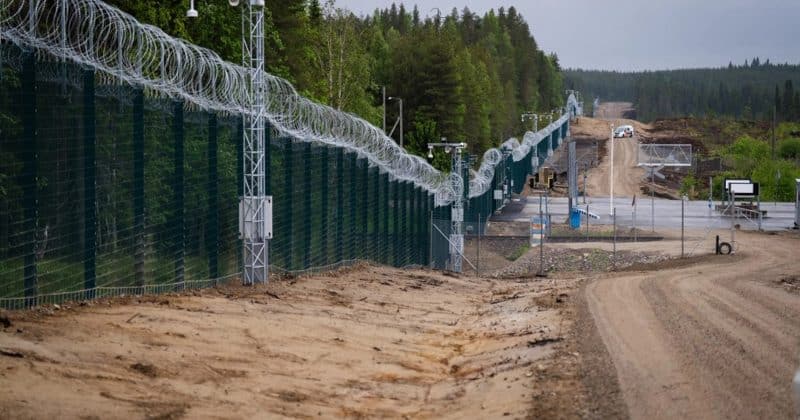
Russia’s government has ordered the temporary suspension of seven railway border checkpoints along its borders with Finland, Estonia, and Latvia, effective July 1, 2026. The decree, signed by Prime Minister Mikhail Mishustin, will halt the movement of people, vehicles, goods, and cargo at all seven locations.

Five of the closures hit the Finnish border: St. Petersburg-Finlyandsky, Vyborg, Vyartsilya, Lyuttya, and Svetogorsk. One crossing with Estonia, Pechory-Pskovskiye, and one with Latvia, Pytalovo, round out the list. Russia’s Foreign Ministry has been instructed to formally notify Helsinki, Tallinn, and Riga.

No official reason, but plenty of context

Moscow hasn’t publicly explained why it’s shutting down these crossings.

Advertisement

The closures fit into a pattern of escalating border restrictions Russia has imposed since 2023, predominantly targeting its boundaries with NATO member countries. Finland joined NATO in 2023, a direct consequence of Russia’s full-scale invasion of Ukraine in February 2022. Estonia and Latvia have been NATO members since 2004.

Finland’s border with Russia stretches roughly 1,340 kilometers, making it the EU’s longest land boundary with Russia. Finland had previously suspended passenger rail service to Russia in 2022, meaning these closures formalize what was already a near-total shutdown of cross-border rail traffic. Finland also closed most of its land border crossings with Russia starting in November 2023, a policy that has been extended into 2026. Estonia and Latvia have similarly tightened their border controls due to heightened security concerns.

Geopolitical chess and the sanctions backdrop

Since 2022, the US, EU, and their allies have imposed sweeping sanctions on Russia covering energy exports, financial services, and technology transfers. Multiple rounds have also targeted Russian entities’ ability to use digital assets to circumvent restrictions.

What this means for markets and crypto investors

This specific decree has not moved token prices or trading volumes in any measurable way, and no crypto tokens, protocols, or related entities have been directly referenced in coverage of this action.

The more relevant thread for digital asset markets is the sanctions infrastructure itself. Western governments have spent three years building increasingly sophisticated tools to track and block Russian entities from using crypto to evade restrictions.

Historically, periods of heightened Russian isolation have correlated with spikes in ruble-denominated crypto trading as residents seek alternative stores of value and transfer mechanisms. Russia’s ongoing border restrictions also align with its broader efforts to explore alternative methods for conducting trade, including the potential use of digital assets for cross-border transactions.

Disclosure: This article was edited by Editorial Team. For more information on how we create and review content, see our Editorial Policy.

Russia closes seven railway border crossings with Baltic states and Finland starting July 1

Russia closes seven railway border crossings with Baltic states and Finland starting July 1

The temporary shutdown of rail checkpoints with three NATO members signals deepening isolation along Russia's western frontier

Russia’s government has ordered the temporary suspension of seven railway border checkpoints along its borders with Finland, Estonia, and Latvia, effective July 1, 2026. The decree, signed by Prime Minister Mikhail Mishustin, will halt the movement of people, vehicles, goods, and cargo at all seven locations.

Five of the closures hit the Finnish border: St. Petersburg-Finlyandsky, Vyborg, Vyartsilya, Lyuttya, and Svetogorsk. One crossing with Estonia, Pechory-Pskovskiye, and one with Latvia, Pytalovo, round out the list. Russia’s Foreign Ministry has been instructed to formally notify Helsinki, Tallinn, and Riga.

No official reason, but plenty of context

Moscow hasn’t publicly explained why it’s shutting down these crossings.

Advertisement

The closures fit into a pattern of escalating border restrictions Russia has imposed since 2023, predominantly targeting its boundaries with NATO member countries. Finland joined NATO in 2023, a direct consequence of Russia’s full-scale invasion of Ukraine in February 2022. Estonia and Latvia have been NATO members since 2004.

Finland’s border with Russia stretches roughly 1,340 kilometers, making it the EU’s longest land boundary with Russia. Finland had previously suspended passenger rail service to Russia in 2022, meaning these closures formalize what was already a near-total shutdown of cross-border rail traffic. Finland also closed most of its land border crossings with Russia starting in November 2023, a policy that has been extended into 2026. Estonia and Latvia have similarly tightened their border controls due to heightened security concerns.

Geopolitical chess and the sanctions backdrop

Since 2022, the US, EU, and their allies have imposed sweeping sanctions on Russia covering energy exports, financial services, and technology transfers. Multiple rounds have also targeted Russian entities’ ability to use digital assets to circumvent restrictions.

What this means for markets and crypto investors

This specific decree has not moved token prices or trading volumes in any measurable way, and no crypto tokens, protocols, or related entities have been directly referenced in coverage of this action.

The more relevant thread for digital asset markets is the sanctions infrastructure itself. Western governments have spent three years building increasingly sophisticated tools to track and block Russian entities from using crypto to evade restrictions.

Historically, periods of heightened Russian isolation have correlated with spikes in ruble-denominated crypto trading as residents seek alternative stores of value and transfer mechanisms. Russia’s ongoing border restrictions also align with its broader efforts to explore alternative methods for conducting trade, including the potential use of digital assets for cross-border transactions.

Disclosure: This article was edited by Editorial Team. For more information on how we create and review content, see our Editorial Policy.