
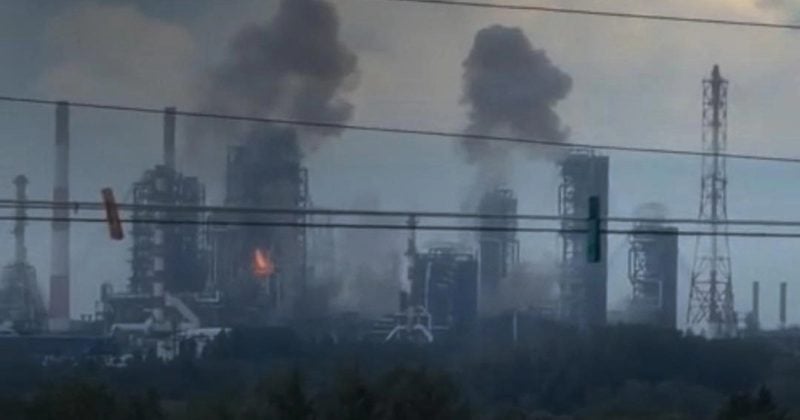
Russia’s crude output hits lowest level in over two years amid Ukraine attacks on oil infrastructure
Ukrainian drone strikes have disabled over 40% of Russia's refining capacity, sending crude processing to a two-decade low and forcing Moscow to slash exports
Russia’s oil machine is breaking down. June 2026 crude production fell to 8.86 million barrels per day, marking the lowest output the country has posted in over two years, as relentless Ukrainian drone strikes continue to systematically dismantle the energy infrastructure that funds Moscow’s war effort.
The scale of the damage
Since 2022, Ukrainian forces have struck Russian oil facilities more than 300 times. By early July 2026, roughly 42.7% of Russia’s refining capacity had been disabled. Crude processing into fuel dropped approximately 25% year-over-year in June, falling to 3.95 million barrels per day. That represents the lowest refining output Russia has recorded in over 20 years.
In June, Russia reduced crude oil exports to prioritize domestic refining and shore up fuel supplies in regions already experiencing shortages. The country’s output is running roughly 690,000 barrels per day below its OPEC+ quota in recent months, a gap that widened in June to approximately 910,000 bpd below the cartel’s allocation.
May 2026 saw record strike volumes targeting Russian energy infrastructure, with production dipping as low as roughly 9.009 million bpd. June’s 8.86 million bpd figure represents only a slight uptick.
Global forecasts are shifting
The IEA has already cut its 2026 Russian oil supply forecast by 85,000 bpd to 8.9 million bpd. For 2027, the revision was even steeper: a 150,000 bpd reduction, bringing the outlook down to 8.8 million bpd.
Macro, rates, and crypto—what moved markets and what matters next.
Daily. Free. Join 34,000+ readers across crypto, finance, and policy.
The fuel shortages inside Russia are already hitting ordinary citizens. Multiple regions have reported supply disruptions, and the government has been forced to take administrative action to redirect resources domestically.
What this means for energy markets and crypto
For crypto markets, the most direct transmission mechanism is mining economics. Bitcoin and proof-of-work mining operations are electricity-intensive businesses, and energy costs represent one of their largest expense line items. If global energy prices rise meaningfully due to sustained Russian supply disruptions, the cost to mine a single Bitcoin goes up.
Traders should be watching the IEA’s monthly reports closely. The agency’s willingness to revise Russian supply forecasts downward twice in quick succession suggests it sees further deterioration as likely. If production continues to fall toward or below the 8.8 million bpd level the IEA now forecasts for 2027, oil markets will need to find replacement barrels somewhere.