
Nexo Earn with Nexo
Russian drone strikes nuclear-fuel storage facility near Chornobyl, Ukraine reports

Russian drone strikes nuclear-fuel storage facility near Chornobyl, Ukraine reports

A Shahed drone hit a spent-fuel building nine miles from the decommissioned plant, causing damage but no radiation spike, as the IAEA scrambles inspectors to the site.

A Russian attack drone struck a nuclear-fuel storage facility near Chornobyl on June 7, slamming into a building designed to receive spent reactor fuel roughly nine miles from the site of the world’s worst nuclear disaster. Ukrainian authorities confirmed significant damage to the fuel-reception structure but said radiation levels remained at normal background readings and no injuries were reported.

What happened and why it matters

The weapon was identified as a Shahed drone, also known by its Russian designation Geran-2. The target was the Centralized Spent Fuel Storage Facility, located approximately 14 kilometers from the decommissioned Chornobyl Nuclear Power Plant.

Advertisement

Ukrainian President Volodymyr Zelenskyy condemned the strike, calling it “extremely vile” and framing it as a deliberate assault on critical nuclear infrastructure. Russia has not issued any public statements regarding the incident.

The International Atomic Energy Agency labeled the attack “deeply concerning” for nuclear safety within the exclusion zone. The IAEA said it had been formally briefed and plans to dispatch inspectors to the site to verify that safety protocols remain intact and the facility’s containment systems were not compromised.

A pattern, not an isolated event

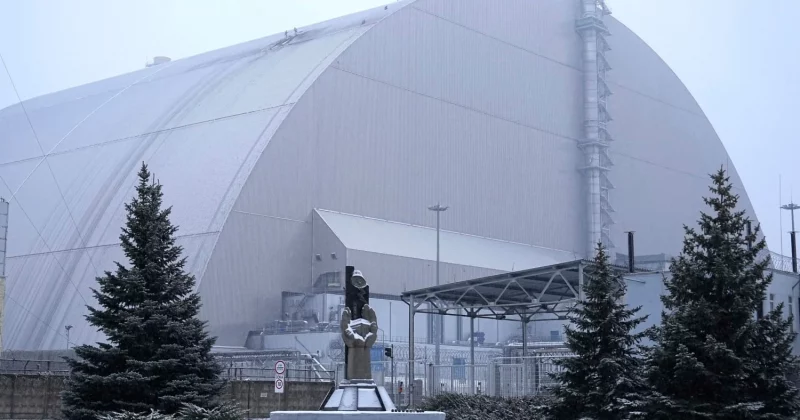
This is not the first time Russian drones have struck nuclear-related infrastructure near Chornobyl. On February 14, 2025, a drone hit the New Safe Confinement structure, the massive arch built over Reactor 4 to contain the radioactive remains of the 1986 meltdown. That earlier strike caused damage to the protective containment but similarly did not result in a radiation release.

The Chornobyl exclusion zone has been a flashpoint since the earliest days of the full-scale invasion. Russian forces famously occupied the plant and surrounding territory in February 2022 before withdrawing weeks later, with soldiers reportedly digging trenches in contaminated soil. The IAEA has maintained a presence in Ukraine throughout the war, monitoring nuclear sites including Zaporizhzhia, Europe’s largest nuclear power plant, which has been under Russian occupation since March 2022.

Disclosure: This article was edited by Editorial Team. For more information on how we create and review content, see our Editorial Policy.

Russian drone strikes nuclear-fuel storage facility near Chornobyl, Ukraine reports

Russian drone strikes nuclear-fuel storage facility near Chornobyl, Ukraine reports

A Shahed drone hit a spent-fuel building nine miles from the decommissioned plant, causing damage but no radiation spike, as the IAEA scrambles inspectors to the site.

A Russian attack drone struck a nuclear-fuel storage facility near Chornobyl on June 7, slamming into a building designed to receive spent reactor fuel roughly nine miles from the site of the world’s worst nuclear disaster. Ukrainian authorities confirmed significant damage to the fuel-reception structure but said radiation levels remained at normal background readings and no injuries were reported.

What happened and why it matters

The weapon was identified as a Shahed drone, also known by its Russian designation Geran-2. The target was the Centralized Spent Fuel Storage Facility, located approximately 14 kilometers from the decommissioned Chornobyl Nuclear Power Plant.

Advertisement

Ukrainian President Volodymyr Zelenskyy condemned the strike, calling it “extremely vile” and framing it as a deliberate assault on critical nuclear infrastructure. Russia has not issued any public statements regarding the incident.

The International Atomic Energy Agency labeled the attack “deeply concerning” for nuclear safety within the exclusion zone. The IAEA said it had been formally briefed and plans to dispatch inspectors to the site to verify that safety protocols remain intact and the facility’s containment systems were not compromised.

A pattern, not an isolated event

This is not the first time Russian drones have struck nuclear-related infrastructure near Chornobyl. On February 14, 2025, a drone hit the New Safe Confinement structure, the massive arch built over Reactor 4 to contain the radioactive remains of the 1986 meltdown. That earlier strike caused damage to the protective containment but similarly did not result in a radiation release.

The Chornobyl exclusion zone has been a flashpoint since the earliest days of the full-scale invasion. Russian forces famously occupied the plant and surrounding territory in February 2022 before withdrawing weeks later, with soldiers reportedly digging trenches in contaminated soil. The IAEA has maintained a presence in Ukraine throughout the war, monitoring nuclear sites including Zaporizhzhia, Europe’s largest nuclear power plant, which has been under Russian occupation since March 2022.

Disclosure: This article was edited by Editorial Team. For more information on how we create and review content, see our Editorial Policy.