
Russia’s Ukraine strategy likened to Cuban Missile Crisis amid military buildup

https://en.defence-ua.com/industries/how_many_t_72_and_t_90m_tanks_uralvagonzavod_produced_for_russian_army_in_2024-13088.html

Russia’s Ukraine strategy likened to Cuban Missile Crisis amid military buildup

NATO and Russia military clash

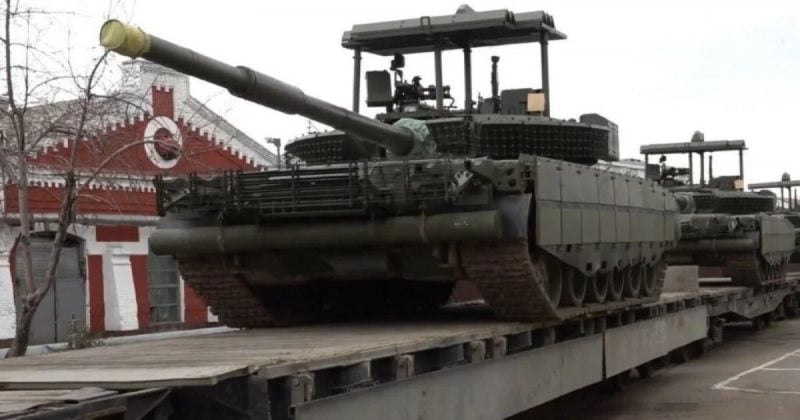
The Hill has drawn parallels between Russian President Vladimir Putin’s current strategy in Ukraine and the Cuban Missile Crisis of 1962, suggesting an escalation in military tensions. This comparison comes as Russia continues to intensify its military presence and operations in Ukraine, despite stalled advancements on the battlefield. The situation is marked by a significant buildup of Russian troops and military hardware near the Ukrainian border, indicating a possible shift towards a more aggressive stance.

The ongoing Russo-Ukrainian War has seen Russia conducting large-scale missile and drone strikes on Ukrainian infrastructure, while Ukraine has responded with drone attacks targeting Russian assets. In the context of these developments, the potential for further escalation appears to be influencing market expectations regarding a military clash between NATO and Russia. Current market pricing suggests a modest increase in the perceived likelihood of such an event, with odds at 16.5% for a military clash by the end of 2026.

Advertisement

Key Takeaways

  • The comparison to the Cuban Missile Crisis suggests heightened tensions, which could indicate an increased risk of a military clash involving NATO and Russia.
  • Market activity reflects a slight increase in the perceived likelihood of a NATO-Russia military clash, with current odds at 16.5%.
  • The significant Russian military buildup near Ukraine may be driving market concerns about potential escalation.

What to Watch

Observers should monitor further military developments along the Russia-Ukraine border, as additional troop movements or military actions could influence market perceptions. Attention should also be paid to any diplomatic efforts by NATO or Russia to de-escalate tensions, as successful negotiations might affect current market pricing. Developments in the ongoing conflict, particularly any significant changes in Russian or Ukrainian military strategies, will be crucial in shaping future market expectations.

For further details, see the market on Polymarket.

Get live prediction-market analysis, powered by Vera. Sign up for Vera.

Disclosure: This article was edited by Estefano Gomez. For more information on how we create and review content, see our Editorial Policy.

Russia’s Ukraine strategy likened to Cuban Missile Crisis amid military buildup

Russia’s Ukraine strategy likened to Cuban Missile Crisis amid military buildup

NATO and Russia military clash

https://en.defence-ua.com/industries/how_many_t_72_and_t_90m_tanks_uralvagonzavod_produced_for_russian_army_in_2024-13088.html

The Hill has drawn parallels between Russian President Vladimir Putin’s current strategy in Ukraine and the Cuban Missile Crisis of 1962, suggesting an escalation in military tensions. This comparison comes as Russia continues to intensify its military presence and operations in Ukraine, despite stalled advancements on the battlefield. The situation is marked by a significant buildup of Russian troops and military hardware near the Ukrainian border, indicating a possible shift towards a more aggressive stance.

The ongoing Russo-Ukrainian War has seen Russia conducting large-scale missile and drone strikes on Ukrainian infrastructure, while Ukraine has responded with drone attacks targeting Russian assets. In the context of these developments, the potential for further escalation appears to be influencing market expectations regarding a military clash between NATO and Russia. Current market pricing suggests a modest increase in the perceived likelihood of such an event, with odds at 16.5% for a military clash by the end of 2026.

Advertisement

Key Takeaways

  • The comparison to the Cuban Missile Crisis suggests heightened tensions, which could indicate an increased risk of a military clash involving NATO and Russia.
  • Market activity reflects a slight increase in the perceived likelihood of a NATO-Russia military clash, with current odds at 16.5%.
  • The significant Russian military buildup near Ukraine may be driving market concerns about potential escalation.

What to Watch

Observers should monitor further military developments along the Russia-Ukraine border, as additional troop movements or military actions could influence market perceptions. Attention should also be paid to any diplomatic efforts by NATO or Russia to de-escalate tensions, as successful negotiations might affect current market pricing. Developments in the ongoing conflict, particularly any significant changes in Russian or Ukrainian military strategies, will be crucial in shaping future market expectations.

For further details, see the market on Polymarket.

Get live prediction-market analysis, powered by Vera. Sign up for Vera.

Disclosure: This article was edited by Estefano Gomez. For more information on how we create and review content, see our Editorial Policy.