
Nexo Earn with Nexo
Samsung Electronics averts 18-day strike with tentative wage deal

Samsung Electronics averts 18-day strike with tentative wage deal

The world's dominant memory-chip maker narrowly dodged a walkout by 48,000 union members that could have rattled AI and crypto supply chains.

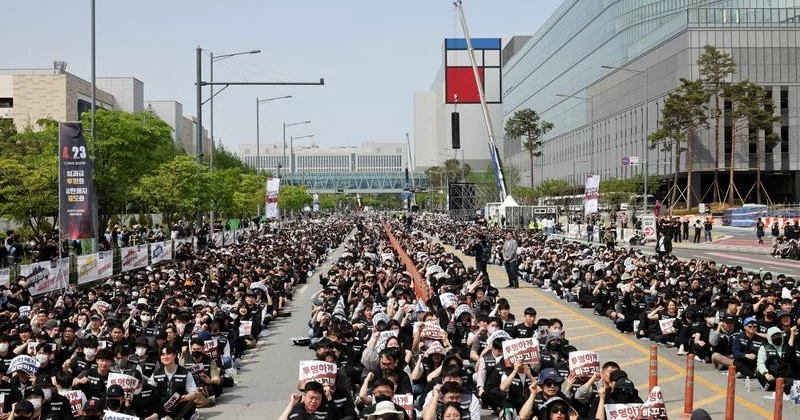
Samsung Electronics just pulled off the corporate equivalent of defusing a bomb with three seconds left on the clock. The company reached a last-minute tentative wage agreement with its largest labor union, suspending a planned 18-day strike that threatened to choke the global memory-chip supply chain during a period of intense AI-driven demand.

The deal, which still needs ratification from union members, temporarily removes the risk of major production disruptions at a company that dominates the supply of both DRAM and NAND flash memory. Samsung shares rose in Seoul trading following the announcement, as investors exhaled collectively.

What the deal looks like

The tentative agreement involves roughly 48,000 union members, making this one of the largest labor disputes in the semiconductor industry’s recent history. For context, that’s more people than live in some small cities, all threatening to walk off the job at facilities that produce components critical to everything from smartphones to AI data centers.

Negotiations centered on performance bonuses and wage terms, though the full details of what Samsung agreed to haven’t been publicly disclosed yet. In English: we know a handshake happened, but we don’t know exactly what’s written on the napkin.

Here’s the thing that keeps this story from being a clean “crisis averted” narrative. Union members still get to vote on whether they actually accept the deal. That vote is scheduled to run from May 22 to May 27. If the rank and file reject the terms, strike threats come right back to life, and all the supply chain anxiety returns with them.

Think of it as a conditional ceasefire rather than a peace treaty.

Advertisement

Why memory chips matter beyond your phone

Samsung isn’t just some big electronics company that makes TVs and refrigerators. It’s the world’s leading manufacturer of memory chips, the components that serve as the backbone of modern AI infrastructure and, increasingly, blockchain operations.

DRAM and NAND flash memory are the workhorses inside AI-specialized GPUs, the same processors that companies like Nvidia sell for eye-watering prices to power large language models and machine learning workloads. When Samsung’s production gets disrupted, the ripple effects don’t stop at Samsung’s balance sheet. They cascade through the entire technology ecosystem.

The timing here matters enormously. Global demand for AI-related hardware has been running hot, with chip supply already tight across the industry. An 18-day production stoppage at Samsung’s facilities would have been the equivalent of shutting off a major highway during rush hour. Traffic was already bad. This would have made it catastrophic.

For the crypto sector specifically, memory chip supply has become an increasingly relevant variable. Bitcoin mining operations, blockchain validators, and decentralized computing networks all depend on hardware that requires these exact components. High-bandwidth memory is essential for the GPUs that power both AI inference and certain proof-of-work mining rigs. A prolonged shortage would have driven up hardware costs across the board, squeezing margins for miners and infrastructure operators who are already navigating tight economics.

The broader labor trend in semiconductors

Samsung’s labor tensions didn’t emerge in a vacuum. The semiconductor industry has been grappling with a fundamental tension: demand for chips has surged to historic levels, driven by the AI boom, while the workers who actually produce these components are pushing for a bigger share of the profits they help generate.

This dynamic mirrors what happened in the US auto industry, where the UAW leveraged record corporate profits into aggressive wage demands. Samsung’s union appears to be running a similar playbook, using the company’s critical position in the global supply chain as negotiating leverage. When you’re the only restaurant in town and the kitchen staff threatens to walk out, you tend to listen.

Samsung’s position as a near-irreplaceable supplier gives the union unusual power. While competitors like SK Hynix and Micron also produce memory chips, Samsung’s market share in both DRAM and NAND is large enough that any meaningful disruption would tighten supply industry-wide.

The fact that Samsung moved to a tentative deal rather than risk even a few days of strike action suggests management understood the stakes. Lost production during a supply-constrained period doesn’t just mean delayed shipments. It means customers start diversifying their supplier relationships, which is a long-term strategic risk that’s arguably scarier than any short-term wage increase.

What this means for investors

The immediate market reaction, Samsung shares climbing in Seoul, reflects relief more than enthusiasm. Investors had been pricing in the possibility of significant output losses, and the tentative deal removed that near-term risk. But “tentative” is doing a lot of heavy lifting in that sentence.

The May 22-27 ratification vote is the next critical date to watch. If union members reject the deal, Samsung is back to square one, potentially with even less goodwill at the negotiating table. Markets tend to react more sharply to the second scare than the first, because the initial relief trade gets unwound violently.

For crypto-adjacent investors, the calculus is slightly different but equally important. Anyone with exposure to Bitcoin mining companies, GPU-dependent AI tokens, or decentralized compute networks should be monitoring this situation closely. A supply disruption at Samsung would accelerate the existing trend of rising hardware costs, which directly impacts the profitability of mining operations and the economics of on-chain compute services.

Look, the deal might hold. Union members might ratify it and everyone moves on. But the episode exposed a vulnerability that the market had largely been ignoring: the AI and crypto hardware booms are built on a supply chain that runs through a handful of facilities, staffed by workers who have every reason to demand more. That structural risk doesn’t disappear just because one tentative agreement was reached.

Disclosure: This article was edited by Editorial Team. For more information on how we create and review content, see our Editorial Policy.

Samsung Electronics averts 18-day strike with tentative wage deal

Samsung Electronics averts 18-day strike with tentative wage deal

The world's dominant memory-chip maker narrowly dodged a walkout by 48,000 union members that could have rattled AI and crypto supply chains.

Samsung Electronics just pulled off the corporate equivalent of defusing a bomb with three seconds left on the clock. The company reached a last-minute tentative wage agreement with its largest labor union, suspending a planned 18-day strike that threatened to choke the global memory-chip supply chain during a period of intense AI-driven demand.

The deal, which still needs ratification from union members, temporarily removes the risk of major production disruptions at a company that dominates the supply of both DRAM and NAND flash memory. Samsung shares rose in Seoul trading following the announcement, as investors exhaled collectively.

What the deal looks like

The tentative agreement involves roughly 48,000 union members, making this one of the largest labor disputes in the semiconductor industry’s recent history. For context, that’s more people than live in some small cities, all threatening to walk off the job at facilities that produce components critical to everything from smartphones to AI data centers.

Negotiations centered on performance bonuses and wage terms, though the full details of what Samsung agreed to haven’t been publicly disclosed yet. In English: we know a handshake happened, but we don’t know exactly what’s written on the napkin.

Here’s the thing that keeps this story from being a clean “crisis averted” narrative. Union members still get to vote on whether they actually accept the deal. That vote is scheduled to run from May 22 to May 27. If the rank and file reject the terms, strike threats come right back to life, and all the supply chain anxiety returns with them.

Think of it as a conditional ceasefire rather than a peace treaty.

Advertisement

Why memory chips matter beyond your phone

Samsung isn’t just some big electronics company that makes TVs and refrigerators. It’s the world’s leading manufacturer of memory chips, the components that serve as the backbone of modern AI infrastructure and, increasingly, blockchain operations.

DRAM and NAND flash memory are the workhorses inside AI-specialized GPUs, the same processors that companies like Nvidia sell for eye-watering prices to power large language models and machine learning workloads. When Samsung’s production gets disrupted, the ripple effects don’t stop at Samsung’s balance sheet. They cascade through the entire technology ecosystem.

The timing here matters enormously. Global demand for AI-related hardware has been running hot, with chip supply already tight across the industry. An 18-day production stoppage at Samsung’s facilities would have been the equivalent of shutting off a major highway during rush hour. Traffic was already bad. This would have made it catastrophic.

For the crypto sector specifically, memory chip supply has become an increasingly relevant variable. Bitcoin mining operations, blockchain validators, and decentralized computing networks all depend on hardware that requires these exact components. High-bandwidth memory is essential for the GPUs that power both AI inference and certain proof-of-work mining rigs. A prolonged shortage would have driven up hardware costs across the board, squeezing margins for miners and infrastructure operators who are already navigating tight economics.

The broader labor trend in semiconductors

Samsung’s labor tensions didn’t emerge in a vacuum. The semiconductor industry has been grappling with a fundamental tension: demand for chips has surged to historic levels, driven by the AI boom, while the workers who actually produce these components are pushing for a bigger share of the profits they help generate.

This dynamic mirrors what happened in the US auto industry, where the UAW leveraged record corporate profits into aggressive wage demands. Samsung’s union appears to be running a similar playbook, using the company’s critical position in the global supply chain as negotiating leverage. When you’re the only restaurant in town and the kitchen staff threatens to walk out, you tend to listen.

Samsung’s position as a near-irreplaceable supplier gives the union unusual power. While competitors like SK Hynix and Micron also produce memory chips, Samsung’s market share in both DRAM and NAND is large enough that any meaningful disruption would tighten supply industry-wide.

The fact that Samsung moved to a tentative deal rather than risk even a few days of strike action suggests management understood the stakes. Lost production during a supply-constrained period doesn’t just mean delayed shipments. It means customers start diversifying their supplier relationships, which is a long-term strategic risk that’s arguably scarier than any short-term wage increase.

What this means for investors

The immediate market reaction, Samsung shares climbing in Seoul, reflects relief more than enthusiasm. Investors had been pricing in the possibility of significant output losses, and the tentative deal removed that near-term risk. But “tentative” is doing a lot of heavy lifting in that sentence.

The May 22-27 ratification vote is the next critical date to watch. If union members reject the deal, Samsung is back to square one, potentially with even less goodwill at the negotiating table. Markets tend to react more sharply to the second scare than the first, because the initial relief trade gets unwound violently.

For crypto-adjacent investors, the calculus is slightly different but equally important. Anyone with exposure to Bitcoin mining companies, GPU-dependent AI tokens, or decentralized compute networks should be monitoring this situation closely. A supply disruption at Samsung would accelerate the existing trend of rising hardware costs, which directly impacts the profitability of mining operations and the economics of on-chain compute services.

Look, the deal might hold. Union members might ratify it and everyone moves on. But the episode exposed a vulnerability that the market had largely been ignoring: the AI and crypto hardware booms are built on a supply chain that runs through a handful of facilities, staffed by workers who have every reason to demand more. That structural risk doesn’t disappear just because one tentative agreement was reached.

Disclosure: This article was edited by Editorial Team. For more information on how we create and review content, see our Editorial Policy.