
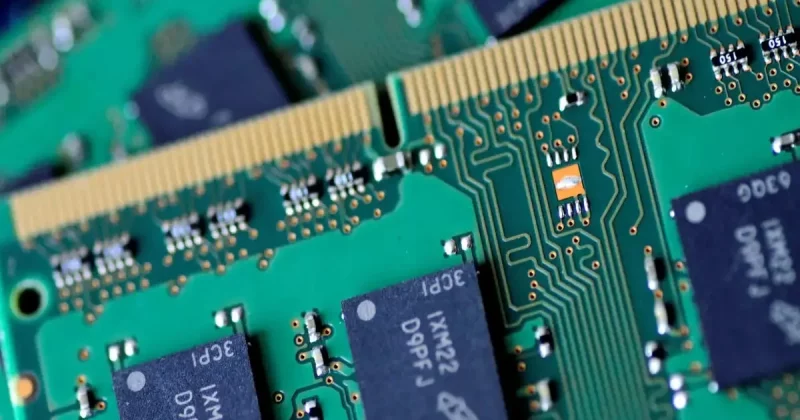
Samsung Electronics ships next-gen AI memory chip samples, shares surge 6%
The Korean tech giant's HBM4 chips are fueling a remarkable financial turnaround, with quarterly profits jumping eightfold and its market cap crossing $1 trillion.
Samsung Electronics has shipped samples of its latest high-bandwidth memory chips to customers around the world, sending its shares up roughly 6%. The move represents the company’s most aggressive push yet into the AI hardware supply chain, where demand for specialized memory continues to outstrip supply.
The shipment involves Samsung’s sixth-generation HBM4 chips, purpose-built for the kind of massive parallel processing that AI data centers devour. HBM chips stack layers of memory on top of each other, letting AI models access enormous amounts of data simultaneously.
The numbers behind the comeback
In Q1 2026, the company posted a record operating profit of 57.2 trillion won, an increase of more than eightfold compared to the same period a year earlier. The primary engine behind that growth: AI memory demand.
That momentum pushed Samsung’s market capitalization past the $1 trillion mark in May 2026. It became only the second Asian company to reach that threshold, trailing only TSMC, the Taiwanese chipmaker that fabricates processors for Apple, Nvidia, and practically everyone else.
Samsung began mass production and shipping of HBM4 chips back in February 2026. Then, at Nvidia’s annual AI conference in March, Samsung unveiled the HBM4E, the enhanced successor to a chip that was barely a month old. That announcement alone lifted Samsung’s stock price by 2.8% on the day.
AI, tech, and the markets they move—in one daily briefing.
Daily. Free. Join 34,000+ readers across crypto, finance, and policy.
Why this matters in the AI arms race
Samsung is competing directly with SK Hynix, a fellow Korean chipmaker that has been the dominant HBM supplier to Nvidia for the past couple of years. Micron, the American memory giant, rounds out the three-player race.
Samsung’s decision to ship HBM4 samples globally signals confidence that the product is ready for evaluation by major data center operators and chip designers. These samples typically go to companies like Nvidia, AMD, and hyperscale cloud providers who need to validate memory compatibility with their next-generation hardware platforms.
What this means for investors
The $1 trillion market cap milestone places Samsung firmly in the category of mega-cap tech companies that attract institutional capital by default. Many large funds have allocation rules that favor companies above certain market cap thresholds, which can create a self-reinforcing cycle of inflows.
Reports on Samsung’s chip shipments and stock movements contain no references to crypto tokens or blockchain applications.
The risk worth watching is competition. SK Hynix has been the acknowledged leader in HBM for Nvidia’s products, and Micron is investing heavily to close the gap. The chip shortage conditions and strong pricing power that have benefited Samsung could also shift if new manufacturing capacity comes online faster than expected, compressing margins across the industry.