
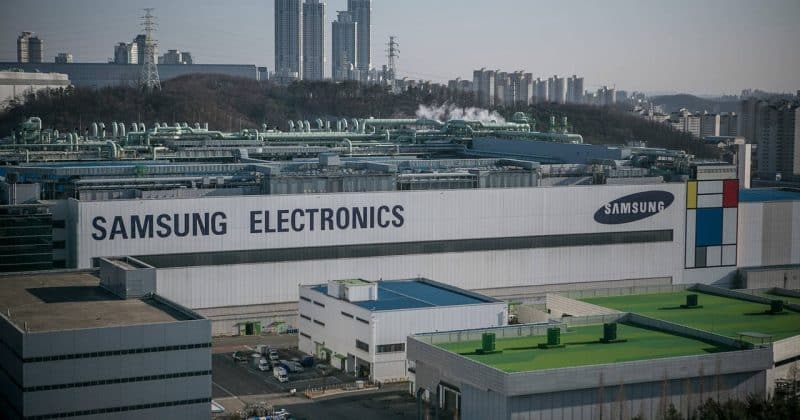
Samsung Electronics shares sell off despite strong earnings, triggering KOSPI circuit breaker

Samsung Electronics shares sell off despite strong earnings, triggering KOSPI circuit breaker

The Korean chipmaker posted an 1,810% profit surge, and investors responded by heading for the exits

Samsung Electronics delivered what might be the most impressive quarterly earnings report in its history on July 7. The market said “cool, we’re selling anyway.”

The Korean tech giant’s preliminary Q2 2026 results showed operating profit of KRW 89.4 trillion, roughly $58.5 billion, representing an almost incomprehensible 1,810% increase year-over-year. Revenue hit KRW 171 trillion (about $111.8 billion), blowing past analyst expectations that had pegged operating profit somewhere between KRW 84 and 85 trillion. And yet shares dropped as much as 7.9% intraday, breaking below the KRW 300,000 level to touch roughly KRW 294,000.

A sell-the-news masterclass

The damage wasn’t contained to Samsung, either. SK Hynix, Korea’s other semiconductor heavyweight, dropped as much as 7.3% in sympathy. The broader KOSPI index cratered roughly 5 to 6%, falling hard enough to trigger a circuit breaker that halted program trading.

Advertisement

The reasoning centered on concerns that AI-driven gains were already baked into stock prices. Samsung had enjoyed a significant pre-earnings rally, and the Q2 numbers, spectacular as they were, apparently weren’t spectacular enough to justify where the stock had already climbed. Investors also flagged uncertainty around potential slowdowns in AI data center expenditure, which has been the primary engine driving memory chip demand.

Here’s the thing: this is a company whose Q1 2026 results already showed KRW 57.2 trillion in operating profit and KRW 133.9 trillion in revenue, with a staggering 94% of profits coming from its chip division. Revenue jumped from KRW 133.9 trillion to KRW 171 trillion, a 129% increase compared to the same period last year.

The AI memory gold rush

Samsung’s semiconductor division has been riding a wave that shows few signs of cresting. High-bandwidth memory (HBM) and premium DRAM/NAND products have been in extraordinarily tight supply, keeping chip prices elevated.

Some analysts project that Samsung’s 2026 full-year earnings could exceed its cumulative profits from the past four decades combined. The competitive dynamics in HBM specifically favor Samsung and SK Hynix, which together dominate global production. As hyperscalers like Microsoft, Google, and Amazon pour hundreds of billions into AI infrastructure, the demand for advanced memory chips has created a seller’s market that Samsung is exploiting with precision.

What this means for investors watching crypto and tech

The Samsung sell-off matters well beyond Korean equities. When the market punishes Samsung for “only” delivering an 1,810% profit increase, it signals something important about sentiment. Investors are starting to ask whether AI spending can maintain its current trajectory, or whether the market has front-run several years of growth into current valuations.

The circuit breaker on the KOSPI also highlights how concentrated positioning creates fragility. The 5 to 6% single-day decline on the KOSPI, despite fundamentally positive earnings, is a reminder that momentum cuts both ways.

The counterpoint is that Samsung’s actual business performance validates the AI demand thesis. Record chip profits driven by tight supply and elevated pricing suggest that the AI infrastructure buildout is very real. The sell-off looks more like positioning cleanup than a fundamental reassessment.

Disclosure: This article was edited by Editorial Team. For more information on how we create and review content, see our Editorial Policy.

Samsung Electronics shares sell off despite strong earnings, triggering KOSPI circuit breaker

Samsung Electronics shares sell off despite strong earnings, triggering KOSPI circuit breaker

The Korean chipmaker posted an 1,810% profit surge, and investors responded by heading for the exits

Samsung Electronics delivered what might be the most impressive quarterly earnings report in its history on July 7. The market said “cool, we’re selling anyway.”

The Korean tech giant’s preliminary Q2 2026 results showed operating profit of KRW 89.4 trillion, roughly $58.5 billion, representing an almost incomprehensible 1,810% increase year-over-year. Revenue hit KRW 171 trillion (about $111.8 billion), blowing past analyst expectations that had pegged operating profit somewhere between KRW 84 and 85 trillion. And yet shares dropped as much as 7.9% intraday, breaking below the KRW 300,000 level to touch roughly KRW 294,000.

A sell-the-news masterclass

The damage wasn’t contained to Samsung, either. SK Hynix, Korea’s other semiconductor heavyweight, dropped as much as 7.3% in sympathy. The broader KOSPI index cratered roughly 5 to 6%, falling hard enough to trigger a circuit breaker that halted program trading.

Advertisement

The reasoning centered on concerns that AI-driven gains were already baked into stock prices. Samsung had enjoyed a significant pre-earnings rally, and the Q2 numbers, spectacular as they were, apparently weren’t spectacular enough to justify where the stock had already climbed. Investors also flagged uncertainty around potential slowdowns in AI data center expenditure, which has been the primary engine driving memory chip demand.

Here’s the thing: this is a company whose Q1 2026 results already showed KRW 57.2 trillion in operating profit and KRW 133.9 trillion in revenue, with a staggering 94% of profits coming from its chip division. Revenue jumped from KRW 133.9 trillion to KRW 171 trillion, a 129% increase compared to the same period last year.

The AI memory gold rush

Samsung’s semiconductor division has been riding a wave that shows few signs of cresting. High-bandwidth memory (HBM) and premium DRAM/NAND products have been in extraordinarily tight supply, keeping chip prices elevated.

Some analysts project that Samsung’s 2026 full-year earnings could exceed its cumulative profits from the past four decades combined. The competitive dynamics in HBM specifically favor Samsung and SK Hynix, which together dominate global production. As hyperscalers like Microsoft, Google, and Amazon pour hundreds of billions into AI infrastructure, the demand for advanced memory chips has created a seller’s market that Samsung is exploiting with precision.

What this means for investors watching crypto and tech

The Samsung sell-off matters well beyond Korean equities. When the market punishes Samsung for “only” delivering an 1,810% profit increase, it signals something important about sentiment. Investors are starting to ask whether AI spending can maintain its current trajectory, or whether the market has front-run several years of growth into current valuations.

The circuit breaker on the KOSPI also highlights how concentrated positioning creates fragility. The 5 to 6% single-day decline on the KOSPI, despite fundamentally positive earnings, is a reminder that momentum cuts both ways.

The counterpoint is that Samsung’s actual business performance validates the AI demand thesis. Record chip profits driven by tight supply and elevated pricing suggest that the AI infrastructure buildout is very real. The sell-off looks more like positioning cleanup than a fundamental reassessment.

Disclosure: This article was edited by Editorial Team. For more information on how we create and review content, see our Editorial Policy.