
Nexo Earn with Nexo
Samsung reaches deal to avert strike over AI profits

Samsung reaches deal to avert strike over AI profits

The world's largest memory chipmaker agreed to share 13% of operating profits with workers, narrowly avoiding an $11.7 billion production disaster.

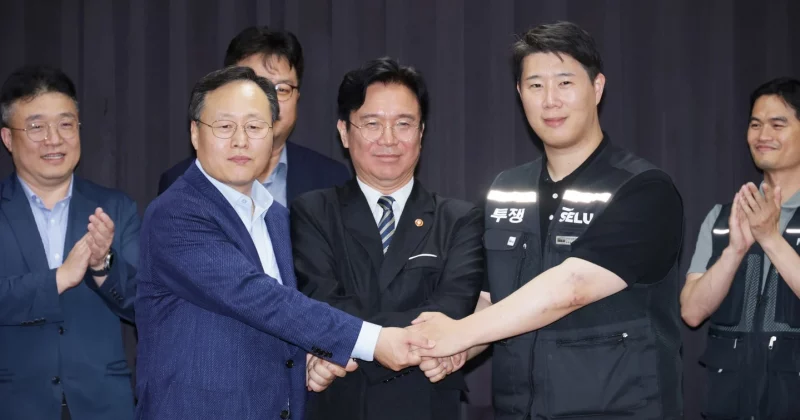
Samsung Electronics just dodged what would have been the first-ever strike in its semiconductor division. The company reached a last-minute agreement with the National Samsung Electronics Union (NSEU), heading off an 18-day work stoppage that could have cost up to $11.7 billion in lost production and sent shockwaves through the global AI chip supply chain.

The deal: Samsung will allocate 13% of operating profits as a bonus for workers in its Device Solutions division, translating to roughly $340K per employee. In return, the union stood down from a walkout that would have halted production of the memory chips feeding the world’s insatiable appetite for AI infrastructure.

The fight over AI’s spoils

The AI boom has supercharged demand for advanced memory and chips, the exact products Samsung’s DS division manufactures. Workers watched their employer ride a wave of surging orders from AI data center operators while their compensation stayed anchored to older pay structures. The union’s core argument was straightforward: if the profits are recurring, the bonuses should be too.

Advertisement

That distinction, one-time bonus versus ongoing profit-sharing, was the crux of the negotiations. Samsung initially leaned toward a one-time payout. The union pushed back, pointing to a model already in use at rival SK hynix, where bonuses reportedly reached up to $900K per worker during the AI boom.

The NSEU wanted an annualized incentive structure that would scale with Samsung’s AI-driven earnings. The 13% operating profit allocation represents a compromise, though one that signals Samsung acknowledges its workforce has a legitimate claim to share in the AI windfall.

What a strike would have meant

Samsung is the world’s largest memory chipmaker. Its products end up in data centers operated by the biggest names in tech, powering the AI training runs and inference workloads that companies like Nvidia, Microsoft, and Google depend on. A production halt lasting nearly three weeks would have tightened an already constrained supply of high-bandwidth memory (HBM) and other advanced chips critical to AI systems.

A bigger pattern in tech labor

SK hynix set the template. Its profit-sharing arrangement became a benchmark that Samsung’s union could point to during negotiations. The $900K bonuses at SK hynix didn’t just reward workers there. They created a market expectation that Samsung’s employees could reasonably demand something comparable.

Samsung has been playing catch-up to SK hynix in the HBM market, which is the specific type of memory chip most coveted by AI hardware builders. The 13% profit-sharing agreement at Samsung is likely the floor, not the ceiling, for future negotiations across the semiconductor industry.

Samsung’s compromise of tying payouts to a percentage of operating profit rather than a fixed dollar amount builds in some downside flexibility. The deal preserves production continuity for now, but it also signals that the cost of making AI chips is about to include a permanently higher labor component.

Disclosure: This article was edited by Editorial Team. For more information on how we create and review content, see our Editorial Policy.

Samsung reaches deal to avert strike over AI profits

Samsung reaches deal to avert strike over AI profits

The world's largest memory chipmaker agreed to share 13% of operating profits with workers, narrowly avoiding an $11.7 billion production disaster.

Samsung Electronics just dodged what would have been the first-ever strike in its semiconductor division. The company reached a last-minute agreement with the National Samsung Electronics Union (NSEU), heading off an 18-day work stoppage that could have cost up to $11.7 billion in lost production and sent shockwaves through the global AI chip supply chain.

The deal: Samsung will allocate 13% of operating profits as a bonus for workers in its Device Solutions division, translating to roughly $340K per employee. In return, the union stood down from a walkout that would have halted production of the memory chips feeding the world’s insatiable appetite for AI infrastructure.

The fight over AI’s spoils

The AI boom has supercharged demand for advanced memory and chips, the exact products Samsung’s DS division manufactures. Workers watched their employer ride a wave of surging orders from AI data center operators while their compensation stayed anchored to older pay structures. The union’s core argument was straightforward: if the profits are recurring, the bonuses should be too.

Advertisement

That distinction, one-time bonus versus ongoing profit-sharing, was the crux of the negotiations. Samsung initially leaned toward a one-time payout. The union pushed back, pointing to a model already in use at rival SK hynix, where bonuses reportedly reached up to $900K per worker during the AI boom.

The NSEU wanted an annualized incentive structure that would scale with Samsung’s AI-driven earnings. The 13% operating profit allocation represents a compromise, though one that signals Samsung acknowledges its workforce has a legitimate claim to share in the AI windfall.

What a strike would have meant

Samsung is the world’s largest memory chipmaker. Its products end up in data centers operated by the biggest names in tech, powering the AI training runs and inference workloads that companies like Nvidia, Microsoft, and Google depend on. A production halt lasting nearly three weeks would have tightened an already constrained supply of high-bandwidth memory (HBM) and other advanced chips critical to AI systems.

A bigger pattern in tech labor

SK hynix set the template. Its profit-sharing arrangement became a benchmark that Samsung’s union could point to during negotiations. The $900K bonuses at SK hynix didn’t just reward workers there. They created a market expectation that Samsung’s employees could reasonably demand something comparable.

Samsung has been playing catch-up to SK hynix in the HBM market, which is the specific type of memory chip most coveted by AI hardware builders. The 13% profit-sharing agreement at Samsung is likely the floor, not the ceiling, for future negotiations across the semiconductor industry.

Samsung’s compromise of tying payouts to a percentage of operating profit rather than a fixed dollar amount builds in some downside flexibility. The deal preserves production continuity for now, but it also signals that the cost of making AI chips is about to include a permanently higher labor component.

Disclosure: This article was edited by Editorial Team. For more information on how we create and review content, see our Editorial Policy.