
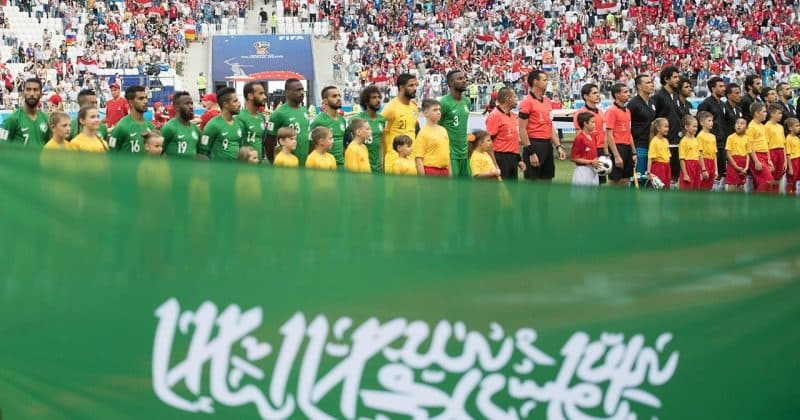
Saudi Arabia names starting XI for World Cup match against Cape Verde
The Green Falcons reveal their lineup ahead of a Group H clash that carries implications for crypto fan engagement and prediction markets tied to the 2026 tournament.
Saudi Arabia has announced its starting lineup for the FIFA World Cup 2026 Group H match against Cape Verde, scheduled for June 27, 2026, at NRG Stadium in Houston, Texas. The match pits a Saudi squad riding momentum from its memorable 2022 World Cup campaign against a Cape Verde side making its first-ever appearance on the sport’s biggest stage.
For crypto markets, the match itself is less interesting than the infrastructure surrounding it. The 2026 World Cup has woven blockchain partnerships into its commercial fabric, with Kraken among the tournament’s crypto partners and Avalanche infrastructure playing a supporting role.
The squad and the setup
Saudi Arabia’s anticipated formation leans toward either a 4-4-2 or 5-4-1, offering tactical flexibility depending on how coach Georgios Donis reads the Cape Verde threat.
Goalkeeper Mohammed Al-Owais anchors the back line. Al-Owais became a household name during the 2022 tournament, where Saudi Arabia stunned Argentina in one of the greatest World Cup upsets in recent memory.
The defensive unit features Saud Abdulhamid alongside Abdulelah Al-Amri. Both represent the kind of defensive solidity Saudi Arabia will need navigating a group that also includes Spain and Uruguay.
Up front, Firas Al-Buraikan leads the attacking charge. He’s joined by the Al-Dawsari brothers, a family connection that gives the Saudi front line a degree of chemistry that’s hard to manufacture on the training pitch.
The news moving money, markets, and the world—before your day starts.
Daily. Free. Join 34,000+ readers across crypto, finance, and policy.
Cape Verde enters the World Cup as debutants. The island nation of roughly 600,000 people qualifying for the tournament is a story in itself, made possible by FIFA’s expansion to 48 teams for the first time in the competition’s history.
The crypto angle: fan tokens and prediction markets
Neither Saudi Arabia nor Cape Verde has launched a dedicated fan token for this tournament. Fan tokens, pioneered largely through Chiliz and its Socios platform, have become a staple of major football clubs and national teams. Tokens for clubs like PSG, Barcelona, and Juventus have generated significant trading volume during previous tournaments. The absence of Saudi and Cape Verdean fan tokens means there’s no direct on-chain way for supporters to engage with their national teams through token-based voting or rewards.
During the 2022 World Cup, national team tokens experienced volatile trading windows aligned with match schedules. Without tokens in play for this particular fixture, one potential source of crypto market activity around the match simply doesn’t exist.
The broader tournament infrastructure tells a more bullish story for crypto engagement. Kraken’s partnership with the World Cup signals that major exchanges see global sporting events as customer acquisition funnels. The integration of Avalanche-based infrastructure suggests that some of the tournament’s digital experiences, whether ticketing, collectibles, or fan engagement platforms, may run on blockchain rails.
What this means for crypto investors
The 2026 World Cup features 48 teams instead of the traditional 32, spanning three host countries: the US, Canada, and Mexico. That’s more matches, more eyeballs, and more potential touchpoints for blockchain-based products.
For investors watching the Chiliz ecosystem, the absence of fan tokens for teams like Saudi Arabia and Cape Verde highlights both an opportunity and a limitation. If tokens were available for every participating nation, the trading volume during a month-long tournament could be substantial. The current patchwork of token availability means market activity will cluster around teams that have already partnered with platforms like Socios.