
Nexo Earn with Nexo
Saudi Aramco CEO warns Strait of Hormuz closure could cut 100M barrels weekly

Saudi Aramco CEO warns Strait of Hormuz closure could cut 100M barrels weekly

Amin Nasser's warning highlights a crisis that could ripple from oil tankers to Bitcoin miners, with vessel traffic through the world's most critical chokepoint down more than 75%.

Saudi Aramco CEO Amin Nasser delivered a blunt assessment of the Strait of Hormuz situation on May 10: the ongoing disruption could strip 100 million barrels of oil per week from global supply. For context, that waterway handles roughly 20% of the world’s oil.

The warning comes as vessel traffic through the strait has collapsed from its normal pace of over 20 ships per day to just 2-5, a decline driven by escalating tensions between the US and Iran.

What’s actually happening in the strait

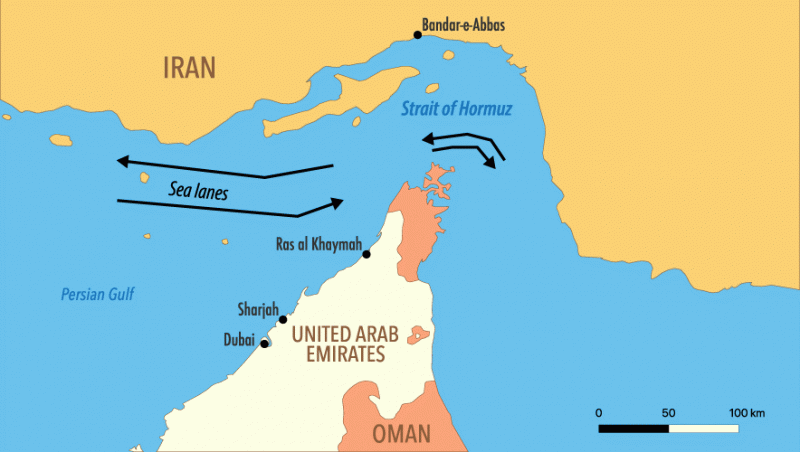
The Strait of Hormuz sits between Iran and the Arabian Peninsula, connecting the Persian Gulf to the open ocean. Every major oil-producing nation in the region, from Saudi Arabia to the UAE to Kuwait, depends on it to get crude to market.

Nasser’s 100 million barrel weekly figure reflects the full scope of what’s at risk if the chokepoint remains effectively closed. Estimates suggest that even if flows resumed immediately, it could take months for global oil markets to normalize.

Morgan Stanley has projected oil prices could surge to $110 per barrel if current geopolitical tensions persist.

Prediction markets currently place the odds of a prolonged closure extending into late May 2026 at 6.6%. A separate metric shows a 68% probability that 20 ships will transit the strait by May 31, suggesting markets expect some normalization but aren’t betting the house on it.

Dallas Fed surveys paint a grimmer timeline. Energy sector executives surveyed expect disruptions could persist until at least August 2026.

Why crypto investors should care about oil tankers

Bitcoin mining is fundamentally an energy business. When oil prices spike, electricity costs tend to follow, particularly in regions that rely heavily on fossil fuel generation. Sustained high oil prices could make Bitcoin mining significantly less profitable in high-cost areas like China.

Inflationary pressures from elevated energy costs complicate the Federal Reserve’s calculus on interest rate cuts. If oil stays elevated through the summer, the Fed has less room to ease monetary policy, meaning less capital flowing into risk assets.

Rising energy costs and commodity volatility could drive increased demand for energy-linked digital assets, tokenized commodities, and DeFi protocols associated with real-world commodity exposure.

The broader picture for digital asset markets

If Morgan Stanley’s $110 per barrel projection materializes, higher energy costs feed into CPI numbers, which feed into Fed decisions, which feed into the liquidity environment that crypto trades within.

Mining tokens and energy-related DeFi assets represent a potential exception, as these sectors could benefit from elevated energy prices precisely because they’re designed to track or interact with energy markets.

Investors watching this situation should track three things closely: the actual vessel count through Hormuz as a real-time indicator of supply normalization, the Fed’s response to energy-driven inflation data, and mining profitability metrics in high-cost regions. If disruptions extend to August 2026 as Dallas Fed survey respondents expect, the downstream effects on crypto liquidity and mining economics will compound in ways that current pricing may not fully reflect.

Disclosure: This article was edited by Editorial Team. For more information on how we create and review content, see our Editorial Policy.

Saudi Aramco CEO warns Strait of Hormuz closure could cut 100M barrels weekly

Saudi Aramco CEO warns Strait of Hormuz closure could cut 100M barrels weekly

Amin Nasser's warning highlights a crisis that could ripple from oil tankers to Bitcoin miners, with vessel traffic through the world's most critical chokepoint down more than 75%.

Saudi Aramco CEO Amin Nasser delivered a blunt assessment of the Strait of Hormuz situation on May 10: the ongoing disruption could strip 100 million barrels of oil per week from global supply. For context, that waterway handles roughly 20% of the world’s oil.

The warning comes as vessel traffic through the strait has collapsed from its normal pace of over 20 ships per day to just 2-5, a decline driven by escalating tensions between the US and Iran.

What’s actually happening in the strait

The Strait of Hormuz sits between Iran and the Arabian Peninsula, connecting the Persian Gulf to the open ocean. Every major oil-producing nation in the region, from Saudi Arabia to the UAE to Kuwait, depends on it to get crude to market.

Nasser’s 100 million barrel weekly figure reflects the full scope of what’s at risk if the chokepoint remains effectively closed. Estimates suggest that even if flows resumed immediately, it could take months for global oil markets to normalize.

Morgan Stanley has projected oil prices could surge to $110 per barrel if current geopolitical tensions persist.

Prediction markets currently place the odds of a prolonged closure extending into late May 2026 at 6.6%. A separate metric shows a 68% probability that 20 ships will transit the strait by May 31, suggesting markets expect some normalization but aren’t betting the house on it.

Dallas Fed surveys paint a grimmer timeline. Energy sector executives surveyed expect disruptions could persist until at least August 2026.

Why crypto investors should care about oil tankers

Bitcoin mining is fundamentally an energy business. When oil prices spike, electricity costs tend to follow, particularly in regions that rely heavily on fossil fuel generation. Sustained high oil prices could make Bitcoin mining significantly less profitable in high-cost areas like China.

Inflationary pressures from elevated energy costs complicate the Federal Reserve’s calculus on interest rate cuts. If oil stays elevated through the summer, the Fed has less room to ease monetary policy, meaning less capital flowing into risk assets.

Rising energy costs and commodity volatility could drive increased demand for energy-linked digital assets, tokenized commodities, and DeFi protocols associated with real-world commodity exposure.

The broader picture for digital asset markets

If Morgan Stanley’s $110 per barrel projection materializes, higher energy costs feed into CPI numbers, which feed into Fed decisions, which feed into the liquidity environment that crypto trades within.

Mining tokens and energy-related DeFi assets represent a potential exception, as these sectors could benefit from elevated energy prices precisely because they’re designed to track or interact with energy markets.

Investors watching this situation should track three things closely: the actual vessel count through Hormuz as a real-time indicator of supply normalization, the Fed’s response to energy-driven inflation data, and mining profitability metrics in high-cost regions. If disruptions extend to August 2026 as Dallas Fed survey respondents expect, the downstream effects on crypto liquidity and mining economics will compound in ways that current pricing may not fully reflect.

Disclosure: This article was edited by Editorial Team. For more information on how we create and review content, see our Editorial Policy.