
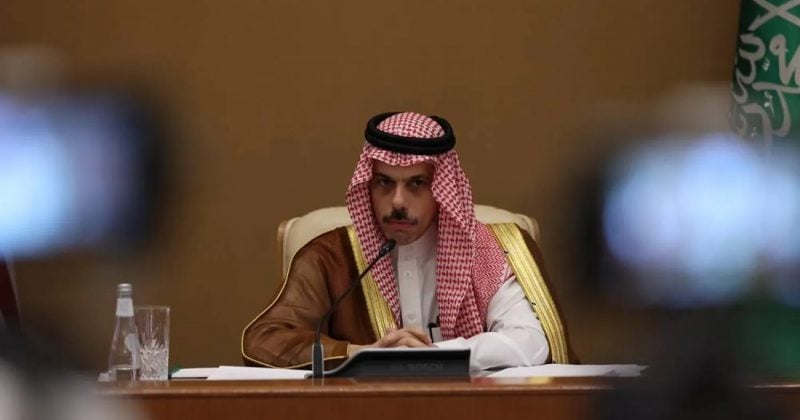
Saudi foreign minister engages in talks to ease Strait of Hormuz tensions

https://english.aawsat.com/gulf/5270698-saudi-arabia-condemns-any-attempt-close-strait-hormuz-or-disrupt-waterways

Saudi foreign minister engages in talks to ease Strait of Hormuz tensions

US-Iran peace talks

Saudi Foreign Minister Prince Faisal bin Farhan has conducted diplomatic discussions with his counterparts from Qatar, Oman, Bahrain, and Jordan to address regional tensions, de-escalate conflicts, and ensure freedom of navigation in the strategic Strait of Hormuz. The conversations are part of a Saudi-led initiative to stabilize the region following a US-Iran conflict that concluded with a memorandum of understanding in early July 2026. The focus on the Strait of Hormuz reflects ongoing concerns about Iran’s strategic control over the waterway. This development aligns with Saudi Arabia’s broader diplomatic efforts to maintain regional stability and protect critical economic interests.

Advertisement

Key Takeaways

  • Market pricing suggests that the Saudi diplomatic outreach could increase the likelihood of US-Iran peace talks by July 31, 2026.
  • Observations indicate that the regional coordination may contribute to a positive diplomatic environment, consistent with YES outcomes for upcoming talks.
  • The outreach is part of Saudi Arabia’s broader strategy to act as a regional stabilizer and protect economic interests.

What to Watch

Observers will be monitoring any announcements from the White House or Iran’s Foreign Ministry confirming the next round of talks. Developments in the Strait of Hormuz will also be critical, as renewed navigation disruptions could impact diplomatic progress. Additionally, any statements from involved parties, such as Qatar and Oman, could further influence market expectations of a diplomatic meeting before the end of July 2026.

Get live prediction-market analysis, powered by Vera. Sign up for Vera.

Disclosure: This article was edited by Estefano Gomez. For more information on how we create and review content, see our Editorial Policy.

Saudi foreign minister engages in talks to ease Strait of Hormuz tensions

Saudi foreign minister engages in talks to ease Strait of Hormuz tensions

US-Iran peace talks

https://english.aawsat.com/gulf/5270698-saudi-arabia-condemns-any-attempt-close-strait-hormuz-or-disrupt-waterways

Saudi Foreign Minister Prince Faisal bin Farhan has conducted diplomatic discussions with his counterparts from Qatar, Oman, Bahrain, and Jordan to address regional tensions, de-escalate conflicts, and ensure freedom of navigation in the strategic Strait of Hormuz. The conversations are part of a Saudi-led initiative to stabilize the region following a US-Iran conflict that concluded with a memorandum of understanding in early July 2026. The focus on the Strait of Hormuz reflects ongoing concerns about Iran’s strategic control over the waterway. This development aligns with Saudi Arabia’s broader diplomatic efforts to maintain regional stability and protect critical economic interests.

Advertisement

Key Takeaways

  • Market pricing suggests that the Saudi diplomatic outreach could increase the likelihood of US-Iran peace talks by July 31, 2026.
  • Observations indicate that the regional coordination may contribute to a positive diplomatic environment, consistent with YES outcomes for upcoming talks.
  • The outreach is part of Saudi Arabia’s broader strategy to act as a regional stabilizer and protect economic interests.

What to Watch

Observers will be monitoring any announcements from the White House or Iran’s Foreign Ministry confirming the next round of talks. Developments in the Strait of Hormuz will also be critical, as renewed navigation disruptions could impact diplomatic progress. Additionally, any statements from involved parties, such as Qatar and Oman, could further influence market expectations of a diplomatic meeting before the end of July 2026.

Get live prediction-market analysis, powered by Vera. Sign up for Vera.

Disclosure: This article was edited by Estefano Gomez. For more information on how we create and review content, see our Editorial Policy.