
Nexo Earn with Nexo
Senate Banking Committee passes Digital Asset Market Clarity Act

Senate Banking Committee passes Digital Asset Market Clarity Act

Democrats have proposed amendments to strengthen conflict-of-interest rules to prevent officials, including President Trump, from profiting from crypto holdings.

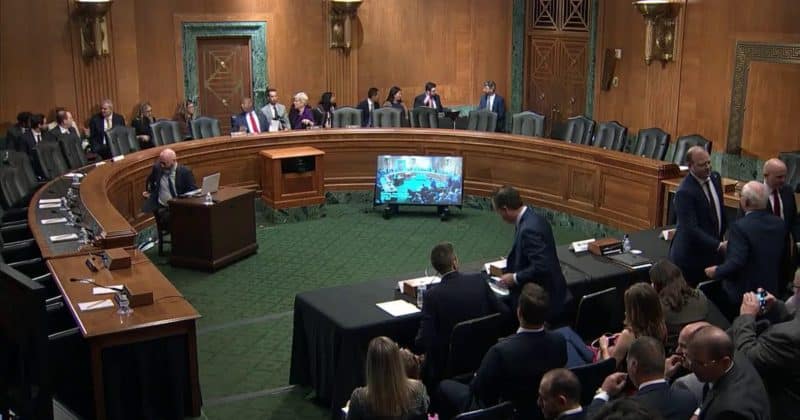
The Senate Banking Committee voted Thursday to advance the Digital Asset Market Clarity Act, moving the country’s most ambitious crypto market structure bill closer to a full Senate vote.

The bill cleared the panel in a 15 to 9 bipartisan vote, with Democratic Senators Ruben Gallego and Angela Alsobrooks joining Republicans to support the measure. The vote gives the legislation fresh momentum after months of negotiations over market structure, stablecoins, illicit finance controls, and investor protections.

“The CLARITY Act resolves years of jurisdictional ambiguity that left legitimate digital asset businesses operating in legal grey areas, arguably, to the benefit of malicious actors. Critically, the Act officially designates digital asset intermediaries and brings them under direct FinCEN supervision, necessitating the innovative, effective compliance programmes that FinCEN’s recent NPRM envisions,” Andrew Davies, Global Head of Regulatory Affairs at ComplyAdvantage, said in a statement.

Instead of relying on enforcement actions to shape policy, the bill aims to provide clear legal categories and compliance pathways for market participants. It also incorporates safeguards such as stablecoin reserve standards, DeFi treatment rules, and consumer protections to create a more predictable and rules-based system for innovation, supervision, and investor safety.

“With these intermediaries firmly inside the framework, the crypto sector will need to get serious about robust compliance infrastructure: transaction monitoring, name screening, sanctions compliance, and SAR filing. The technology to do this properly takes time to build and even longer to tune, and requires first-rate data to work effectively. On a less positive note, the Act’s explicit protection of unhosted wallets is a missed opportunity that I would hope to see addressed in time,” Davies added.

Alsobrooks said her vote to advance the bill out of committee does not guarantee she will support the final legislation on the Senate floor unless unresolved issues are addressed.

“I’ve been in negotiations for over nine months, working toward regulating digital assets in a way that protects consumers and reduces the risk of deposit flight while still allowing innovation to happen,” Alsobrooks said. “In recognition of that good faith, I have voted yes to advance the bill today.”

Getting to the Senate floor

The bill now heads to the full Senate, where the Banking Committee’s version must be reconciled with a companion bill that passed through the Senate Agriculture Committee. It would then need 60 votes in a chamber where Republicans hold 53 seats, meaning at least seven Democrats would need to support it.

Democratic senators including Angela Alsobrooks, Raphael Warnock, Catherine Cortez Masto, Andy Kim, and Mark Warner are expected to play pivotal roles in negotiations.

Their focus areas include strengthening illicit finance controls, enhancing ethics rules for public officials, and addressing national security risks tied to digital asset markets. Recent amendments have emphasized tougher anti-money laundering standards and stricter conflict-of-interest provisions.

Before today’s vote, more than 130 amendments were filed for the markup session.

Senator Elizabeth Warren alone submitted 44 of them, the most by any individual member. Many targeted anti-money laundering requirements and provisions addressing crypto’s potential use in sanctions evasion.

The stablecoin fight

Stablecoins remain one of the most contested parts of the bill.

Senator Tim Scott and Senator Alsobrooks reportedly brokered a compromise: financial institutions can offer activity-based rewards tied to stablecoin usage, but passive yield on idle balances is off the table. The American Bankers Association fired off more than 8,000 letters opposing even this limited concession.

Odds and timeline

The White House has set a July 4 deadline for the bill to land on President Trump’s desk, which leaves roughly seven weeks for reconciliation, floor debate, and a final vote.

TD Cowen’s Washington Research Group, which tracks legislative outcomes, gives the bill roughly a 30% chance of clearing the full Senate this year.

Some industry advocates remain optimistic about the bill’s prospects. Digital Chamber CEO Cody Carbone highlighted strong momentum and suggested the legislation could still reach the president’s desk before the August deadline.

Traders on Polymarket are more optimistic, placing the odds between 64% and 69% as of this week.

Crypto stocks rally during committee debate

Crypto linked stocks rose after the Senate Banking Committee advanced the CLARITY Act, as investors bet the bill’s progress could bring the industry closer to a clearer federal market structure framework.

Coinbase led the move, rising more than 9% during the session. Galaxy Digital gained about 6.3%, while Circle rebounded from earlier losses to trade about 2% higher. Bullish erased an earlier decline of more than 10% following its earnings report and turned positive by the afternoon.

Strategy, the largest corporate Bitcoin holder, climbed 8%, while Ethereum focused treasury company BitMine advanced 6%.

The gains came as Bitcoin pushed to fresh session highs near $82,000, rising roughly 3% over the past 24 hours. The Nasdaq 100 and S&P 500 also climbed to record levels, supporting broader risk appetite.

Disclosure: This article was edited by Vivian Nguyen. For more information on how we create and review content, see our Editorial Policy.
Advertisement

Senate Banking Committee passes Digital Asset Market Clarity Act

Senate Banking Committee passes Digital Asset Market Clarity Act

Democrats have proposed amendments to strengthen conflict-of-interest rules to prevent officials, including President Trump, from profiting from crypto holdings.

The Senate Banking Committee voted Thursday to advance the Digital Asset Market Clarity Act, moving the country’s most ambitious crypto market structure bill closer to a full Senate vote.

The bill cleared the panel in a 15 to 9 bipartisan vote, with Democratic Senators Ruben Gallego and Angela Alsobrooks joining Republicans to support the measure. The vote gives the legislation fresh momentum after months of negotiations over market structure, stablecoins, illicit finance controls, and investor protections.

“The CLARITY Act resolves years of jurisdictional ambiguity that left legitimate digital asset businesses operating in legal grey areas, arguably, to the benefit of malicious actors. Critically, the Act officially designates digital asset intermediaries and brings them under direct FinCEN supervision, necessitating the innovative, effective compliance programmes that FinCEN’s recent NPRM envisions,” Andrew Davies, Global Head of Regulatory Affairs at ComplyAdvantage, said in a statement.

Instead of relying on enforcement actions to shape policy, the bill aims to provide clear legal categories and compliance pathways for market participants. It also incorporates safeguards such as stablecoin reserve standards, DeFi treatment rules, and consumer protections to create a more predictable and rules-based system for innovation, supervision, and investor safety.

“With these intermediaries firmly inside the framework, the crypto sector will need to get serious about robust compliance infrastructure: transaction monitoring, name screening, sanctions compliance, and SAR filing. The technology to do this properly takes time to build and even longer to tune, and requires first-rate data to work effectively. On a less positive note, the Act’s explicit protection of unhosted wallets is a missed opportunity that I would hope to see addressed in time,” Davies added.

Alsobrooks said her vote to advance the bill out of committee does not guarantee she will support the final legislation on the Senate floor unless unresolved issues are addressed.

“I’ve been in negotiations for over nine months, working toward regulating digital assets in a way that protects consumers and reduces the risk of deposit flight while still allowing innovation to happen,” Alsobrooks said. “In recognition of that good faith, I have voted yes to advance the bill today.”

Getting to the Senate floor

The bill now heads to the full Senate, where the Banking Committee’s version must be reconciled with a companion bill that passed through the Senate Agriculture Committee. It would then need 60 votes in a chamber where Republicans hold 53 seats, meaning at least seven Democrats would need to support it.

Democratic senators including Angela Alsobrooks, Raphael Warnock, Catherine Cortez Masto, Andy Kim, and Mark Warner are expected to play pivotal roles in negotiations.

Their focus areas include strengthening illicit finance controls, enhancing ethics rules for public officials, and addressing national security risks tied to digital asset markets. Recent amendments have emphasized tougher anti-money laundering standards and stricter conflict-of-interest provisions.

Before today’s vote, more than 130 amendments were filed for the markup session.

Senator Elizabeth Warren alone submitted 44 of them, the most by any individual member. Many targeted anti-money laundering requirements and provisions addressing crypto’s potential use in sanctions evasion.

The stablecoin fight

Stablecoins remain one of the most contested parts of the bill.

Senator Tim Scott and Senator Alsobrooks reportedly brokered a compromise: financial institutions can offer activity-based rewards tied to stablecoin usage, but passive yield on idle balances is off the table. The American Bankers Association fired off more than 8,000 letters opposing even this limited concession.

Odds and timeline

The White House has set a July 4 deadline for the bill to land on President Trump’s desk, which leaves roughly seven weeks for reconciliation, floor debate, and a final vote.

TD Cowen’s Washington Research Group, which tracks legislative outcomes, gives the bill roughly a 30% chance of clearing the full Senate this year.

Some industry advocates remain optimistic about the bill’s prospects. Digital Chamber CEO Cody Carbone highlighted strong momentum and suggested the legislation could still reach the president’s desk before the August deadline.

Traders on Polymarket are more optimistic, placing the odds between 64% and 69% as of this week.

Crypto stocks rally during committee debate

Crypto linked stocks rose after the Senate Banking Committee advanced the CLARITY Act, as investors bet the bill’s progress could bring the industry closer to a clearer federal market structure framework.

Coinbase led the move, rising more than 9% during the session. Galaxy Digital gained about 6.3%, while Circle rebounded from earlier losses to trade about 2% higher. Bullish erased an earlier decline of more than 10% following its earnings report and turned positive by the afternoon.

Strategy, the largest corporate Bitcoin holder, climbed 8%, while Ethereum focused treasury company BitMine advanced 6%.

The gains came as Bitcoin pushed to fresh session highs near $82,000, rising roughly 3% over the past 24 hours. The Nasdaq 100 and S&P 500 also climbed to record levels, supporting broader risk appetite.

Disclosure: This article was edited by Vivian Nguyen. For more information on how we create and review content, see our Editorial Policy.
Advertisement