
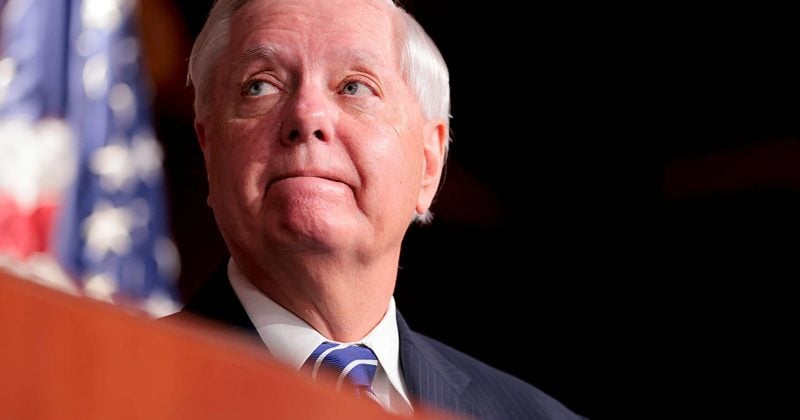
US Senate unveils bipartisan Russia sanctions bill in honor of late Senator Lindsey Graham
The Sanctioning Russia Act of 2026 targets buyers of Russian energy exports, and crypto markets should pay attention to what it doesn't include
A bipartisan group of US senators has introduced sweeping new sanctions legislation aimed at punishing entities that support Russia’s war machine in Ukraine. The bill, formally known as the Sanctioning Russia Act of 2026, carries an added layer of significance: it’s being framed as a tribute to the late Senator Lindsey Graham, who originally championed the effort before his death.
Graham first introduced the legislation as S.1241 back in April 2025. The fact that colleagues from both parties picked it up and pushed it across the finish line tells you something about where Washington’s head is on Russia policy right now.
What the bill actually does
The core mechanism is straightforward. The legislation targets buyers of Russian oil and natural gas exports, expanding the US government’s toolkit for penalizing entities that keep revenue flowing into Moscow’s war chest.
Key sponsors include Senators Jeanne Shaheen, Richard Blumenthal, and Roger Wicker, a cross-party lineup that’s become increasingly rare in Washington. Over 80 senators have previously backed earlier versions of this bill.
On July 10, 2026, the group reached an agreement with the Trump White House to advance the sanctions framework.
Macro, rates, and crypto—what moved markets and what matters next.
Daily. Free. Join 34,000+ readers across crypto, finance, and policy.
The bill is designed to address several specific scenarios: Russian government actions that undermine peace negotiations over Ukraine, new military invasions, and broader efforts to destabilize the Ukrainian government.
The crypto angle, or lack thereof
There are zero references to cryptocurrency, digital assets, or blockchain technology anywhere in this bill or its surrounding discussions. For a piece of legislation focused on economic punishment, that’s a notable omission.
Why energy markets matter for crypto
Even without a direct crypto provision, the bill’s energy focus creates second-order effects that digital asset investors should track. Stricter penalties on buyers of Russian energy exports could tighten global oil and gas markets, pushing prices higher and adding inflationary pressure to economies already navigating uncertain monetary policy.
There’s also the mining angle. Higher energy prices directly impact Bitcoin mining economics, particularly for operations in regions sensitive to global energy benchmarks.