
Nexo Earn with Nexo
Senate Armed Services Committee authorizes $2B for Taiwan, Philippines security aid

Senate Armed Services Committee authorizes $2B for Taiwan, Philippines security aid

The new First Island Chain Security Cooperation Initiative replaces the existing Taiwan-focused program, expanding defense commitments through 2032 as geopolitical risk reshapes investor calculus.

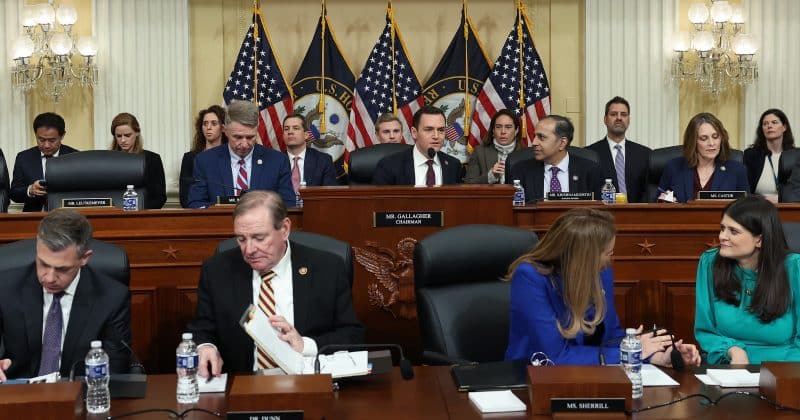
The US Senate Armed Services Committee voted 18-9 to approve a sweeping reorganization of security assistance for Taiwan and the Philippines, bundling them into a single defense framework called the First Island Chain Security Cooperation Initiative. The move, embedded in the FY2027 National Defense Authorization Act, authorizes up to $1 billion in shared assistance between Taipei and Manila for fiscal year 2027, with a House Appropriations Committee proposal pushing the total Taiwan defense figure to $2 billion.

What the new defense framework actually does

The initiative replaces the narrower Taiwan Security Cooperation Initiative, which was created under the FY2025 NDAA after provisions in the Taiwan Enhanced Resilience Act of FY2023. What started as a $300 million program in FY2025 grew to $1 billion in FY2026, and is now being expanded, renamed, and extended through 2032.

The renamed FICSCI does three notable things. It loops the Philippines into what was previously a Taiwan-only assistance pipeline. It establishes a war reserve stockpile program for Taiwan, designed to pre-position military supplies for potential conflict scenarios. And it mandates reviews of arms sales delays affecting key allies across the First Island Chain, including Japan and South Korea.

Advertisement

The committee approved the measure on June 11, 2026. Separately, the House Appropriations Committee has proposed $2 billion for Taiwan defense in FY2027, with up to $1 billion directly tied to the FICSCI initiative. Those funds could remain available through September 30, 2028.

The South China Sea factor

The “First Island Chain” refers to the arc of islands stretching from Japan through Taiwan to the Philippines, forming a natural barrier between China’s coastline and the open Pacific. By combining Taiwan and Philippines security assistance under one umbrella, the committee is signaling that it views the South China Sea and Taiwan Strait as a single theater of potential conflict. The inclusion of a crisis management strategy for the South China Sea reinforces that framing.

The 18-9 vote wasn’t unanimous, but it was decisive. The bipartisan support reflects a rare area of agreement in Washington: both parties see the western Pacific as the primary arena for great-power competition over the next decade.

What this means for investors

When the US shot down a suspected Chinese surveillance balloon in February 2023, Bitcoin dipped briefly before recovering. When China conducted military exercises around Taiwan in August 2022, trading volumes spiked across major exchanges as investors repositioned.

The war reserve stockpile provision deserves particular attention. Pre-positioning weapons in Taiwan is one of the most escalatory steps the US can take short of deploying troops.

Previous periods of elevated US-China tension have coincided with increased stablecoin activity in Asian markets, as investors seek dollar-denominated safe havens outside traditional banking channels.

The funding available through September 2028 means this story has a long tail. Traders focused on short-term catalysts should watch for the House floor vote on the appropriations bill and any Chinese military response to the stockpile provisions.

Disclosure: This article was edited by Editorial Team. For more information on how we create and review content, see our Editorial Policy.

Senate Armed Services Committee authorizes $2B for Taiwan, Philippines security aid

Senate Armed Services Committee authorizes $2B for Taiwan, Philippines security aid

The new First Island Chain Security Cooperation Initiative replaces the existing Taiwan-focused program, expanding defense commitments through 2032 as geopolitical risk reshapes investor calculus.

The US Senate Armed Services Committee voted 18-9 to approve a sweeping reorganization of security assistance for Taiwan and the Philippines, bundling them into a single defense framework called the First Island Chain Security Cooperation Initiative. The move, embedded in the FY2027 National Defense Authorization Act, authorizes up to $1 billion in shared assistance between Taipei and Manila for fiscal year 2027, with a House Appropriations Committee proposal pushing the total Taiwan defense figure to $2 billion.

What the new defense framework actually does

The initiative replaces the narrower Taiwan Security Cooperation Initiative, which was created under the FY2025 NDAA after provisions in the Taiwan Enhanced Resilience Act of FY2023. What started as a $300 million program in FY2025 grew to $1 billion in FY2026, and is now being expanded, renamed, and extended through 2032.

The renamed FICSCI does three notable things. It loops the Philippines into what was previously a Taiwan-only assistance pipeline. It establishes a war reserve stockpile program for Taiwan, designed to pre-position military supplies for potential conflict scenarios. And it mandates reviews of arms sales delays affecting key allies across the First Island Chain, including Japan and South Korea.

Advertisement

The committee approved the measure on June 11, 2026. Separately, the House Appropriations Committee has proposed $2 billion for Taiwan defense in FY2027, with up to $1 billion directly tied to the FICSCI initiative. Those funds could remain available through September 30, 2028.

The South China Sea factor

The “First Island Chain” refers to the arc of islands stretching from Japan through Taiwan to the Philippines, forming a natural barrier between China’s coastline and the open Pacific. By combining Taiwan and Philippines security assistance under one umbrella, the committee is signaling that it views the South China Sea and Taiwan Strait as a single theater of potential conflict. The inclusion of a crisis management strategy for the South China Sea reinforces that framing.

The 18-9 vote wasn’t unanimous, but it was decisive. The bipartisan support reflects a rare area of agreement in Washington: both parties see the western Pacific as the primary arena for great-power competition over the next decade.

What this means for investors

When the US shot down a suspected Chinese surveillance balloon in February 2023, Bitcoin dipped briefly before recovering. When China conducted military exercises around Taiwan in August 2022, trading volumes spiked across major exchanges as investors repositioned.

The war reserve stockpile provision deserves particular attention. Pre-positioning weapons in Taiwan is one of the most escalatory steps the US can take short of deploying troops.

Previous periods of elevated US-China tension have coincided with increased stablecoin activity in Asian markets, as investors seek dollar-denominated safe havens outside traditional banking channels.

The funding available through September 2028 means this story has a long tail. Traders focused on short-term catalysts should watch for the House floor vote on the appropriations bill and any Chinese military response to the stockpile provisions.

Disclosure: This article was edited by Editorial Team. For more information on how we create and review content, see our Editorial Policy.