
Singapore seizes $42 million luxury home in Nvidia AI chips smuggling probe

Singapore seizes $42 million luxury home in Nvidia AI chips smuggling probe

Authorities froze a sprawling bungalow and nearly $1 million in bank accounts as part of a widening investigation into alleged cross-border diversion of advanced AI semiconductors.

Singapore just put a prohibition of disposal order on a luxury Good Class Bungalow worth S$55 million, roughly $42 million, as part of an escalating investigation into alleged fraud and smuggling operations involving Nvidia AI chips.

The asset freeze, executed on July 1, also locked down nearly S$1 million ($770,000) in bank funds. Combined, authorities have now frozen approximately $56 million in assets tied to the case.

What happened and who’s involved

Fraud and money laundering charges have been filed against four individuals and four companies. Among those named are Alan Wei and Jenny Lim.

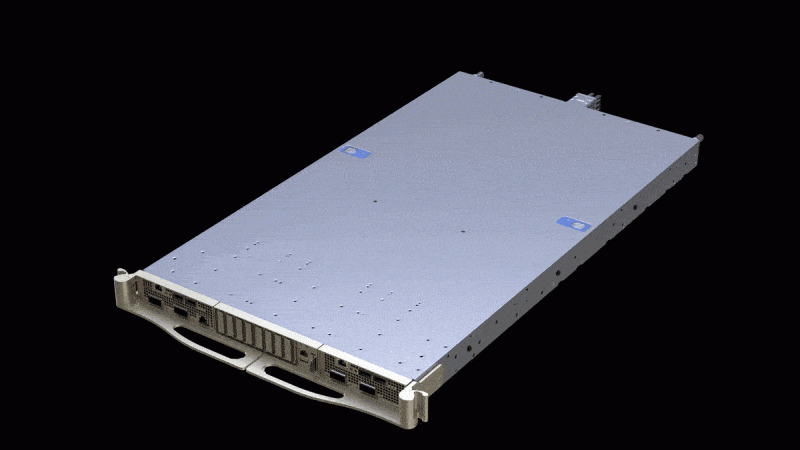
The investigation traces back to February 2025, when authorities first began looking into alleged misrepresentation of end-users for high-value servers. Those servers, sourced from US firms including Dell, Super Micro Computer, and Asus, were documented for export to Malaysia. Investigators believe they were rerouted improperly, potentially violating US export controls on advanced AI semiconductors.

Advertisement

The earlier phase of the investigation involved approximately $390 million in questionable transactions.

Good Class Bungalows are Singapore’s most exclusive residential properties. They sit on plots of at least 1,400 square meters and are subject to strict ownership rules.

The bigger picture: US export controls and the global chip war

The US has imposed increasingly aggressive export controls on advanced semiconductors, particularly Nvidia’s high-end AI processors. These restrictions are designed to limit the flow of cutting-edge computing power to countries deemed strategic rivals, primarily China.

The servers at the center of this investigation reportedly contained Nvidia chips, making them subject to US export control regulations regardless of where the initial sale took place. American firms like Dell and Super Micro Computer have compliance obligations that extend through the supply chain, and allegations of end-user misrepresentation strike at the heart of those obligations.

What this means for tech investors and the AI market

Reports have found no links to digital assets in the investigation.

Dell, Super Micro Computer, and Asus are mentioned as the original suppliers of the allegedly diverted servers. None of them have been accused of wrongdoing.

The $390 million in questionable transactions identified in the earlier phase of this investigation suggests the market for diverted AI hardware is enormous.

Disclosure: This article was edited by Editorial Team. For more information on how we create and review content, see our Editorial Policy.

Singapore seizes $42 million luxury home in Nvidia AI chips smuggling probe

Singapore seizes $42 million luxury home in Nvidia AI chips smuggling probe

Authorities froze a sprawling bungalow and nearly $1 million in bank accounts as part of a widening investigation into alleged cross-border diversion of advanced AI semiconductors.

Singapore just put a prohibition of disposal order on a luxury Good Class Bungalow worth S$55 million, roughly $42 million, as part of an escalating investigation into alleged fraud and smuggling operations involving Nvidia AI chips.

The asset freeze, executed on July 1, also locked down nearly S$1 million ($770,000) in bank funds. Combined, authorities have now frozen approximately $56 million in assets tied to the case.

What happened and who’s involved

Fraud and money laundering charges have been filed against four individuals and four companies. Among those named are Alan Wei and Jenny Lim.

The investigation traces back to February 2025, when authorities first began looking into alleged misrepresentation of end-users for high-value servers. Those servers, sourced from US firms including Dell, Super Micro Computer, and Asus, were documented for export to Malaysia. Investigators believe they were rerouted improperly, potentially violating US export controls on advanced AI semiconductors.

Advertisement

The earlier phase of the investigation involved approximately $390 million in questionable transactions.

Good Class Bungalows are Singapore’s most exclusive residential properties. They sit on plots of at least 1,400 square meters and are subject to strict ownership rules.

The bigger picture: US export controls and the global chip war

The US has imposed increasingly aggressive export controls on advanced semiconductors, particularly Nvidia’s high-end AI processors. These restrictions are designed to limit the flow of cutting-edge computing power to countries deemed strategic rivals, primarily China.

The servers at the center of this investigation reportedly contained Nvidia chips, making them subject to US export control regulations regardless of where the initial sale took place. American firms like Dell and Super Micro Computer have compliance obligations that extend through the supply chain, and allegations of end-user misrepresentation strike at the heart of those obligations.

What this means for tech investors and the AI market

Reports have found no links to digital assets in the investigation.

Dell, Super Micro Computer, and Asus are mentioned as the original suppliers of the allegedly diverted servers. None of them have been accused of wrongdoing.

The $390 million in questionable transactions identified in the earlier phase of this investigation suggests the market for diverted AI hardware is enormous.

Disclosure: This article was edited by Editorial Team. For more information on how we create and review content, see our Editorial Policy.