
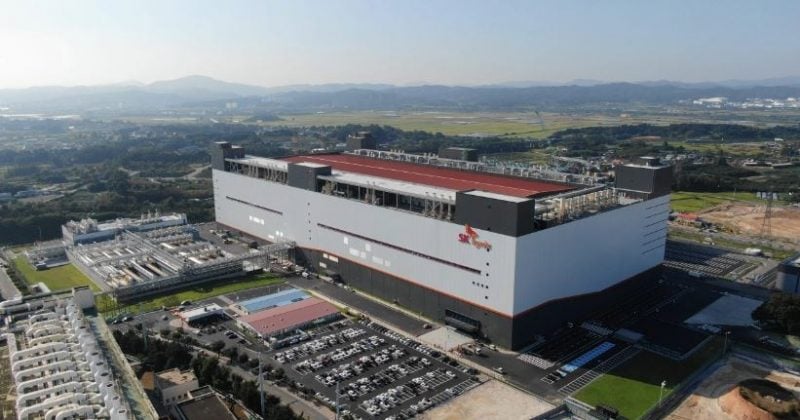
SK Hynix evacuates 3,600 workers after fire and toxic gas leak at South Korean chip plant
A hydrogen fluoride leak at the Cheongju facility sent several workers to the hospital, but production reportedly continued uninterrupted.
A fire at SK Hynix’s Cheongju chip plant triggered a hydrogen fluoride gas leak on June 1, forcing the evacuation of roughly 3,600 employees. The incident, which began around 10:32 a.m. local time in a gas room on the sixth floor, was contained within hours, but not before six to seven workers were hospitalized for eye irritation related to the toxic exposure.
What happened at Cheongju
The fire broke out in a gas room on the sixth floor of the facility, impacting the M15 and M15X production lines. Automated sprinkler systems extinguished the flames quickly, but the sprinkler activation is what apparently triggered the hydrogen fluoride leak.
SK Hynix evacuated approximately 3,600 workers as a precautionary measure. The affected employees who reported health issues were treated, and no severe or lasting effects were noted. By roughly 1:38 p.m. local time, the residual gas had been cleared from the facility.
Employees were allowed to re-enter only after a thorough return inspection and safety checks were completed. SK Hynix stated that it followed its standard safety procedures throughout the event.
Production stayed online, which matters enormously
Perhaps the most significant detail: production operations reportedly remained fully functional throughout the incident. No manufacturing downtime was recorded.
AI, tech, and the markets they move—in one daily briefing.
Daily. Free. Join 34,000+ readers across crypto, finance, and policy.
That matters because SK Hynix is one of the planet’s largest memory chipmakers, producing the high-bandwidth memory (HBM) chips that have become essential infrastructure for the AI boom. The Cheongju campus is a critical node in that supply chain. The M15 facility produces NAND flash memory, while the M15X expansion has been part of SK Hynix’s broader push to increase capacity.
Context: a sector under pressure
The global semiconductor industry is operating under intense demand pressure, driven primarily by the AI sector. SK Hynix has been a primary beneficiary of this trend, with its HBM chips finding their way into Nvidia’s most advanced AI accelerators and other cutting-edge hardware. SK Hynix reported robust financial performance in Q1 2026, paralleling gains seen at competitors including Samsung and Micron.
Market analysts have reported no significant connection between this event and potential disruptions to semiconductor supply or pricing.
What this means for investors
For anyone with exposure to semiconductor stocks, the immediate takeaway is straightforward: no production was lost, no severe injuries occurred, and the gas was cleared in roughly three hours.
The fact that a sprinkler system activation could trigger a hydrogen fluoride leak raises questions about facility design and chemical storage protocols that SK Hynix will need to address. For the crypto market specifically, the AI narrative has been a dominant driver of token prices across several categories, from decentralized compute networks to AI agent platforms. That narrative depends on continued expansion of AI hardware infrastructure, which depends on chipmakers like SK Hynix maintaining uninterrupted production.