
Nexo Earn with Nexo
SoFi Stadium workers reach tentative deal ahead of World Cup

SoFi Stadium workers reach tentative deal ahead of World Cup

Nearly 2,000 food and beverage employees avert a strike days before the US team's opening match, securing wage hikes, automation limits, and a first-of-its-kind immigration enforcement provision.

Nearly 2,000 food and beverage workers at SoFi Stadium just pulled off something that rarely happens in labor negotiations: they got what they wanted before the walkout, not after it. The tentative agreement, reached on June 9, averts a strike that would have thrown a wrench into one of the biggest sporting events on American soil in decades.

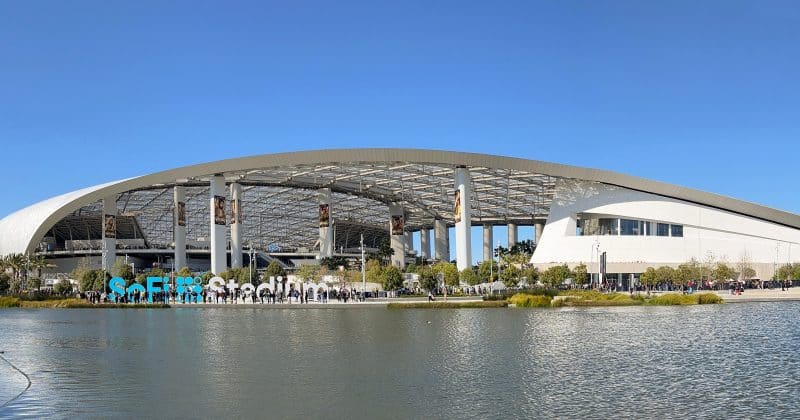
The deal between Unite Here Local 11 and Legends Global, the venue’s food-service operator, lands just in time. SoFi Stadium is set to host eight matches during the 2026 FIFA World Cup, including the US team’s opening game.

What the workers actually won

The headline number is worth lingering on. Under the new agreement, many cooks at SoFi Stadium will earn as much as $40 per hour within two years.

Advertisement

The agreement includes hard limits on subcontracting, which is the practice of farming out jobs to third-party companies that often pay less and offer fewer protections. It also includes restrictions against the introduction of new automation technologies, a provision that reads like a direct response to the growing trend of robot bartenders and self-service kiosks creeping into stadiums and arenas nationwide.

The agreement contains a unique clause allowing workers to strike if federal immigration enforcement actions are perceived to threaten their safety during World Cup events. It also includes protections ensuring that workers’ personal information is not shared with accrediting bodies like FIFA.

How it got to this point

The tentative deal didn’t materialize out of goodwill. It came just days after the union voted to authorize a strike, a move that dramatically raised the stakes for Legends Global and, by extension, everyone involved in World Cup logistics at SoFi Stadium.

Tom Steyer, the billionaire investor and political figure, was among those who publicly supported the workers’ push for better conditions.

What this means for the broader labor landscape

The 2026 World Cup is being hosted across multiple cities in the US, Canada, and Mexico. Every single one of those venues employs thousands of food-service, janitorial, and hospitality workers. If the SoFi deal holds, other unions at other World Cup venues now have a precedent to point to in areas including automation restrictions and the novel immigration enforcement strike provision.

For the approximately 2,000 cooks, bartenders, and servers represented by Unite Here Local 11, the immediate impact is straightforward: better pay, stronger job security, and a set of protections that didn’t exist before June 9.

The agreement still needs to be ratified by the union membership. The real question is whether other venue operators across the World Cup host cities are already picking up the phone to get ahead of their own workforce negotiations.

Disclosure: This article was edited by Editorial Team. For more information on how we create and review content, see our Editorial Policy.

SoFi Stadium workers reach tentative deal ahead of World Cup

SoFi Stadium workers reach tentative deal ahead of World Cup

Nearly 2,000 food and beverage employees avert a strike days before the US team's opening match, securing wage hikes, automation limits, and a first-of-its-kind immigration enforcement provision.

Nearly 2,000 food and beverage workers at SoFi Stadium just pulled off something that rarely happens in labor negotiations: they got what they wanted before the walkout, not after it. The tentative agreement, reached on June 9, averts a strike that would have thrown a wrench into one of the biggest sporting events on American soil in decades.

The deal between Unite Here Local 11 and Legends Global, the venue’s food-service operator, lands just in time. SoFi Stadium is set to host eight matches during the 2026 FIFA World Cup, including the US team’s opening game.

What the workers actually won

The headline number is worth lingering on. Under the new agreement, many cooks at SoFi Stadium will earn as much as $40 per hour within two years.

Advertisement

The agreement includes hard limits on subcontracting, which is the practice of farming out jobs to third-party companies that often pay less and offer fewer protections. It also includes restrictions against the introduction of new automation technologies, a provision that reads like a direct response to the growing trend of robot bartenders and self-service kiosks creeping into stadiums and arenas nationwide.

The agreement contains a unique clause allowing workers to strike if federal immigration enforcement actions are perceived to threaten their safety during World Cup events. It also includes protections ensuring that workers’ personal information is not shared with accrediting bodies like FIFA.

How it got to this point

The tentative deal didn’t materialize out of goodwill. It came just days after the union voted to authorize a strike, a move that dramatically raised the stakes for Legends Global and, by extension, everyone involved in World Cup logistics at SoFi Stadium.

Tom Steyer, the billionaire investor and political figure, was among those who publicly supported the workers’ push for better conditions.

What this means for the broader labor landscape

The 2026 World Cup is being hosted across multiple cities in the US, Canada, and Mexico. Every single one of those venues employs thousands of food-service, janitorial, and hospitality workers. If the SoFi deal holds, other unions at other World Cup venues now have a precedent to point to in areas including automation restrictions and the novel immigration enforcement strike provision.

For the approximately 2,000 cooks, bartenders, and servers represented by Unite Here Local 11, the immediate impact is straightforward: better pay, stronger job security, and a set of protections that didn’t exist before June 9.

The agreement still needs to be ratified by the union membership. The real question is whether other venue operators across the World Cup host cities are already picking up the phone to get ahead of their own workforce negotiations.

Disclosure: This article was edited by Editorial Team. For more information on how we create and review content, see our Editorial Policy.