
 Earn with Nexo
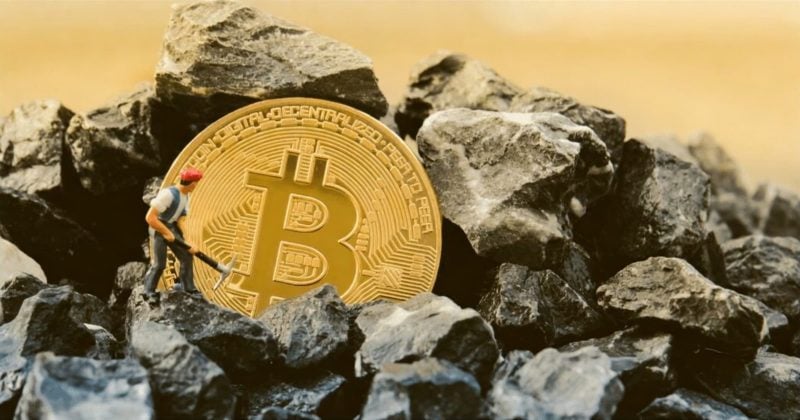
Solo Bitcoin miner wins $222K after beating 1 in 100,000 odds
A miner running a single machine from 2019 just outperformed statistical reality, collecting the full block reward on Bitcoin's network.
Imagine walking into a casino, placing a single chip on a roulette number, and winning. Now imagine the wheel has 100,000 slots. That’s roughly what a solo Bitcoin miner just pulled off.
On April 9, a lone miner using just 70 terahashes per second of computing power solved block 944,306, pocketing 3.128 BTC, worth approximately $222,012. That hashrate is equivalent to a single 2019-era Bitmain Antminer S17+ machine, the kind of hardware most serious operations retired years ago.
The details behind the improbable win
The reward broke down to 3.125 BTC in block subsidy ($221,800) and a modest 0.003 BTC ($212) in transaction fees. The miner used CKpool’s solo mining software, specifically the European server at eusolo.ckpool.org.
CKpool developer Con Kolivas confirmed the feat on X.
“A miner of this size has only a 1 in ~100,000 chance of solving a block per day, or once every 300 years!”
To put the miner’s firepower in context: 70 TH/s represents about 0.0000069% of Bitcoin’s total network hashrate, which sat at roughly 1.02 zettahashes per second on the day of the block discovery. In English: this miner brought a squirt gun to a naval battle and somehow sank a battleship.
The block was independently verified through the Bitcoin explorer Mempool, which tracks all block discoveries and their associated rewards in real time.
Here’s what makes this even more remarkable. This was the second solo block win in just 10 days. Another solo miner had previously solved block 943,411 around March 30, earning roughly $210,000 after a 33-day drought in solo block discoveries. Two wins this close together is the kind of statistical clustering that makes probability professors uncomfortable.
The latest block marks CKpool’s 313th solo mining success since the platform launched back in 2014. That’s 313 David-versus-Goliath moments over roughly 12 years, a small but persistent reminder that the lottery ticket occasionally pays out.
Why solo mining is basically irrational, and people do it anyway
Modern Bitcoin mining is dominated by industrial-scale operations. Foundry USA, AntPool, and ViaBTC collectively control over 65% of Bitcoin’s global hashrate as of recent data. These pools aggregate thousands of miners, splitting rewards proportionally but consistently.
Solo mining is the opposite philosophy. You contribute your own hashrate, you solve blocks alone, and you keep everything. The catch is that “everything” is usually nothing, for years at a time.
Mining difficulty on April 9 stood at 138.97 trillion, a number that has ballooned over Bitcoin’s lifetime as more powerful hardware floods the network. A difficulty adjustment expected around April 18 was projected to bring it down slightly to 131.10 trillion, but that’s still an astronomically high bar for any individual miner.
Transaction fees have also cratered. Median Bitcoin transaction fees recently dropped to about $0.38, the lowest level since 2017. That means even when a solo miner does win, the fee component of the reward is barely a rounding error. The $212 in fees attached to block 944,306 illustrates this perfectly.
So why bother? The same reason people buy lottery tickets. The expected value is negative, but the potential payoff is life-changing relative to the input cost. Running a single older-generation ASIC miner costs a few dollars a day in electricity. The reward for hitting a block is over $220,000. The math doesn’t work on average, but averages aren’t what motivate solo miners.
What this means for investors and the broader market
Look, two solo mining wins in 10 days doesn’t signal a fundamental shift in Bitcoin’s mining landscape. The major pools still control the vast majority of hashrate, and that concentration has been deepening, not shrinking.
But these events do matter for the narrative around decentralization. Bitcoin’s entire value proposition rests on the idea that no single entity controls the network. When three mining pools command two-thirds of all hashrate, that premise starts to look shaky. Every solo block win is a small but meaningful data point that individual participation in the network hasn’t died entirely.
For those watching the mining sector specifically, the economics are getting tighter. The April 2024 halving cut the block subsidy from 6.25 BTC to 3.125 BTC, effectively halving miners’ primary revenue source overnight. Combined with rock-bottom transaction fees, mining profitability has been under sustained pressure. Public mining companies have responded by scaling up operations and seeking cheaper energy sources, a luxury solo miners obviously don’t have.
The sustainability angle is also worth noting. As mining profitability tightens, operators are increasingly gravitating toward regions with abundant renewable energy. This “green mining” trend could reshape the geographic distribution of hashrate over time, potentially creating new investment opportunities in regions like Scandinavia, parts of Latin America, and the Pacific Northwest.
For risk-tolerant investors considering solo mining as a side venture, the math is worth doing honestly. A single Antminer S17+ running 24/7 consumes roughly 2,000 watts. At the US average electricity rate of about $0.12 per kWh, that’s roughly $5.76 per day, or about $2,100 per year. At one-in-100,000 daily odds for a $222K reward, the expected daily value is about $2.22, less than half the daily electricity cost. You’re paying for the privilege of extreme variance.
That said, there’s an intangible value in contributing to Bitcoin’s decentralization. Every independent miner, no matter how small, adds to the distributed security model that gives Bitcoin its censorship resistance. Whether that philosophical benefit is worth the financial cost is a personal calculation.
The frequency of these solo wins also serves as a useful barometer. If solo block discoveries become more common, it could indicate that smaller miners are returning to the network, perhaps drawn by cheaper hardware on the secondary market or declining difficulty. If they dry up entirely, it would signal further consolidation, something worth monitoring for anyone invested in Bitcoin’s long-term health as a decentralized protocol.
Bottom line: A miner with equipment most operations would consider obsolete just collected $222,000 by defying 300-year odds. It’s a feel-good story, and statistically meaningless at scale. But in a network increasingly dominated by industrial mining giants, every solo block is a tiny proof of concept that Bitcoin’s permissionless design still works as advertised. Just don’t quit your day job to try it.