
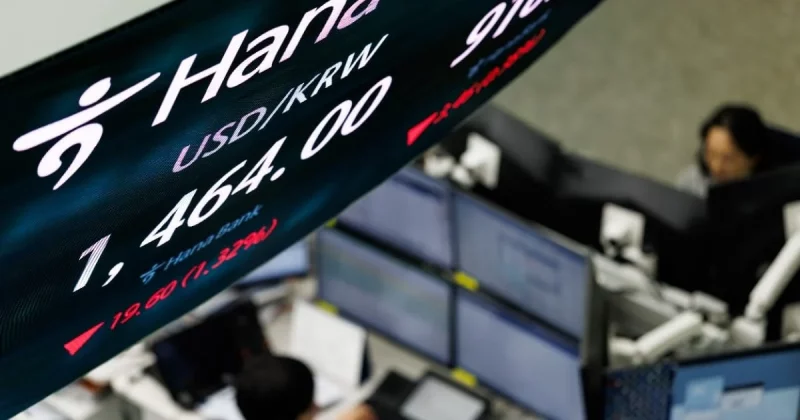
South Korea to introduce 24-hour dollar-won trading from July 6
Seoul is scrapping its six-and-a-half-hour FX trading window in favor of round-the-clock access, a move that could ripple through crypto markets where Korean exchanges already never sleep.
South Korea’s dollar-won spot market is about to get a radical schedule upgrade. Starting July 6, the onshore USD/KRW market will shift from a roughly six-and-a-half-hour daily window to continuous 24-hour trading.
What’s actually changing
Right now, if you want to trade dollars for won onshore, you have to do it between 9:00 AM and 3:30 PM Korean Standard Time. That’s it. Six and a half hours. Markets in New York, London, and Tokyo are open while Seoul’s FX desk is dark, creating gaps that traders either route through offshore markets or simply wait out.
The reform is spearheaded by South Korea’s Ministry of Economy and Finance as part of a broader capital markets modernization push that’s been rolling out since 2023. An earlier phase of the initiative opened the onshore FX market to approved foreign financial institutions, letting them trade USD/KRW directly rather than going through Korean bank intermediaries.
Why this matters beyond forex desks
South Korea is one of the most active crypto trading markets on the planet. Exchanges like Upbit and Bithumb already operate around the clock, processing enormous volumes in KRW-denominated pairs.
But the FX market that underpins all of that KRW liquidity has been shutting down at 3:30 PM every afternoon. That mismatch created friction. Market makers who needed to hedge their KRW exposure against dollars couldn’t do so outside a narrow window. Foreign institutions wanting to move capital in or out of Korean assets faced timing constraints that added cost and complexity.
A continuously available onshore FX rate should help narrow price discrepancies between Korean and global markets. The Kimchi premium, where Bitcoin and other tokens trade at a markup on Korean exchanges compared to international ones, has historically been driven partly by capital controls and partly by the difficulty of arbitraging across a currency market with limited hours.
Seoul’s bigger play
South Korea maintained strict regulations on capital flows and FX participation, partly as a legacy of the 1997 Asian financial crisis, which hit the country particularly hard. Major equity index providers have previously cited FX market restrictions as a reason for not upgrading South Korea’s classification, which affects billions in passive fund flows.
What crypto investors should watch
The first thing to monitor is whether the Kimchi premium compresses further. If arbitrage becomes easier with round-the-clock FX access, the premium that Korean exchanges have historically charged should narrow.
Second, watch for increased foreign participation on Korean exchanges. Approved foreign institutions now have both direct FX access and continuous trading hours. If Upbit or Bithumb see upticks in institutional volume in the months following July 6, the FX reform is likely a contributing factor.
The risk is that a more open FX market also means more volatility transmission. When something breaks in US markets at 2 AM Seoul time, the won will now move in real time rather than gapping at the 9 AM open. That volatility will flow through to KRW-denominated crypto pairs.