
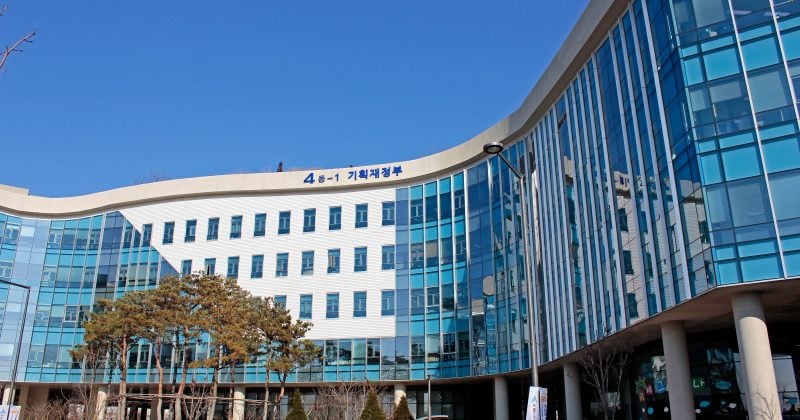
South Korea’s finance ministry calls emergency market meeting as volatility concerns mount

South Korea’s finance ministry calls emergency market meeting as volatility concerns mount

The high-level F4 gathering brings together the country's top financial regulators amid growing unease over leveraged ETFs and corporate divestment activity.

South Korea’s Ministry of Economy and Finance is convening a high-level market meeting on Thursday, pulling together the country’s most powerful financial regulators in what appears to be a coordinated response to escalating market turbulence.

The so-called F4 meeting brings the Ministry together with the Financial Services Commission, the Financial Supervisory Service, and the Bank of Korea.

What’s driving the meeting

The primary catalyst appears to be rising volatility tied to single-stock leveraged ETFs. Adding to regulator anxiety, major corporations in South Korea’s chip and shipbuilding sectors have been actively divesting positions in the forwards market.

Advertisement

The specific agenda and expected outcomes of Thursday’s meeting haven’t been publicly disclosed.

The bigger regulatory picture

The Digital Asset Basic Act, anticipated to be enacted in the second half of 2026, will establish formal rules governing digital assets, business conduct standards for crypto firms, and regulations around won-pegged stablecoins.

Beyond the Basic Act, the country has floated a pilot program for tokenizing government bonds via a central bank digital currency, with a tentative launch window of 2027. Proposals for spot Bitcoin ETFs have also entered the conversation.

On the enforcement side, South Korea’s Supreme Court proposed new seizure rules for crypto assets in July 2026. Those rules are currently open for public comment until August 11, 2026, with an effective date slated for October 2026.

What this means for investors

If regulators decide to tighten rules around single-stock leveraged ETFs, it could have immediate implications for trading strategies that rely on these instruments. The corporate divestment activity in chip and shipbuilding forwards adds another layer of uncertainty, particularly for anyone positioned in the Korean semiconductor supply chain.

Once enacted, the Digital Asset Basic Act could create a more predictable environment for institutional capital to enter South Korea’s crypto ecosystem, with clearer rules around stablecoins, tokenized securities, and exchange operations. South Korea’s political environment, which saw significant upheaval with the martial law episode in late 2024, adds a layer of unpredictability that no legislative framework can fully eliminate.

Disclosure: This article was edited by Editorial Team. For more information on how we create and review content, see our Editorial Policy.

South Korea’s finance ministry calls emergency market meeting as volatility concerns mount

South Korea’s finance ministry calls emergency market meeting as volatility concerns mount

The high-level F4 gathering brings together the country's top financial regulators amid growing unease over leveraged ETFs and corporate divestment activity.

South Korea’s Ministry of Economy and Finance is convening a high-level market meeting on Thursday, pulling together the country’s most powerful financial regulators in what appears to be a coordinated response to escalating market turbulence.

The so-called F4 meeting brings the Ministry together with the Financial Services Commission, the Financial Supervisory Service, and the Bank of Korea.

What’s driving the meeting

The primary catalyst appears to be rising volatility tied to single-stock leveraged ETFs. Adding to regulator anxiety, major corporations in South Korea’s chip and shipbuilding sectors have been actively divesting positions in the forwards market.

Advertisement

The specific agenda and expected outcomes of Thursday’s meeting haven’t been publicly disclosed.

The bigger regulatory picture

The Digital Asset Basic Act, anticipated to be enacted in the second half of 2026, will establish formal rules governing digital assets, business conduct standards for crypto firms, and regulations around won-pegged stablecoins.

Beyond the Basic Act, the country has floated a pilot program for tokenizing government bonds via a central bank digital currency, with a tentative launch window of 2027. Proposals for spot Bitcoin ETFs have also entered the conversation.

On the enforcement side, South Korea’s Supreme Court proposed new seizure rules for crypto assets in July 2026. Those rules are currently open for public comment until August 11, 2026, with an effective date slated for October 2026.

What this means for investors

If regulators decide to tighten rules around single-stock leveraged ETFs, it could have immediate implications for trading strategies that rely on these instruments. The corporate divestment activity in chip and shipbuilding forwards adds another layer of uncertainty, particularly for anyone positioned in the Korean semiconductor supply chain.

Once enacted, the Digital Asset Basic Act could create a more predictable environment for institutional capital to enter South Korea’s crypto ecosystem, with clearer rules around stablecoins, tokenized securities, and exchange operations. South Korea’s political environment, which saw significant upheaval with the martial law episode in late 2024, adds a layer of unpredictability that no legislative framework can fully eliminate.

Disclosure: This article was edited by Editorial Team. For more information on how we create and review content, see our Editorial Policy.