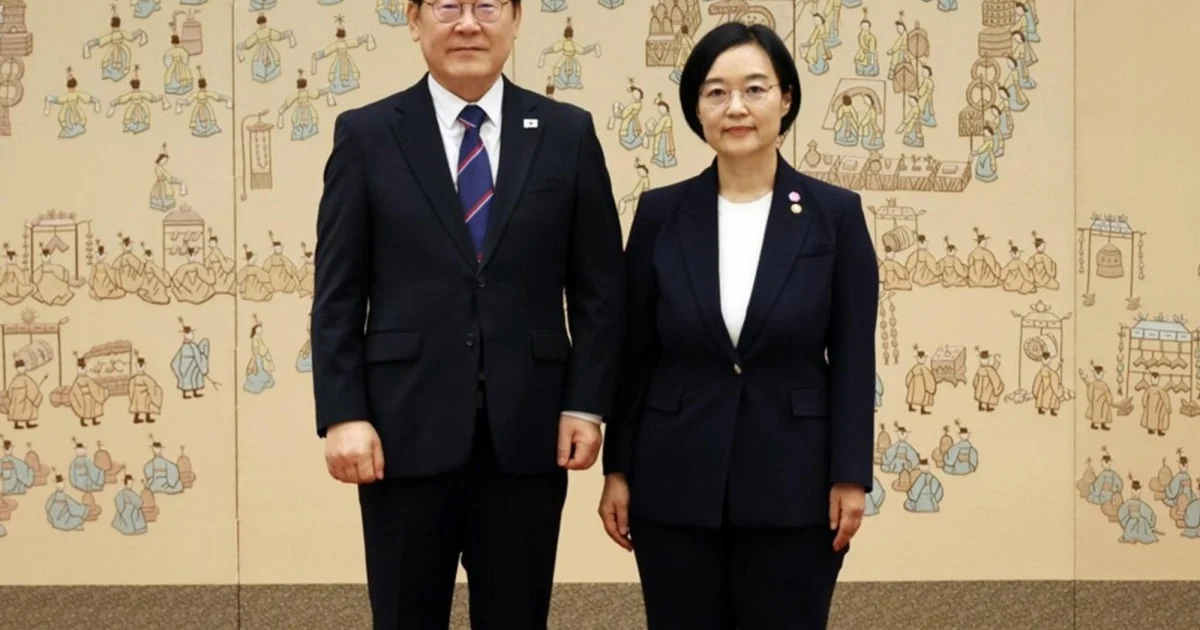
South Korea’s Lee nominates Han Seong-sook as prime minister to lead AI growth
The former Naver CEO could become South Korea's first female prime minister in 20 years, with a mandate to make the country a top-three global AI power.
South Korean President Lee Jae Myung has nominated Han Seong-sook, the current Minister of SMEs and Startups, as the country’s next prime minister. If confirmed by the National Assembly, she would be South Korea’s first female prime minister in two decades.
The nomination, announced on June 7 by chief of staff Kang Hoon-sik, sends a clear signal about where Asia’s fourth-largest economy wants to place its bets. Han’s resume reads like a blueprint for a country trying to become an AI superpower: former CEO of Naver Corp., South Korea’s dominant search and tech platform, followed by a cabinet role focused on digital transformation for small and mid-sized businesses.
A tech executive with a government playbook
Naver is often described as South Korea’s answer to Google. Running that company gave Han direct experience scaling AI-driven products for a market of over 50 million people.
Her transition into government as Minister of SMEs and Startups wasn’t just a soft landing. In that role, she pushed digital transformation initiatives aimed at getting smaller Korean businesses onto AI-powered tools.
The backdrop here is the Lee administration’s “AI for All” initiative, an ambitious program that aims to position South Korea among the top three global AI powers. The government’s 2026 budget includes KRW 10.1 trillion, roughly $7.3 billion, earmarked specifically for AI infrastructure and industry adoption.
AI, tech, and the markets they move—in one daily briefing.
Daily. Free. Join 34,000+ readers across crypto, finance, and policy.
What this means for digital assets and crypto regulation
During her time as minister, Han championed regulatory frameworks designed to attract venture capital into Korea’s digital economy while simultaneously tightening user protections. One notable policy: a 5% cap on corporate investments in digital assets.
South Korea has long been one of the world’s most active crypto trading markets. The so-called “Kimchi premium,” where Bitcoin and other tokens trade at higher prices on Korean exchanges compared to global averages, has become a well-known phenomenon in crypto markets.
No immediate market reaction was observed in crypto prices tied to her nomination.
Confirmation looks likely, and then what
The ruling party holds a majority in the National Assembly, which is the body that needs to approve the appointment. The current prime minister, Kim Min-seok, is stepping down to advance within the party.
The Korea Federation of SMEs has already signaled support, viewing the nomination as a step toward fostering innovation and economic growth through AI.
Disclosure: This article was edited by Editorial Team. For more information on how we create and review content, see our Editorial Policy.