
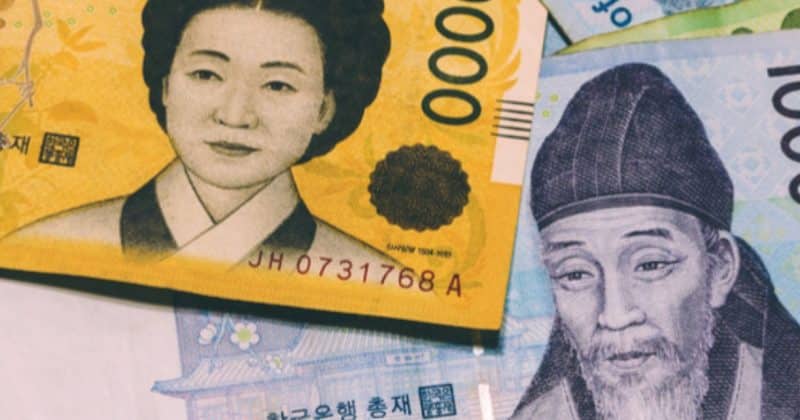
South Korea and US strike deal to cooperate on won’s sharp decline
The Korean won has shed over 11% in the past year, and both governments now agree the weakness doesn't match the country's economic fundamentals
South Korea and the United States have agreed to work together on addressing the Korean won’s persistent weakness. The agreement came out of a meeting between South Korean Deputy Finance Minister Moon Ji-sung and US foreign exchange officials in Washington. The core message: both governments believe the won’s depreciation is out of step with South Korea’s actual economic health, and they’re ready to do something about it.
A currency under siege
The won has been trading around 1,518 to 1,520 per US dollar, levels that represent a decline of over 11% across the past 12 months.
In January, the US Treasury flagged something interesting in its assessment: the pressures driving the won lower didn’t appear to match South Korea’s strong underlying economic fundamentals.
By May, South Korean authorities had escalated their rhetoric, warning publicly about “excessive” movements in the won and signaling readiness for decisive market interventions.
Why bilateral cooperation matters here
The US-South Korea agreement builds on earlier 2025 trade deals between the two nations that included tariff reductions and facilitated substantial Korean investments in US sectors.
Macro, rates, and crypto—what moved markets and what matters next.
Daily. Free. Join 34,000+ readers across crypto, finance, and policy.
South Korea has a well-documented history of stepping into foreign exchange markets to smooth out volatility. The country’s finance ministry and central bank have deployed both verbal interventions and direct market operations to manage the won’s trajectory. This latest agreement adds an explicit bilateral dimension to that long-standing approach.
What this means for investors
There’s also an inflation angle worth watching. A weaker won makes imports more expensive, which feeds directly into consumer prices. South Korea imports a significant share of its energy and raw materials, so currency depreciation acts as a stealth inflation tax on Korean households and businesses.
For crypto markets, South Korea consistently ranks among the world’s most active crypto trading nations, and currency instability has historically correlated with increased interest in digital assets among Korean retail investors.