
South Korea’s won moves to 24-hour trading as global investor interest grows

South Korea’s won moves to 24-hour trading as global investor interest grows

The finance ministry says international demand for won-denominated assets is rising ahead of a landmark shift to nearly continuous currency trading starting July 6.

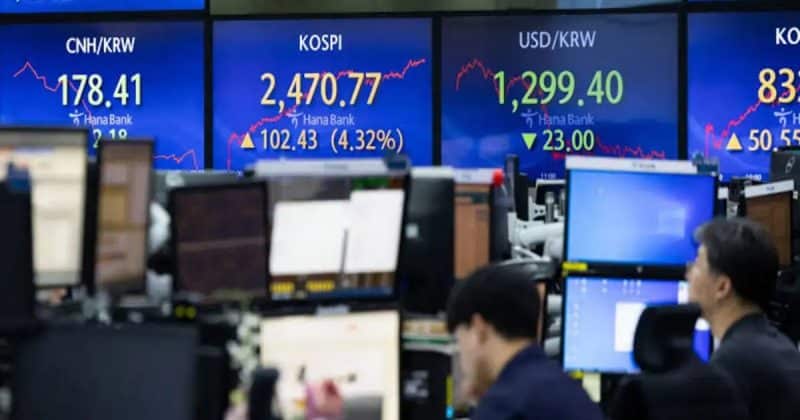
South Korea is about to do something it has never done before: let the world trade its currency around the clock. Starting July 6, the dollar-won spot market will operate nearly 24 hours a day, five days a week, a move the Ministry of Economy and Finance says is already drawing increased attention from global investors.

The shift isn’t just a technical upgrade. It’s the centerpiece of South Korea’s years-long campaign to join the ranks of MSCI’s developed-market index, a classification that has eluded Asia’s fourth-largest economy for decades.

What the new trading hours actually look like

Currently, dollar-won trading operates from 9 a.m. to 2 a.m. Korean time. Under the new system, trading will run from 6 a.m. Monday through 6 a.m. Saturday during New York daylight saving time.

Advertisement

A trial period kicks off on June 29, giving market participants a week to stress-test systems before the official launch. Major Korean banks, including Hana Bank, are reportedly staffing up and building out operational teams to handle the extended shifts.

The MSCI question that won’t go away

South Korea has been stuck in the emerging-market index for years, despite having an economy, corporate governance standards, and capital markets that look far more like Japan or Australia than like many of its index peers. MSCI has flagged limited trading hours and restrictions on offshore won settlement as barriers to an upgrade. South Korea’s finance officials know this, which is why the 24-hour trading reform is bundled with other changes: relaxed regulations for non-resident participants and the development of offshore won settlement systems.

South Korea has been close before, only to see the upgrade deferred. The 24-hour trading launch represents perhaps the most concrete structural reform the country has made to address MSCI’s specific concerns.

Why this matters beyond currency traders

For South Korean exporters, particularly the semiconductor giants that dominate the country’s trade balance, extended trading hours mean better hedging options. If a chip deal closes at 3 p.m. in Austin, Texas, the exporter can now lock in a currency rate immediately rather than waiting for the Seoul market to open.

There’s also a competitive angle. Singapore, Hong Kong, and Tokyo have all been vying for dominance as Asia-Pacific financial hubs. South Korea opening its currency market to continuous global access is a direct play for relevance in that race.

The risk is that extended hours without sufficient liquidity could lead to increased volatility during off-peak sessions. The trial period starting June 29 will offer the first real data on whether global appetite matches the ministry’s optimism.

Disclosure: This article was edited by Editorial Team. For more information on how we create and review content, see our Editorial Policy.

South Korea’s won moves to 24-hour trading as global investor interest grows

South Korea’s won moves to 24-hour trading as global investor interest grows

The finance ministry says international demand for won-denominated assets is rising ahead of a landmark shift to nearly continuous currency trading starting July 6.

South Korea is about to do something it has never done before: let the world trade its currency around the clock. Starting July 6, the dollar-won spot market will operate nearly 24 hours a day, five days a week, a move the Ministry of Economy and Finance says is already drawing increased attention from global investors.

The shift isn’t just a technical upgrade. It’s the centerpiece of South Korea’s years-long campaign to join the ranks of MSCI’s developed-market index, a classification that has eluded Asia’s fourth-largest economy for decades.

What the new trading hours actually look like

Currently, dollar-won trading operates from 9 a.m. to 2 a.m. Korean time. Under the new system, trading will run from 6 a.m. Monday through 6 a.m. Saturday during New York daylight saving time.

Advertisement

A trial period kicks off on June 29, giving market participants a week to stress-test systems before the official launch. Major Korean banks, including Hana Bank, are reportedly staffing up and building out operational teams to handle the extended shifts.

The MSCI question that won’t go away

South Korea has been stuck in the emerging-market index for years, despite having an economy, corporate governance standards, and capital markets that look far more like Japan or Australia than like many of its index peers. MSCI has flagged limited trading hours and restrictions on offshore won settlement as barriers to an upgrade. South Korea’s finance officials know this, which is why the 24-hour trading reform is bundled with other changes: relaxed regulations for non-resident participants and the development of offshore won settlement systems.

South Korea has been close before, only to see the upgrade deferred. The 24-hour trading launch represents perhaps the most concrete structural reform the country has made to address MSCI’s specific concerns.

Why this matters beyond currency traders

For South Korean exporters, particularly the semiconductor giants that dominate the country’s trade balance, extended trading hours mean better hedging options. If a chip deal closes at 3 p.m. in Austin, Texas, the exporter can now lock in a currency rate immediately rather than waiting for the Seoul market to open.

There’s also a competitive angle. Singapore, Hong Kong, and Tokyo have all been vying for dominance as Asia-Pacific financial hubs. South Korea opening its currency market to continuous global access is a direct play for relevance in that race.

The risk is that extended hours without sufficient liquidity could lead to increased volatility during off-peak sessions. The trial period starting June 29 will offer the first real data on whether global appetite matches the ministry’s optimism.

Disclosure: This article was edited by Editorial Team. For more information on how we create and review content, see our Editorial Policy.