
Nexo Earn with Nexo
SpaceX names F2Pool co-founder Chun Wang commander of Mars flyby mission

SpaceX names F2Pool co-founder Chun Wang commander of Mars flyby mission

The Bitcoin mining pioneer who helped secure 11% of Bitcoin's hashrate is now set to command humanity's first crewed trip past Mars.

SpaceX just handed the keys to its first crewed interplanetary Starship mission to someone who made his fortune mining Bitcoin. Chun Wang, co-founder of one of the world’s largest mining pools, will command a roughly two-year expedition that includes flybys of both the Moon and Mars before returning to Earth.

The announcement, made on May 22, marks a milestone not just for private space exploration but for the crypto industry’s expanding footprint in ambitious, capital-intensive ventures far removed from blockchain technology.

From hashrate to headspace

Wang co-founded F2Pool in 2013, during the early days when Bitcoin mining was still something you could reasonably do in a garage. The pool grew to control as much as 11% of Bitcoin’s total hashrate, making it one of the most influential operations in the network’s security infrastructure.

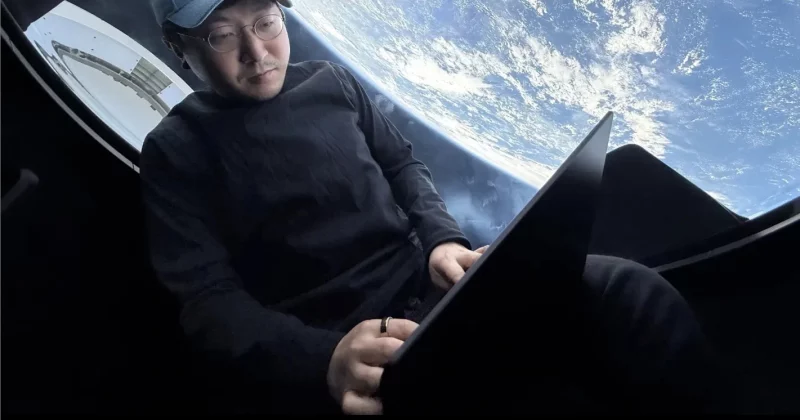
Wang, a Maltese-Kittitian investor originally from China, has been converting crypto-era riches into space-era ambitions. Wang commanded the Fram2 mission in early 2025, which became the first crewed flight to orbit over Earth’s poles. During that mission, his crew executed the first X-ray experiments ever conducted in space.

Advertisement

What the mission actually involves

The interplanetary Starship mission is designed as a proving ground for SpaceX’s Starship V3 architecture and its deep-space operational capabilities.

The flight plan includes a circumlunar flyby, meaning the crew will swing past the Moon. From there, the trajectory takes them to a high-altitude flyby of Mars, not landing, just getting close enough to test systems and collect data. Then comes the long ride home.

The full trip is expected to last approximately two years.

Before the Mars mission, Wang is set to participate in a separate commercial crewed lunar flyby alongside Dennis and Akiko Tito. Dennis Tito was the first-ever space tourist back in 2001. The lunar mission serves as a stepping stone, giving Wang additional flight experience before the far more demanding interplanetary journey.

The Mars flyby itself is positioned as a preliminary test for potential future crewed landings on the planet. The announcement came during discussions around a Starship Flight 12 attempt, though a specific launch date for the Mars mission has not been disclosed.

What this means for crypto and space

Private space exploration has historically been funded by tech billionaires: Bezos, Musk, Branson. Wang’s involvement signals that crypto-native wealth is joining that club. If mining Bitcoin in 2013 can put you in command of a Mars-bound spacecraft in the late 2020s, the incentive structure for early-stage risk-taking in crypto gets a very compelling new data point.

A two-year crewed mission beyond Earth’s orbital neighborhood is unprecedented in the private sector. Life-support systems, radiation exposure, psychological strain on the crew, and the sheer mechanical complexity of a round-trip Mars flyby all present challenges that have never been tested at this scale outside of government space programs. The Starship V3 architecture is still being validated, and a lot can change between an announcement and a launch window.

Disclosure: This article was edited by Editorial Team. For more information on how we create and review content, see our Editorial Policy.

SpaceX names F2Pool co-founder Chun Wang commander of Mars flyby mission

SpaceX names F2Pool co-founder Chun Wang commander of Mars flyby mission

The Bitcoin mining pioneer who helped secure 11% of Bitcoin's hashrate is now set to command humanity's first crewed trip past Mars.

SpaceX just handed the keys to its first crewed interplanetary Starship mission to someone who made his fortune mining Bitcoin. Chun Wang, co-founder of one of the world’s largest mining pools, will command a roughly two-year expedition that includes flybys of both the Moon and Mars before returning to Earth.

The announcement, made on May 22, marks a milestone not just for private space exploration but for the crypto industry’s expanding footprint in ambitious, capital-intensive ventures far removed from blockchain technology.

From hashrate to headspace

Wang co-founded F2Pool in 2013, during the early days when Bitcoin mining was still something you could reasonably do in a garage. The pool grew to control as much as 11% of Bitcoin’s total hashrate, making it one of the most influential operations in the network’s security infrastructure.

Wang, a Maltese-Kittitian investor originally from China, has been converting crypto-era riches into space-era ambitions. Wang commanded the Fram2 mission in early 2025, which became the first crewed flight to orbit over Earth’s poles. During that mission, his crew executed the first X-ray experiments ever conducted in space.

Advertisement

What the mission actually involves

The interplanetary Starship mission is designed as a proving ground for SpaceX’s Starship V3 architecture and its deep-space operational capabilities.

The flight plan includes a circumlunar flyby, meaning the crew will swing past the Moon. From there, the trajectory takes them to a high-altitude flyby of Mars, not landing, just getting close enough to test systems and collect data. Then comes the long ride home.

The full trip is expected to last approximately two years.

Before the Mars mission, Wang is set to participate in a separate commercial crewed lunar flyby alongside Dennis and Akiko Tito. Dennis Tito was the first-ever space tourist back in 2001. The lunar mission serves as a stepping stone, giving Wang additional flight experience before the far more demanding interplanetary journey.

The Mars flyby itself is positioned as a preliminary test for potential future crewed landings on the planet. The announcement came during discussions around a Starship Flight 12 attempt, though a specific launch date for the Mars mission has not been disclosed.

What this means for crypto and space

Private space exploration has historically been funded by tech billionaires: Bezos, Musk, Branson. Wang’s involvement signals that crypto-native wealth is joining that club. If mining Bitcoin in 2013 can put you in command of a Mars-bound spacecraft in the late 2020s, the incentive structure for early-stage risk-taking in crypto gets a very compelling new data point.

A two-year crewed mission beyond Earth’s orbital neighborhood is unprecedented in the private sector. Life-support systems, radiation exposure, psychological strain on the crew, and the sheer mechanical complexity of a round-trip Mars flyby all present challenges that have never been tested at this scale outside of government space programs. The Starship V3 architecture is still being validated, and a lot can change between an announcement and a launch window.

Disclosure: This article was edited by Editorial Team. For more information on how we create and review content, see our Editorial Policy.