
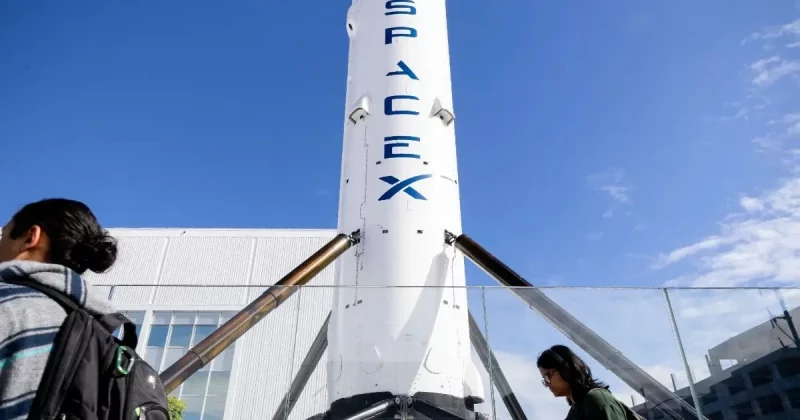
Passive funds may buy 19% of SpaceX shares post-IPO, creating billions in forced demand
New Nasdaq fast-entry rules and index inclusion mechanics could turn SpaceX's IPO into the largest forced-buying event in market history.
When SpaceX goes public, a massive chunk of its shares won’t be bought by enthusiastic retail investors or hedge fund managers placing conviction bets. They’ll be bought by algorithms following rules. Passive S&P 500 funds may need to scoop up roughly 19% of SpaceX’s public float within six months of its IPO, with Russell 1000 and Nasdaq 100 tracking funds likely adding another 5.5% shortly after listing.
That’s nearly a quarter of available shares absorbed by funds that don’t have a choice in the matter. For a company expected to debut at around $1.75 trillion in valuation, the math gets very large, very fast.
The mechanics of forced buying
When a company gets added to a major index like the S&P 500 or Nasdaq 100, every fund that tracks that index has to buy shares to maintain proper weighting. Nasdaq approved new fast-entry rules on March 30, 2026, set to take effect May 1, 2026. These rules dramatically shorten the traditional “seasoning period,” which historically required companies to trade publicly for about six months before becoming eligible for index inclusion.
SpaceX confidentially filed its S-1 on April 1, 2026, with an expected listing on the Nasdaq as early as June 2026. The timing alignment with the new fast-entry rules is, let’s say, convenient.
Why index providers are rewriting the rules
Index providers like Nasdaq, S&P Dow Jones, and FTSE Russell have been modifying their inclusion timelines and float requirements specifically to accommodate massive IPOs. A $1.75 trillion company sitting outside major indices creates a tracking problem. If SpaceX represents a meaningful slice of the US equity market but isn’t in the S&P 500 or Nasdaq 100, those indices stop accurately reflecting what the market actually looks like.
The news moving money, markets, and the world—before your day starts.
Daily. Free. Join 34,000+ readers across crypto, finance, and policy.
Fast index inclusion essentially provides a liquidity mechanism for early investors and insiders. When passive funds are forced to buy billions of dollars worth of shares on a compressed timeline, that creates reliable demand. SpaceX’s IPO reportedly features a phased insider lock-up structure that allows gradual share sales linked to earnings milestones. Pair that with billions in guaranteed passive demand, and you have a carefully orchestrated exit ramp for early stakeholders.
What this means for investors
Analysts estimate that Nasdaq 100 inclusion alone could trigger billions in purchases concentrated into a single day or a very short window.
This IPO doesn’t just matter for people planning to buy SpaceX stock. It matters for anyone holding a passive index fund. When a single stock enters an index at a massive weighting, it slightly dilutes every other holding in that index. Fund managers tracking the Nasdaq 100 will need to sell small amounts of their other 99 positions to make room for the new entrant.
Traders looking to position around these dynamics should watch two dates closely: the IPO itself, expected around June 2026, and the subsequent index inclusion announcements from Nasdaq and S&P Dow Jones. The gap between those events represents the window where price discovery is most uncertain, and where the forced-buying thesis either plays out or doesn’t.