
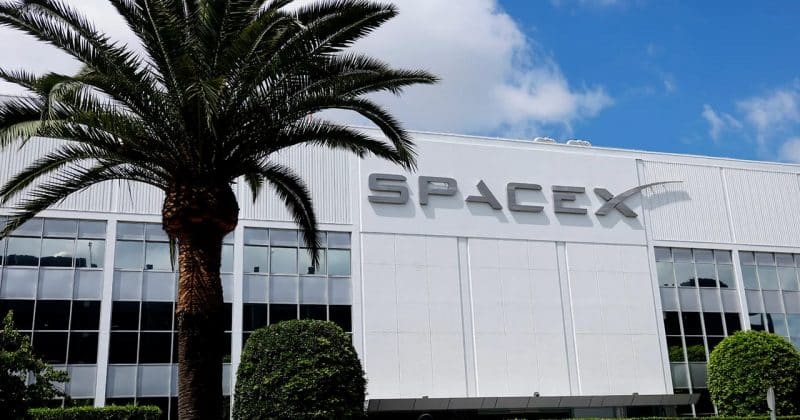
SpaceX joins the Nasdaq-100 on July 7, triggering billions in passive fund buying
The aerospace giant's index inclusion could drive over $22 billion in demand from funds that track the Nasdaq-100
SpaceX is being added to the Nasdaq-100 index before the stock market opens on July 7. Less than a month after going public, Elon Musk’s rocket and satellite company is about to become a fixture in one of the most widely tracked indices in global finance.
The inclusion will force every ETF and mutual fund benchmarked to the Nasdaq-100 to buy shares of $SPCX, whether their managers want to or not. That’s how passive investing works: if a stock is in the index, the fund has to own it. And when the company in question has a market cap north of $2 trillion, the buying pressure is enormous.
From IPO to index in record time
SpaceX completed its IPO on Nasdaq on June 12 under the ticker $SPCX, pricing shares at $135 each. The offering raised approximately $85.7 billion, including a greenshoe option, making it the largest IPO in history by a wide margin.
On its first day of trading, shares closed around $161. That pushed SpaceX’s market capitalization beyond $2 trillion, immediately placing it among the largest publicly traded companies on the planet.
Under normal circumstances, a newly listed company would need to wait longer before joining a major index. But Nasdaq changed its rules effective May 1, 2026. The updated policy allows newly listed companies that rank within the top 40 by market capitalization to enter the Nasdaq-100 after just 15 trading days.
The passive investing tidal wave
When a stock enters the Nasdaq-100, every index fund, ETF, and institutional portfolio that tracks the benchmark must purchase shares in proportion to the company’s weighting. Estimates suggest SpaceX’s addition could trigger an influx of $22 billion or more in demand from index-tracking funds alone.
SpaceX already has some exposure through total-market ETFs like VTI and ITOT, which track broader indices such as CRSP and S&P total market benchmarks. But the Nasdaq-100 is a different animal. It’s one of the most popular index benchmarks globally, and the Invesco QQQ ETF alone manages hundreds of billions in assets. Being in the Nasdaq-100 means dramatically more passive capital flowing into the stock.
AI, tech, and the markets they move—in one daily briefing.
Daily. Free. Join 34,000+ readers across crypto, finance, and policy.
SpaceX is not yet eligible for the S&P 500, which has stricter inclusion requirements.
Why SpaceX matters beyond the ticker
SpaceX isn’t a typical tech company riding a narrative. It has two distinct, massive businesses.
The first is its launch operation, built around reusable rockets that have fundamentally changed the economics of getting things into orbit. The second is Starlink, its satellite internet constellation, which has grown into a global connectivity platform with millions of subscribers. That business alone was reportedly valued in the hundreds of billions during SpaceX’s pre-IPO private rounds.
The company, founded and led by Elon Musk, employs around 22,000 people. The $85.7 billion raise gives SpaceX a substantial war chest to fund its ambitious projects, including the Starship program aimed at Mars missions and deep space exploration.
What this means for investors
The immediate impact is straightforward. If you own any fund that tracks the Nasdaq-100, you’re about to become a SpaceX shareholder whether you chose to be or not. That includes the enormously popular QQQ ETF and its many equivalents.
The stock has already risen from its $135 IPO price to roughly $161 on day one. The $22 billion-plus in estimated passive fund buying creates a near-term demand catalyst, though history shows that stocks added to major indices often see a run-up leading into the effective date, followed by a cooling period once the mechanical buying is complete.
When a $2 trillion company enters the Nasdaq-100, something else gets pushed out. The rebalancing will alter the weightings of every other constituent, subtly changing the risk profile of one of the world’s most widely held indices.