
Spain’s World Cup win over Austria sends fan token trading into overdrive

Spain’s World Cup win over Austria sends fan token trading into overdrive

The 1-0 knockout stage victory highlights how deeply crypto has embedded itself into the 2026 FIFA World Cup, from Kraken's historic sponsorship to surging fan token volumes.

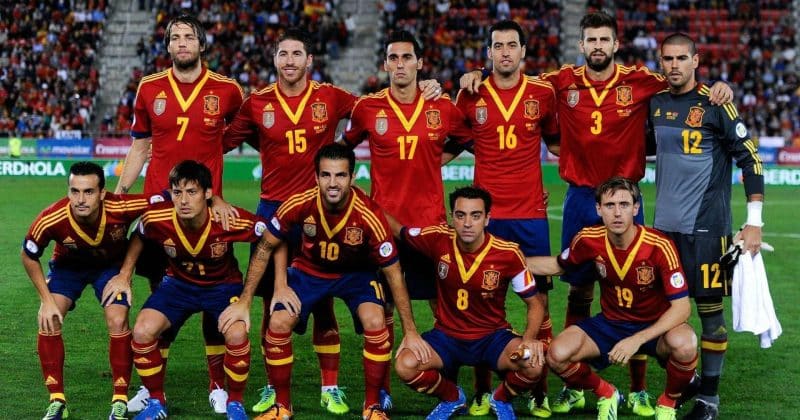
Spain’s 1-0 victory over Austria in the Round of 32 at SoFi Stadium on July 2 extended the team’s unbeaten run to 33 matches. But for the crypto world, the scoreline was almost secondary to what happened on-chain.

Trading activity in Spain’s fan token, $SPAIN, spiked in the hours surrounding the match. Mikel Oyarzabal’s lone goal didn’t just send Spain through to face the winner of Portugal vs. Croatia. It also served as a live stress test for a growing thesis: that digital assets are no longer peripheral to global sports, but structurally woven into them.

Kraken, Chainlink, and crypto’s biggest stage

The 2026 FIFA World Cup is the first edition to feature an official crypto exchange sponsor. Kraken secured that distinction in June 2026, making it the first exchange to ink a deal with FIFA at the tournament level.

Kraken isn’t the only crypto-native entity with a role in the tournament. Chainlink has partnered with ADI PredictStreet to provide oracle infrastructure powering FIFA’s official prediction market platform. In English: Chainlink’s technology feeds real-world match data onto the blockchain so that prediction markets can settle bets and outcomes without relying on a single centralized authority to report the score.

Advertisement

Prediction markets have historically struggled with the “who decides what actually happened” problem. Having Chainlink oracles handle data verification for a FIFA-sanctioned product is a legitimacy milestone for decentralized infrastructure.

Fan tokens are having their tournament moment

Spain launched its official fan token, $SPAIN, on the Socios.com platform on June 16, 2026, just before the tournament kicked off. The token gives holders access to fan voting, exclusive rewards, and the ability to trade based on sentiment and performance.

Spain’s $SPAIN token saw increased trading volume tied to the Austria result. National team tokens like $ARG and $POR have experienced volume surges that correlate tightly with match outcomes. Win, and the token pumps on euphoria. Lose, and holders discover that relegation applies to their portfolio too.

The 2026 tournament features 48 teams for the first time, up from 32 in previous editions. More teams means more matches, more drama, and critically for token platforms, more trading catalysts spread across a longer tournament window.

Football dominates crypto sponsorship spending

Football now accounts for 43% of all crypto and digital asset sports sponsorship deals, with volumes increasing sharply year-over-year. Over 5 billion people are estimated to have some level of interest in football globally.

What this means for investors

Kraken’s FIFA sponsorship is a brand-awareness play that could meaningfully move user acquisition numbers, particularly in markets like the US, Mexico, and Canada where the tournament is being hosted.

Chainlink’s oracle role in FIFA’s prediction markets validates a core DeFi use case on a mainstream stage. Investors holding LINK should watch whether this partnership extends beyond the World Cup into other FIFA competitions or sporting events.

Fan token trading volumes are worth monitoring not as investment opportunities themselves, but as a gauge of mainstream crypto engagement. If $SPAIN and similar tokens sustain elevated volumes deep into the knockout rounds, it suggests that casual sports fans are becoming comfortable with crypto wallets and token trading.

Fan tokens have historically experienced sharp declines after major tournaments end. The 2022 World Cup saw a similar pattern: tokens surged during group stages and cratered within weeks of the final.

Disclosure: This article was edited by Editorial Team. For more information on how we create and review content, see our Editorial Policy.

Spain’s World Cup win over Austria sends fan token trading into overdrive

Spain’s World Cup win over Austria sends fan token trading into overdrive

The 1-0 knockout stage victory highlights how deeply crypto has embedded itself into the 2026 FIFA World Cup, from Kraken's historic sponsorship to surging fan token volumes.

Spain’s 1-0 victory over Austria in the Round of 32 at SoFi Stadium on July 2 extended the team’s unbeaten run to 33 matches. But for the crypto world, the scoreline was almost secondary to what happened on-chain.

Trading activity in Spain’s fan token, $SPAIN, spiked in the hours surrounding the match. Mikel Oyarzabal’s lone goal didn’t just send Spain through to face the winner of Portugal vs. Croatia. It also served as a live stress test for a growing thesis: that digital assets are no longer peripheral to global sports, but structurally woven into them.

Kraken, Chainlink, and crypto’s biggest stage

The 2026 FIFA World Cup is the first edition to feature an official crypto exchange sponsor. Kraken secured that distinction in June 2026, making it the first exchange to ink a deal with FIFA at the tournament level.

Kraken isn’t the only crypto-native entity with a role in the tournament. Chainlink has partnered with ADI PredictStreet to provide oracle infrastructure powering FIFA’s official prediction market platform. In English: Chainlink’s technology feeds real-world match data onto the blockchain so that prediction markets can settle bets and outcomes without relying on a single centralized authority to report the score.

Advertisement

Prediction markets have historically struggled with the “who decides what actually happened” problem. Having Chainlink oracles handle data verification for a FIFA-sanctioned product is a legitimacy milestone for decentralized infrastructure.

Fan tokens are having their tournament moment

Spain launched its official fan token, $SPAIN, on the Socios.com platform on June 16, 2026, just before the tournament kicked off. The token gives holders access to fan voting, exclusive rewards, and the ability to trade based on sentiment and performance.

Spain’s $SPAIN token saw increased trading volume tied to the Austria result. National team tokens like $ARG and $POR have experienced volume surges that correlate tightly with match outcomes. Win, and the token pumps on euphoria. Lose, and holders discover that relegation applies to their portfolio too.

The 2026 tournament features 48 teams for the first time, up from 32 in previous editions. More teams means more matches, more drama, and critically for token platforms, more trading catalysts spread across a longer tournament window.

Football dominates crypto sponsorship spending

Football now accounts for 43% of all crypto and digital asset sports sponsorship deals, with volumes increasing sharply year-over-year. Over 5 billion people are estimated to have some level of interest in football globally.

What this means for investors

Kraken’s FIFA sponsorship is a brand-awareness play that could meaningfully move user acquisition numbers, particularly in markets like the US, Mexico, and Canada where the tournament is being hosted.

Chainlink’s oracle role in FIFA’s prediction markets validates a core DeFi use case on a mainstream stage. Investors holding LINK should watch whether this partnership extends beyond the World Cup into other FIFA competitions or sporting events.

Fan token trading volumes are worth monitoring not as investment opportunities themselves, but as a gauge of mainstream crypto engagement. If $SPAIN and similar tokens sustain elevated volumes deep into the knockout rounds, it suggests that casual sports fans are becoming comfortable with crypto wallets and token trading.

Fan tokens have historically experienced sharp declines after major tournaments end. The 2022 World Cup saw a similar pattern: tokens surged during group stages and cratered within weeks of the final.

Disclosure: This article was edited by Editorial Team. For more information on how we create and review content, see our Editorial Policy.