
Regulators question Standard Chartered after CEO calls cut roles ‘lower-value human capital’
Hong Kong and Singapore authorities want answers after Bill Winters outlined plans to replace over 7,000 jobs with AI by 2030.
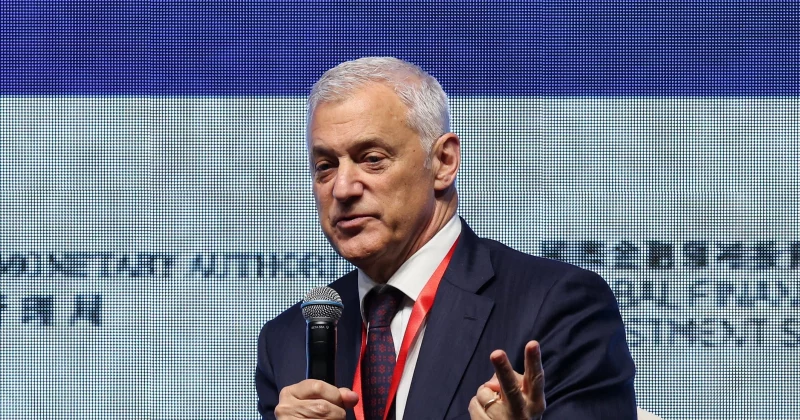
There are things you can say in a boardroom that you probably shouldn’t say into a microphone. Standard Chartered CEO Bill Winters learned that the hard way after an investor briefing where he described certain bank positions as “lower-value human capital,” prompting regulators in two of the bank’s most important markets to pick up the phone.
During a May 19 investor presentation, Winters laid out a plan to eliminate more than 7,000 jobs, roughly 15% of the bank’s back-office and support workforce, by 2030. The cuts target corporate functions including risk, compliance, and human resources, with AI and automation stepping in to fill the gaps. Standard Chartered employs around 81,000 people globally, including contractors.
Regulators want receipts
The Hong Kong Monetary Authority and the Monetary Authority of Singapore both reached out to Standard Chartered seeking clarification on what these cuts mean for local employment. Their core question: is AI actually driving these decisions, or is the technology being used as convenient cover for old-fashioned cost-cutting?
What’s different here is that Winters explicitly tied the reductions to artificial intelligence, making Standard Chartered one of the first major global banks to publicly frame workforce strategy as an AI story rather than an efficiency story.
Winters appeared to recognize the optics problem fairly quickly. Internal communications sent to staff after the briefing softened the language considerably, reframing the plan as a “transition toward higher-value roles” rather than mass layoffs. The bank also emphasized that affected employees would receive advance notice and reskilling opportunities.
The crypto and markets news you actually need—every morning.
Daily. Free. Join 34,000+ readers across crypto, finance, and policy.
The AI-jobs conversation gets real
By directly connecting AI adoption to a specific number of job cuts over a specific timeline, Winters turned a vague industry trend into a concrete corporate strategy. The four-year window ending in 2030 gives the plan a structured timeline that investors can model and regulators can scrutinize.
The roles being targeted tell their own story. Risk, compliance, and HR are functions that rely heavily on pattern recognition, document processing, and rule-based decision-making. These are precisely the tasks where large language models and automation tools have shown the most immediate capability.
What this means for investors
The math is straightforward. Eliminating 7,000 positions from an 81,000-person workforce represents a significant reduction in operating expenses, particularly in functions that don’t directly generate revenue.
Regulatory scrutiny from the HKMA and MAS isn’t just about optics. These authorities have the power to impose conditions on how banks operate within their jurisdictions. If regulators conclude that Standard Chartered is moving too aggressively, or that AI systems aren’t ready to handle risk and compliance functions at the level those roles demand, the bank could face operational constraints that offset any cost savings.