
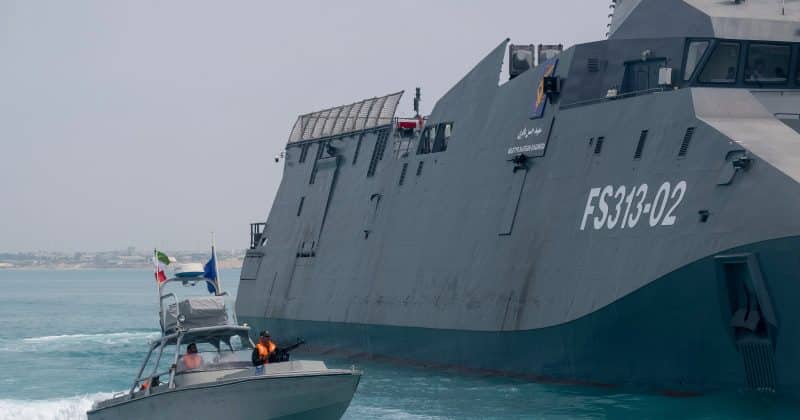
Ship struck in Strait of Hormuz as naval authorities raise threat level, Iran demands Bitcoin for transit fees
An Iranian drone hit a container ship in the world's most important oil chokepoint, and Tehran is now charging vessels up to $2 million in Bitcoin to pass through
A drone struck the Singapore-flagged container ship M/V Ever Lovely in the Strait of Hormuz on June 25, causing minor damage to the vessel’s bridge and zero injuries. What happened next is where things get interesting for crypto markets: Iran is now demanding Bitcoin payments from commercial ships that want to transit one of the most critical waterways on the planet.
The attack, attributed to Iran’s Islamic Revolutionary Guard Corps (IRGC), hit the 8,508 TEU vessel roughly 7.5 nautical miles southeast of Dahit, Oman. The Ever Lovely, owned by Taiwan’s Evergreen Marine, continued its journey.
US strikes back, threat level climbs
US Central Command responded the following day with airstrikes targeting four Iranian military sites, including missile and drone storage facilities and coastal radar installations along the Strait and on Qeshm Island. US officials described the operation as a “powerful response” but emphasized its limited scope.
The United Kingdom Maritime Trade Operations (UKMTO) and the International Maritime Organization (IMO) both issued alerts. The IMO temporarily suspended planned evacuations for vessels stranded in the area since Iran effectively blocked shipping routes starting February 28.
The Strait of Hormuz handles roughly 20% of global oil and LNG trade. A fragile ceasefire had been established in mid-June, designed to reopen lanes disrupted by months of Iranian hostilities. The drone strike on the Ever Lovely tested that ceasefire’s durability.
The news moving money, markets, and the world—before your day starts.
Daily. Free. Join 34,000+ readers across crypto, finance, and policy.
Bitcoin as a toll booth currency
Since mid-March, Iran has required Bitcoin payments for transit tolls through the Strait. The fees are steep: up to $2 million per vessel, or alternatively $1 per barrel of oil being transported.
Iran has also instituted new insurance requirements payable in digital assets. Reports point to an emerging framework called “Hormuz Safe,” which aims to facilitate Bitcoin-settled maritime insurance for vessels transiting the Strait.
What this means for investors
If hundreds of commercial vessels are paying transit fees in Bitcoin, that creates consistent, non-speculative demand for the asset. Thousands of vessels transit the Strait of Hormuz annually. At fees reaching $2 million per vessel in Bitcoin, the aggregate demand could become material.
The risks cut both ways. If the international community successfully pressures Iran to abandon this payment structure, or if the ceasefire holds and transit normalizes without crypto tolls, that demand evaporates. There is also regulatory risk, as Western governments watching a sanctioned nation build Bitcoin-denominated trade infrastructure are unlikely to respond with enthusiasm.