
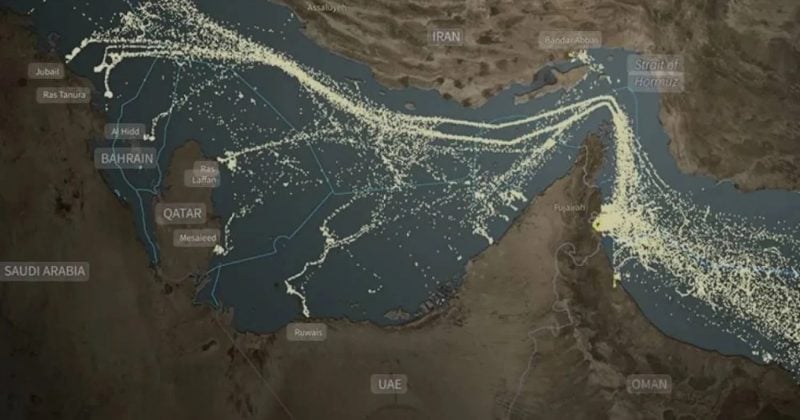
Strait of Hormuz closure heightens US-Iran tensions amid energy crisis

https://english.aawsat.com/business/5155983-us-involvement-iran-israel-conflict-raises-fears-strait-hormuz-closure

Strait of Hormuz closure heightens US-Iran tensions amid energy crisis

US declaration of war on Iran

The geopolitical tensions involving the United States, Iran, and their allies have escalated following comments from former State Department official Aaron David Miller. Miller described the situation as transitioning from “Operation Epic Fury” to “Operation Epic Disaster,” reflecting the challenges faced by the Trump administration amidst the ongoing conflict. The Strait of Hormuz, a critical chokepoint for global oil and LNG supply, remains closed to most commercial shipping, intensifying the global energy crisis. Markets appear to interpret these developments as consistent with a potential increase in military actions, although no new concrete actions have been reported.

In prediction markets, the likelihood of the U.S. officially declaring war on Iran by the end of 2026 is currently priced at 5.5% for a YES outcome. This represents a slight decrease from previous levels. Additionally, the probability of the U.S. striking eight countries in 2026 remains stable at 35.2%. Observers note that the situation could change rapidly depending on developments in the region and political maneuvers by key actors, including President Trump and congressional leaders.

Advertisement

The ongoing conflict has already resulted in significant military engagements, with U.S. forces involved in various operations across the Middle East. The situation remains fluid, with potential for further escalation or diplomatic resolution depending on the actions of the involved parties.

Key Takeaways

  • Markets suggest that the commentary on the U.S.-Iran conflict is consistent with increased geopolitical tensions.
  • The probability of the U.S. declaring war on Iran by year-end is currently priced at 5.5% YES.
  • The likelihood of the U.S. engaging in military action across eight countries in 2026 remains at 35.2% YES.

What to Watch

Observers should monitor any official statements or actions by the U.S. government, particularly regarding military engagement in the Middle East. Developments in the Strait of Hormuz and regional military activities could significantly influence market perceptions. Additionally, diplomatic efforts or changes in congressional stance toward military action against Iran could alter the probabilities of these outcomes. Watch for indications that may be consistent with either escalation or de-escalation scenarios.

Get live prediction-market analysis, powered by Vera. Sign up for Vera.

Disclosure: This article was edited by Estefano Gomez. For more information on how we create and review content, see our Editorial Policy.

Strait of Hormuz closure heightens US-Iran tensions amid energy crisis

Strait of Hormuz closure heightens US-Iran tensions amid energy crisis

US declaration of war on Iran

https://english.aawsat.com/business/5155983-us-involvement-iran-israel-conflict-raises-fears-strait-hormuz-closure

The geopolitical tensions involving the United States, Iran, and their allies have escalated following comments from former State Department official Aaron David Miller. Miller described the situation as transitioning from “Operation Epic Fury” to “Operation Epic Disaster,” reflecting the challenges faced by the Trump administration amidst the ongoing conflict. The Strait of Hormuz, a critical chokepoint for global oil and LNG supply, remains closed to most commercial shipping, intensifying the global energy crisis. Markets appear to interpret these developments as consistent with a potential increase in military actions, although no new concrete actions have been reported.

In prediction markets, the likelihood of the U.S. officially declaring war on Iran by the end of 2026 is currently priced at 5.5% for a YES outcome. This represents a slight decrease from previous levels. Additionally, the probability of the U.S. striking eight countries in 2026 remains stable at 35.2%. Observers note that the situation could change rapidly depending on developments in the region and political maneuvers by key actors, including President Trump and congressional leaders.

Advertisement

The ongoing conflict has already resulted in significant military engagements, with U.S. forces involved in various operations across the Middle East. The situation remains fluid, with potential for further escalation or diplomatic resolution depending on the actions of the involved parties.

Key Takeaways

  • Markets suggest that the commentary on the U.S.-Iran conflict is consistent with increased geopolitical tensions.
  • The probability of the U.S. declaring war on Iran by year-end is currently priced at 5.5% YES.
  • The likelihood of the U.S. engaging in military action across eight countries in 2026 remains at 35.2% YES.

What to Watch

Observers should monitor any official statements or actions by the U.S. government, particularly regarding military engagement in the Middle East. Developments in the Strait of Hormuz and regional military activities could significantly influence market perceptions. Additionally, diplomatic efforts or changes in congressional stance toward military action against Iran could alter the probabilities of these outcomes. Watch for indications that may be consistent with either escalation or de-escalation scenarios.

Get live prediction-market analysis, powered by Vera. Sign up for Vera.

Disclosure: This article was edited by Estefano Gomez. For more information on how we create and review content, see our Editorial Policy.