
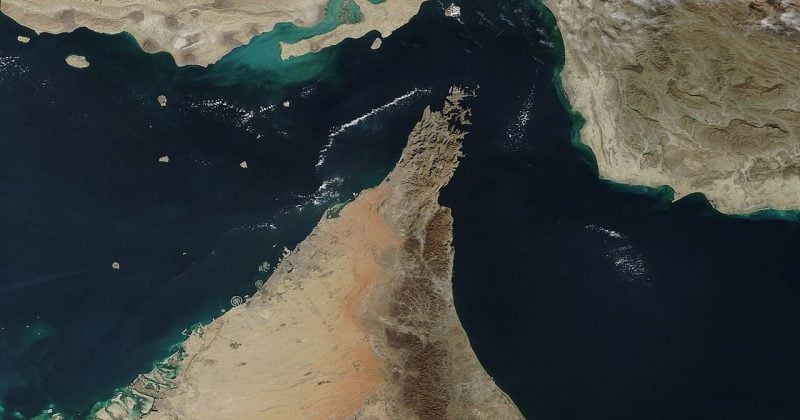
Traffic through Strait of Hormuz declines sharply after US-Iran strikes

Traffic through Strait of Hormuz declines sharply after US-Iran strikes

A 70% drop in vessel transits in four days is rattling oil markets and sending risk-off tremors through crypto

One of the world’s most critical energy chokepoints is, for all practical purposes, barely functioning right now. Vessel transits through the Strait of Hormuz fell from 74 ships on June 24 to just 22 ships by June 28, 2026, according to maritime analytics firm Kpler. That is a 70% collapse in four days.

The Strait of Hormuz handles roughly 20% of global oil and liquefied natural gas trade, with pre-conflict daily traffic averaging around 130 vessels.

Advertisement

What triggered the collapse

The deterioration traces back to a cascade of military escalations between the US and Iran. US-Israeli strikes began as far back as February 28, 2026, but the situation reached a sharper inflection point in late June when Iran’s Islamic Revolutionary Guard Corps attacked commercial vessels, including the Evergreen ship Ever Lovely.

Brent crude prices spiked nearly 6% in a single trading session as the disruption crystallized in market data.

The US and Iran signed a 14-point Memorandum of Understanding on June 17, 2026, specifically aimed at restoring safe maritime passage through the strait. It has not held. Repeated IRGC incidents in the days following the agreement effectively undermined whatever confidence operators had placed in the deal.

What investors should watch

The immediate variable is whether vessel traffic through the strait recovers or continues to deteriorate. A rebound toward the pre-conflict average of around 130 daily transits would signal that operators believe the risk environment is stabilizing. A further decline below the June 28 reading of 22 ships would indicate the opposite and likely push Brent crude higher still.

The June 17 Memorandum of Understanding is now the diplomatic baseline to watch. If a revised or reinforced agreement emerges with verifiable compliance mechanisms, markets will treat it as a positive signal. If the IRGC continues operations that violate the accord, the agreement becomes noise rather than news.

Disclosure: This article was edited by Editorial Team. For more information on how we create and review content, see our Editorial Policy.

Traffic through Strait of Hormuz declines sharply after US-Iran strikes

Traffic through Strait of Hormuz declines sharply after US-Iran strikes

A 70% drop in vessel transits in four days is rattling oil markets and sending risk-off tremors through crypto

One of the world’s most critical energy chokepoints is, for all practical purposes, barely functioning right now. Vessel transits through the Strait of Hormuz fell from 74 ships on June 24 to just 22 ships by June 28, 2026, according to maritime analytics firm Kpler. That is a 70% collapse in four days.

The Strait of Hormuz handles roughly 20% of global oil and liquefied natural gas trade, with pre-conflict daily traffic averaging around 130 vessels.

Advertisement

What triggered the collapse

The deterioration traces back to a cascade of military escalations between the US and Iran. US-Israeli strikes began as far back as February 28, 2026, but the situation reached a sharper inflection point in late June when Iran’s Islamic Revolutionary Guard Corps attacked commercial vessels, including the Evergreen ship Ever Lovely.

Brent crude prices spiked nearly 6% in a single trading session as the disruption crystallized in market data.

The US and Iran signed a 14-point Memorandum of Understanding on June 17, 2026, specifically aimed at restoring safe maritime passage through the strait. It has not held. Repeated IRGC incidents in the days following the agreement effectively undermined whatever confidence operators had placed in the deal.

What investors should watch

The immediate variable is whether vessel traffic through the strait recovers or continues to deteriorate. A rebound toward the pre-conflict average of around 130 daily transits would signal that operators believe the risk environment is stabilizing. A further decline below the June 28 reading of 22 ships would indicate the opposite and likely push Brent crude higher still.

The June 17 Memorandum of Understanding is now the diplomatic baseline to watch. If a revised or reinforced agreement emerges with verifiable compliance mechanisms, markets will treat it as a positive signal. If the IRGC continues operations that violate the accord, the agreement becomes noise rather than news.

Disclosure: This article was edited by Editorial Team. For more information on how we create and review content, see our Editorial Policy.