
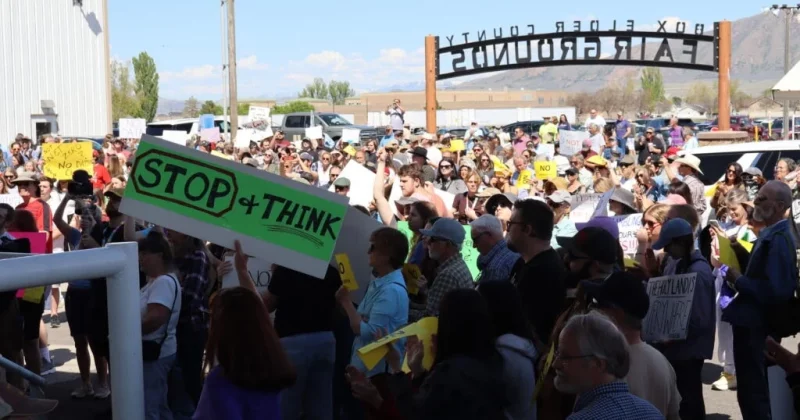
Stratos data center project slashed 50% after massive local protests in Utah
Kevin O'Leary-backed hyperscale campus faces record opposition over water rights, prompting developers to halve what was planned as one of the world's largest data center builds.
A data center project originally designed to span nearly three times the size of Manhattan is getting cut in half before a single shovel hits the ground. The Stratos hyperscale campus in Box Elder County, Utah, backed by Kevin O’Leary’s venture firm, has become a lightning rod for community opposition over water, power, and environmental concerns.
Developers have committed to reducing the project by roughly 50% or more after thousands of residents formally protested the facility’s water rights applications. The first filing alone drew approximately 3,700 to 4,000 protest comments, with many locals paying a $15 fee just to register their objections. A second application attracted around 700 more.
What 40,000 acres of data centers actually looks like
The original Stratos plan called for 40,000 acres of AI-focused data center infrastructure spread across multiple sites in Utah. To put that in perspective, Manhattan is about 14,600 acres.
The facility’s projected power demand at full build-out would reach up to 9 gigawatts. That figure is roughly twice Utah’s current peak electricity usage for the entire state.
Water consumption projections were equally staggering. The facility would require an estimated 16.6 billion gallons of water annually just for gas generation at full scale. Residents zeroed in on a proposed transfer of 1,900 acre-feet of water from a local ranch to the data center, viewing it as a direct threat to the already vulnerable Great Salt Lake.
O’Leary, MIDA, and the regulatory workaround
The project is backed by O’Leary Ventures, with partners including Bitzero Blockchain Inc. and West GenCo. First-phase costs alone are estimated above $4 billion, making this one of the most capital-intensive data center builds currently proposed in the US.
AI, tech, and the markets they move—in one daily briefing.
Daily. Free. Join 34,000+ readers across crypto, finance, and policy.
Despite the intense backlash, the project received approval in May 2026 through the Military Installation Development Authority, commonly known as MIDA. That partnership is significant because MIDA approval allows developers to bypass certain local zoning requirements.
The Utah Legislature has responded to the broader controversy by passing measures to study the environmental impact of data center developments statewide.
Water rights applications were withdrawn twice after record protest volumes.
What this means for crypto and AI infrastructure investors
The involvement of Bitzero Blockchain Inc. as a project partner directly ties this to the crypto infrastructure space. When a project like Stratos gets cut in half because of energy and water concerns, it sends a signal to every operator scouting sites in resource-constrained regions.
For investors evaluating data center and mining plays, the Stratos situation highlights a risk that doesn’t show up on most financial models: community opposition as a material project risk. A $4 billion first phase that gets delayed or downsized by protest isn’t just an inconvenience. It reprices the entire investment thesis.
The MIDA approval pathway, which lets developers sidestep local zoning, may provide a legal shortcut. But legislators are already responding with environmental study requirements.