
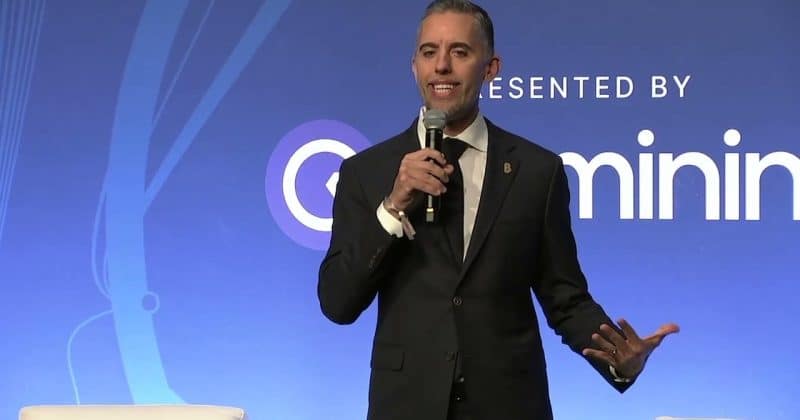
Strive CEO Matt Cole commits to aggressive Bitcoin acquisition strategy
The company now holds approximately 19,000 BTC worth nearly $1.2 billion as it pushes to transition from fiat to a Bitcoin-based corporate model.
Strive Inc. is not tiptoeing into Bitcoin. Under CEO Matt Cole, the company has been steadily converting its corporate treasury into a Bitcoin vault, amassing roughly 19,000 BTC with a valuation approaching $1.2 billion.
From asset manager to Bitcoin treasury company
Cole took over as CEO in April 2023, and the transformation since then has been dramatic. Strive, which trades under the ticker $ASST, has pivoted from traditional asset management into what is essentially a public Bitcoin treasury company.
In April 2026 alone, Strive purchased 789 BTC for approximately $61 million, paying an average price of roughly $77,890 per coin. That single purchase expanded the company’s holdings to 14,557 BTC at the time.
Strive has maintained a debt-free balance sheet while doing all of this. Many companies loading up on Bitcoin have done so through convertible notes and other debt instruments, creating leverage that can turn ugly if prices drop. Strive has kept significant cash reserves on hand, allowing it to buy Bitcoin outright.
The Semler Scientific deal and sector consolidation
Perhaps the most consequential move in Strive’s Bitcoin playbook was its all-stock acquisition of Semler Scientific, valued at approximately $1.3 billion. The deal marked the first major consolidation within the Bitcoin treasury company sector. At the time of the acquisition, the combined entity held over 10,900 BTC.
The news moving money, markets, and the world—before your day starts.
Daily. Free. Join 34,000+ readers across crypto, finance, and policy.
Strive also launched a perpetual preferred equity instrument called SATA, designed to trade in a range of $99 to $101, with a variable dividend rate that has been raised to 13%. As of early June 2026, Cole has indicated that Strive’s reserves are robust enough to support those SATA dividends for several years without needing to sell any Bitcoin.
The bigger picture: Bitcoin as corporate standard
MicroStrategy, now rebranded as Strategy, was the company that proved this thesis could work at scale for a public company. Michael Saylor first started buying Bitcoin in 2020. What was once considered a radical move by a single company has become a recognized corporate strategy with its own sector, its own financial instruments, and now, its own M&A activity.
Cole has also been vocal about the potential for digital credit products, suggesting they could eventually outsize the impact of traditional spot ETFs.
What this means for investors
The SATA instrument at 13% offers yield in an environment where most Bitcoin investment vehicles provide none, and the perpetual structure means there’s no maturity date forcing redemption at an inopportune time.
Strive’s fortunes are now almost entirely tied to Bitcoin’s price. The debt-free balance sheet provides a buffer, but it doesn’t eliminate the fundamental concentration risk of holding nearly $1.2 billion in a single volatile asset.