
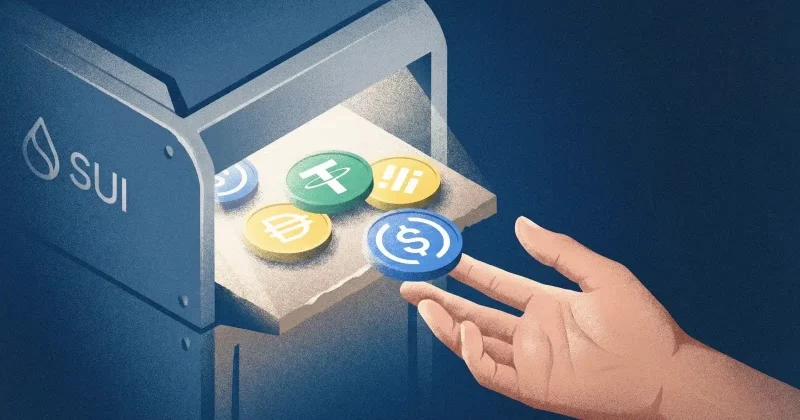
SUI enables gasless stablecoin transfers for seamless payments
Sui becomes the first Layer 1 blockchain to eliminate gas fees for stablecoin transfers at the protocol level, supporting seven tokens at launch.
Sending stablecoins on most blockchains requires a slightly absurd prerequisite: you need to already own the chain’s native token just to pay the fee for moving your dollars. Sui just eliminated that step entirely.
The Sui Network launched protocol-level gasless stablecoin transfers on its mainnet on May 20, setting fees to exactly $0.00 for eligible transfers. No SUI tokens required. No secondary assets. No workarounds. The sender’s wallet doesn’t even need a SUI balance to initiate the transaction.
How it actually works
Sui’s approach isn’t a temporary subsidy or some relayer trick where someone else pays your gas behind the scenes. The feature operates at the protocol level through a new system called Address Balances, a canonical balance architecture for fungible assets that uses specific Move function calls to process transfers without gas.
Seven stablecoins are supported at launch: USDC, USDsui, suiUSDe, USDY, FDUSD, AUSD, and USDB. The minimum transfer size for gasless transactions is 0.01 of the token, so you can’t spam the network with dust-sized transfers.
The network absorbs transaction costs while prioritizing fee-paying transactions. That’s a critical design choice. Regular SUI transactions that do pay gas still get priority, which means the gasless feature shouldn’t degrade network performance for everyone else.
The news moving money, markets, and the world—before your day starts.
Daily. Free. Join 34,000+ readers across crypto, finance, and policy.
Fireblocks and institutional backing
Fireblocks, the institutional-grade custody and infrastructure provider, partnered with Sui to support the feature from day one. For institutions that process high volumes of stablecoin payments, the elimination of gas token management is a meaningful operational simplification. Treasury teams at companies using stablecoins for cross-border payments no longer need to maintain SUI balances across wallets just to keep the plumbing running.
The market noticed. SUI’s token price rose approximately 8% within 24 hours of the announcement.
Why this matters beyond Sui
The gas fee problem has been one of crypto’s most persistent UX failures. Every blockchain that uses stablecoins forces users into a chicken-and-egg situation: you need the native token to move the stablecoin, but you came here for the stablecoin, not the native token.
Other chains have attempted partial solutions. Some use meta-transactions where a relayer pays gas on your behalf. Others offer gas sponsorship programs that are essentially subsidies with expiration dates. Sui is the first Layer 1 to solve this at the protocol level, meaning it doesn’t depend on third-party relayers, temporary funding pools, or goodwill from validators.
For investors watching the SUI token, gasless transfers mean those specific transactions don’t generate fee revenue for the network. The risk to watch is network spam. A 0.01 token minimum threshold is low, and zero-fee systems historically attract abuse. If Sui’s priority system for fee-paying transactions holds up under load, the design works. If gasless transfers start crowding out paid transactions during peak demand, validators and users won’t be thrilled.