
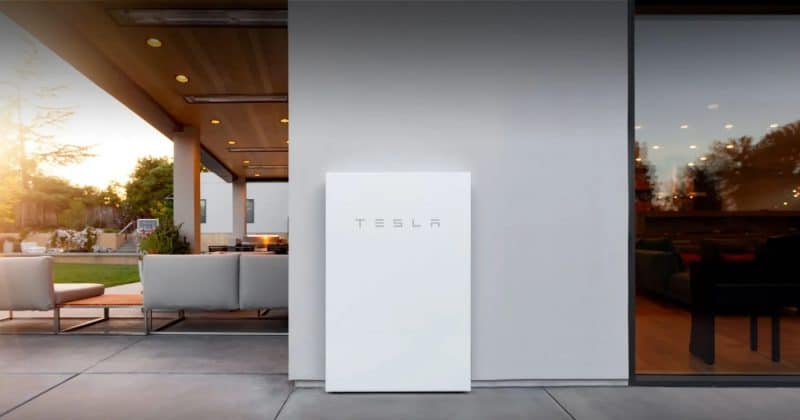
Sunrun stock jumps 31% on partnership with Tesla for power supply
The two companies are teaming up with Renew Home to build what they're calling the largest virtual power plant in the US, targeting AI-hungry data centers.
Sunrun shares surged over 30% on June 24 after the residential solar company announced a partnership with Tesla and Renew Home to supply power for data centers and utilities. The three companies plan to deliver over 16 GW of flexible, dispatchable energy capacity sourced entirely from residential assets.
The virtual power plant play
Sunrun and Tesla are contributing their installed base of home batteries and solar systems. Renew Home brings over 8 million smart thermostats and connected devices to the table. Combined, the three companies say this constitutes the largest distributed or virtual power plant in the United States.
Roughly 300 MW is available immediately in Virginia, with plans to scale that to 500 MW by 2030. In Texas, about 1.7 GW is already accessible. That Texas figure alone represents enough power to meet the peak demand of approximately 17 large data centers.
No new hardware or software is required for the companies buying this power. The entire framework runs on infrastructure that’s already sitting on rooftops and hanging on garage walls across the country.
Why data centers, why now
The initiative builds on earlier collaborative efforts between Sunrun and Tesla, particularly in Texas VPP programs. Those programs have already been paying homeowners for participation. Customers with a Tesla Powerwall, for instance, can receive $400 in annual payments for letting their battery be tapped during peak demand events.
AI, tech, and the markets they move—in one daily briefing.
Daily. Free. Join 34,000+ readers across crypto, finance, and policy.
The companies claim the initiative could be 16 times larger than California’s current VPP programs on a nationwide basis.
What this means for investors
Virginia is home to the largest concentration of data centers in the world, clustered in the Loudoun County corridor. Texas has its own deregulated grid (ERCOT). Both states have electricity demand that continues to climb sharply.
Investors watching this space should pay close attention to two metrics in the coming quarters: actual contracted capacity with named offtakers, and homeowner retention rates in existing VPP programs.