
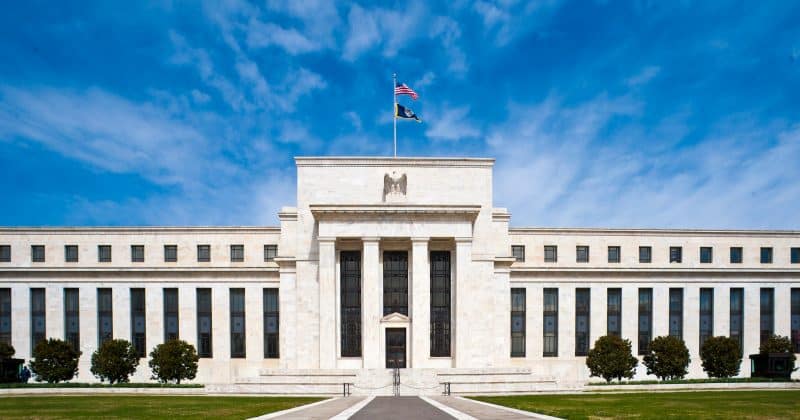
Supreme Court faces instability over Federal Reserve independence, says Feldman
Harvard law professor warns the Fed's political insulation now hinges on a single Supreme Court vote after paired rulings carved out a narrow exception for the central bank
The Federal Reserve’s independence from political interference now depends on the opinion of one Supreme Court justice. That’s the takeaway from Harvard law professor Noah Feldman, who argues that paired Supreme Court rulings have created an inherently unstable arrangement for the central bank’s governance.
The Court issued a sweeping 6-3 decision that stripped for-cause removal protections from most independent federal agencies. But it simultaneously carved out a separate, razor-thin 5-4 exception for the Fed.
Two rulings, one problem
Chief Justice John Roberts authored both opinions, which landed on June 29, 2026. The broader ruling effectively gave the president wider authority to fire leaders of independent federal agencies without needing to show cause. The narrower 5-4 decision acknowledged what Roberts called the Fed’s “unique role” in the economy. It recognized the central bank’s historical insulation from political meddling and denied President Trump’s immediate request to fire Federal Reserve Governor Lisa Cook without due process.
The rulings emerged from Trump v. Cook, a case that went to oral arguments in January 2026. The case directly tested whether a president could remove independent agency leaders at will, and Cook became the focal point of that constitutional question.
So Cook keeps her position. For now. But the math is what matters here. A 5-4 decision means one justice changing their mind, retiring, or being replaced could flip the entire framework. Feldman’s point is straightforward: an institution responsible for steering the world’s largest economy probably shouldn’t have its independence secured by a single vote margin.
The news moving money, markets, and the world—before your day starts.
Daily. Free. Join 34,000+ readers across crypto, finance, and policy.
Why one vote changes everything
The broader 6-3 ruling already established the legal principle that most agency heads can be removed more easily. The Fed’s exception is the outlier, not the rule. A 6-3 ruling has staying power. A 5-4 ruling is an invitation for future challenges. Every future legal dispute about Fed governance will be shaped by the tension between a strong 6-3 principle saying presidents can fire agency leaders and a fragile 5-4 exception saying the Fed is different.
What this means for markets and crypto
For investors, the immediate impact is about uncertainty. Markets price in expectations about monetary policy, and those expectations depend on the Fed operating independently. The ruling could shape the discourse around the independence of central banks globally, influencing traders’ perceptions of economic stability in the U.S. and potentially affecting the broader cryptocurrency market that often tracks macroeconomic indicators closely.
For now, the Fed’s firewall holds. But Feldman’s warning is worth taking seriously: a constitutional protection that survives by a single vote isn’t really a protection. It’s a temporary arrangement waiting for the next vacancy, the next case, or the next president willing to test the boundaries.