
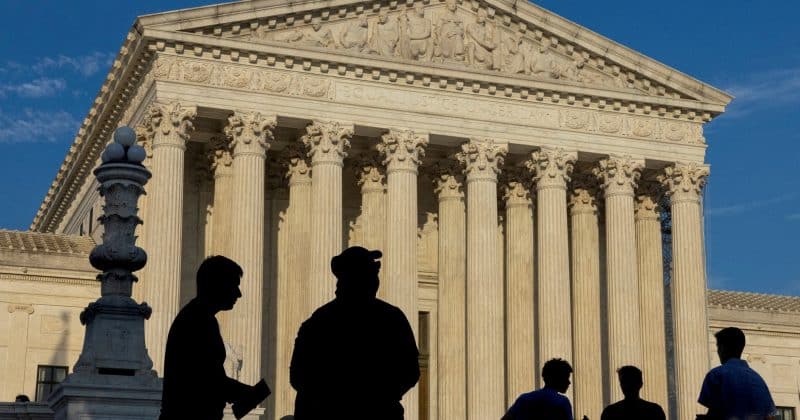
Supreme Court strikes down limits on Trump’s authority to remove FTC members

Supreme Court strikes down limits on Trump’s authority to remove FTC members

A 6-3 ruling overturns a 90-year-old precedent shielding independent agency heads from presidential firing, with sweeping implications for crypto regulation.

The Supreme Court just handed the president a skeleton key to every independent regulatory agency in the federal government. And the crypto industry should be paying very close attention.

In a 6-3 decision issued June 29, the Court ruled in Trump v. Slaughter (No. 25-332) that statutory for-cause removal protections for FTC commissioners violate the Constitution’s separation of powers. Chief Justice John Roberts authored the majority opinion, which explicitly overturned Humphrey’s Executor v. United States, a 1935 precedent that had stood for over nine decades.

What actually happened

The case traces back to March 18, 2025, when President Trump dismissed FTC Commissioner Rebecca Kelly Slaughter without citing the statutory cause that had traditionally been required for such removals. Slaughter challenged the firing, and a lower court ordered her reinstatement.

Advertisement

The Supreme Court stayed that reinstatement on September 22, 2025, in a preliminary 6-3 vote that foreshadowed the eventual outcome. Oral arguments were heard on December 8, 2025, and the final ruling landed this week.

Justices Sonia Sotomayor, Elena Kagan, and Ketanji Brown Jackson dissented, raising alarms about executive overreach and the erosion of checks on presidential power. The majority concluded that the Constitution vests removal authority squarely with the executive branch, and Congress cannot dilute it with for-cause protections.

The ruling impacts roughly two dozen multi-member independent agencies that have historically operated with similar protections. That list includes regulators with direct or indirect oversight of digital assets.

The broader regulatory landscape

The Humphrey’s Executor precedent wasn’t just a legal footnote. It was the foundation for an entire architecture of independent federal governance. Agencies like the Federal Reserve, the Consumer Financial Protection Bureau, and the Nuclear Regulatory Commission all operated under similar removal protections.

The Court’s decision to overturn it represents one of the most significant shifts in executive power in modern American history. The 1935 ruling was decided during the New Deal era as a direct response to President Franklin Roosevelt’s attempt to reshape agencies to suit his policy goals.

What investors should watch

The immediate market impact may be muted, since the ruling was widely anticipated after the Court’s September 2025 stay order. Watch for personnel changes at agencies with crypto oversight responsibilities. New leadership at the SEC or CFTC could signal shifts in enforcement priorities, rulemaking timelines, and the overall tone of crypto regulation.

Disclosure: This article was edited by Editorial Team. For more information on how we create and review content, see our Editorial Policy.

Supreme Court strikes down limits on Trump’s authority to remove FTC members

Supreme Court strikes down limits on Trump’s authority to remove FTC members

A 6-3 ruling overturns a 90-year-old precedent shielding independent agency heads from presidential firing, with sweeping implications for crypto regulation.

The Supreme Court just handed the president a skeleton key to every independent regulatory agency in the federal government. And the crypto industry should be paying very close attention.

In a 6-3 decision issued June 29, the Court ruled in Trump v. Slaughter (No. 25-332) that statutory for-cause removal protections for FTC commissioners violate the Constitution’s separation of powers. Chief Justice John Roberts authored the majority opinion, which explicitly overturned Humphrey’s Executor v. United States, a 1935 precedent that had stood for over nine decades.

What actually happened

The case traces back to March 18, 2025, when President Trump dismissed FTC Commissioner Rebecca Kelly Slaughter without citing the statutory cause that had traditionally been required for such removals. Slaughter challenged the firing, and a lower court ordered her reinstatement.

Advertisement

The Supreme Court stayed that reinstatement on September 22, 2025, in a preliminary 6-3 vote that foreshadowed the eventual outcome. Oral arguments were heard on December 8, 2025, and the final ruling landed this week.

Justices Sonia Sotomayor, Elena Kagan, and Ketanji Brown Jackson dissented, raising alarms about executive overreach and the erosion of checks on presidential power. The majority concluded that the Constitution vests removal authority squarely with the executive branch, and Congress cannot dilute it with for-cause protections.

The ruling impacts roughly two dozen multi-member independent agencies that have historically operated with similar protections. That list includes regulators with direct or indirect oversight of digital assets.

The broader regulatory landscape

The Humphrey’s Executor precedent wasn’t just a legal footnote. It was the foundation for an entire architecture of independent federal governance. Agencies like the Federal Reserve, the Consumer Financial Protection Bureau, and the Nuclear Regulatory Commission all operated under similar removal protections.

The Court’s decision to overturn it represents one of the most significant shifts in executive power in modern American history. The 1935 ruling was decided during the New Deal era as a direct response to President Franklin Roosevelt’s attempt to reshape agencies to suit his policy goals.

What investors should watch

The immediate market impact may be muted, since the ruling was widely anticipated after the Court’s September 2025 stay order. Watch for personnel changes at agencies with crypto oversight responsibilities. New leadership at the SEC or CFTC could signal shifts in enforcement priorities, rulemaking timelines, and the overall tone of crypto regulation.

Disclosure: This article was edited by Editorial Team. For more information on how we create and review content, see our Editorial Policy.