
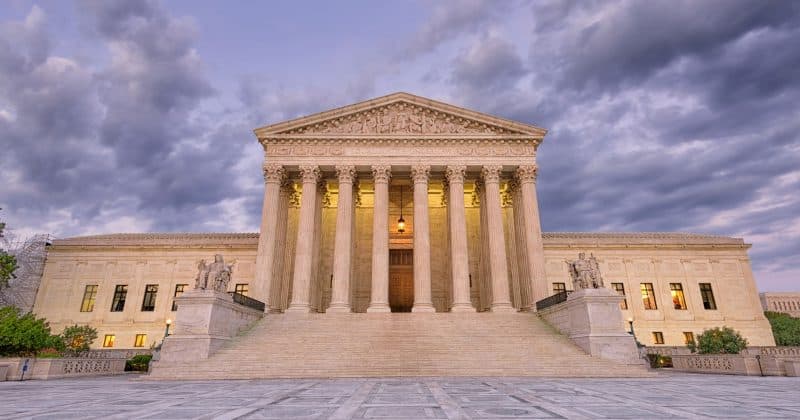
Supreme Court rules 6-3 that Investment Company Act doesn’t allow private lawsuits for contract rescission
The ruling in FS Credit Opportunities v. Saba Capital strips activist investors of a key litigation tool and hands enforcement power squarely to the SEC
The Supreme Court just closed the courthouse door on a legal strategy that activist investors have relied on for years. In a 6-3 decision handed down on June 11, the Court ruled that Section 47(b) of the Investment Company Act of 1940 does not create an implied private right of action, meaning private parties cannot sue to rescind contracts that allegedly violate the Act.
The case, FS Credit Opportunities Corp. v. Saba Capital Master Fund, Ltd., sounds like the kind of thing that would put most people to sleep. It shouldn’t. The ruling reshapes how disputes between fund managers and shareholders get resolved, and it tilts the playing field decisively toward fund operators.
What the case was actually about
Here’s the backstory. Saba Capital Master Fund, a well-known activist investor, challenged control share bylaws adopted by closed-end funds organized under Maryland law. Those bylaws limited the voting rights of any shareholder who accumulated more than 10% of a fund’s shares.
Saba argued this violated Section 18(i) of the Investment Company Act, which requires that shareholders be granted equal voting rights. The fund’s position was essentially: sure, maybe there’s a tension, but you can’t sue us over it in court.
The Second Circuit had sided with Saba, ordering rescission of the restrictive bylaws based on its reading of Section 47(b). That section deals with contracts made in violation of the ICA and declares them “void.” Lower courts in the Second Circuit interpreted that language as giving private investors the ability to go to court and get those contracts unwound.
The Supreme Court disagreed. Justice Amy Coney Barrett, writing for the majority, held that a statute declaring certain contracts void is not the same thing as handing private parties a ticket to federal court. Justice Elena Kagan wrote the dissent, joined by two other justices.
Resolving a circuit split
This wasn’t just about one activist fund and one set of bylaws. The decision resolves a genuine circuit split that had been creating legal uncertainty across the country.
The Second Circuit had recognized implied private rights under Section 47(b). The Third and Ninth Circuits had gone the other direction, dismissing claims that the provision created any such right.
Now the answer is uniform: no implied private right of action under Section 47(b). If you’re an investor who thinks a fund is violating the Investment Company Act, your recourse is to complain to the SEC and hope the agency takes up your cause. You cannot march into court and demand a judge fix it.
What this means for investors
Closed-end funds trade on exchanges like stocks, but unlike open-end mutual funds, they don’t redeem shares on demand. This creates situations where funds trade at persistent discounts to their net asset value, which attracts activist investors like Saba Capital who buy up shares, agitate for changes, and try to close the gap.
Control share bylaws were one of fund managers’ favorite defensive tools against exactly this kind of activism. By capping voting power at ownership thresholds like 10%, funds could prevent activists from accumulating enough votes to force changes such as converting to open-end structures or replacing board members.
Saba and similar investors had challenged these bylaws as violations of the equal voting rights provisions of the ICA. With the Second Circuit previously on their side, the litigation route was viable, at least in New York. That avenue is now closed nationwide.
This doesn’t mean investors are completely without options. The SEC retains enforcement authority over Investment Company Act violations. The decision also raises questions about what happens to pending cases that relied on the Second Circuit’s now-reversed interpretation. Funds that were previously ordered to rescind restrictive bylaws may seek to reinstate them.