
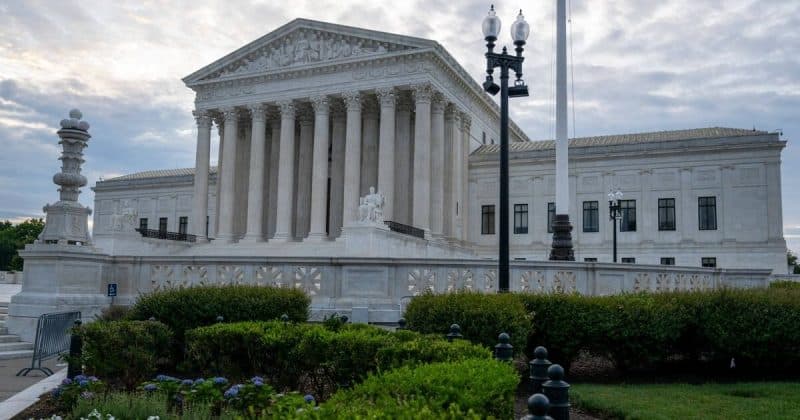
Supreme Court ruling could expand Trump’s control over federal regulators
A potential overturning of 90-year-old precedent could reshape how independent agencies operate, with major implications for crypto and financial markets.
The Supreme Court is quietly dismantling the firewall between the White House and the federal agencies that regulate everything from labor disputes to financial markets. Through a series of emergency orders and pending cases, the court has signaled it may hand presidents, starting with Trump, the power to remove officials from independent agencies without cause.
What’s actually happening
Since early 2025, the Supreme Court has issued emergency docket orders allowing Trump to remove members of independent federal agencies. In May 2025, the court greenlit the removal of officials from the National Labor Relations Board and the Merit Systems Protection Board.
These agencies were designed to operate at arm’s length from the president. The legal foundation for that independence dates back to 1935, when the Supreme Court decided Humphrey’s Executor v. United States. That ruling said Congress could create agencies whose leaders serve fixed terms and can’t be fired just because a president disagrees with them.
The case of Trump v. Slaughter is the main event. Oral arguments were heard on December 8, 2025, and conservative justices reportedly signaled support for expanded presidential authority over these agencies. A full ruling is expected by mid-2026.
If the court formally overrules Humphrey’s Executor for multimember agencies, the president would gain meaningful leverage over bodies like the SEC, CFTC, FTC, and others that have historically operated with considerable autonomy.
The news moving money, markets, and the world—before your day starts.
Daily. Free. Join 34,000+ readers across crypto, finance, and policy.
The executive order already in play
Trump isn’t waiting for the court to finish deliberating. On February 18, 2025, he signed an Executive Order requiring independent agencies to submit major regulatory actions for White House review before moving forward. The Federal Reserve was carved out of this requirement, but virtually every other independent body was included.
Previous Supreme Court decisions had already chipped away at agency independence. Rulings affecting the Consumer Financial Protection Bureau and the Federal Housing Finance Agency weakened protections for single-director agencies. What’s new is the potential expansion to multimember bodies, which represent the bulk of the independent regulatory apparatus.
Why crypto investors should pay attention
The SEC and CFTC, the two agencies most directly involved in crypto regulation, are both independent agencies with commissioners who serve fixed terms. Under the current structure, SEC commissioners serve staggered five-year terms. A ruling in Trump v. Slaughter that allows at-will removal would fundamentally change that calculus.
With oral arguments already completed and a ruling expected by mid-2026, markets won’t have to wait long for clarity. Traders positioning around regulatory catalysts should keep Trump v. Slaughter on their radar alongside the more typical on-chain metrics and ETF flow data.