
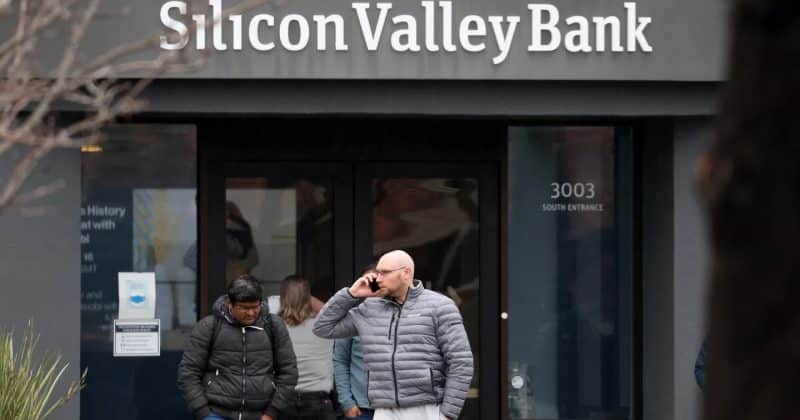
Silicon Valley Bank highlights new era in Bitcoin lending
SVB report details how Bitcoin-backed lending has matured into an institutional-grade market with $67 billion in quarterly volume
Four years ago, the phrase “Bitcoin lending” was practically synonymous with catastrophe. BlockFi, Celsius, Genesis: the 2022 trifecta of collapse left billions in customer funds vaporized and an entire sector’s credibility in ruins. Now Silicon Valley Bank, the crypto-adjacent lender that had its own near-death experience in 2023, is making the case that Bitcoin lending has not only recovered but fundamentally transformed.
SVB, now a division of First Citizens Bank, published a report on June 25 titled “The Bitcoin lending renaissance.” The core argument is straightforward: Bitcoin-backed lending has evolved from a Wild West of unsecured rehypothecation into a collateralized, transparent ecosystem with institutional-grade risk management.
The numbers tell a different story than 2022
Total crypto-backed lending volume hit $67 billion in Q1 2026, according to Galaxy Research data cited in the report. That represents a 49% increase year-over-year.
Bitcoin-specific lending products are now offering annual percentage rates between 7.5% and 16%.
The most significant data point, though, might be this one: Ledn closed a $188 million Bitcoin-collateralized asset-backed security in February 2026. S&P rated it BBB, making it the first Bitcoin-backed ABS to receive an investment-grade rating from a major agency.
How the market actually changed
The SVB report, led by Director Anthony Vassallo and the bank’s crypto team, identifies several structural shifts that separate today’s Bitcoin lending market from its predecessor.
Conservative overcollateralization is now the norm. Lenders are maintaining low loan-to-value ratios and building in features like auto top-up mechanisms, where borrowers automatically post additional collateral if Bitcoin’s price drops below a threshold.
The news moving money, markets, and the world—before your day starts.
Daily. Free. Join 34,000+ readers across crypto, finance, and policy.
Transparency requirements have also tightened considerably. The opaque balance sheets that allowed Celsius to secretly gamble with customer deposits are largely a thing of the past, at least among the institutional players now dominating the space.
The report connects Bitcoin lending’s maturation to a more favorable policy environment, including legislation like the GENIUS Act. Clearer rules have given traditional banks enough comfort to start dipping their toes in. According to SVB’s analysis, major US banks are now beginning to offer Bitcoin-backed credit lines to select clients, driven by improved institutional custody solutions and regulatory clarity.
The bridge between crypto and traditional finance
The Ledn ABS deal represents something bigger than one transaction. Asset-backed securities are the connective tissue of traditional finance. Mortgages, auto loans, credit card receivables: they all get packaged into ABS and sold to institutional investors who wouldn’t touch the underlying assets directly. A pension fund or insurance company that would never hold Bitcoin on its balance sheet can now buy a BBB-rated security whose cash flows happen to be backed by Bitcoin collateral.
SVB’s report also highlights the Lightning Network, Bitcoin’s layer-2 scaling solution, as a technological improvement that has made the underlying asset more practical as a financial instrument by enabling faster and cheaper transactions. The report suggests these developments are facilitating deeper connections between crypto-native lenders and traditional financial institutions, with credit spreads potentially compressing as more institutional capital flows into Bitcoin lending.
What this means for investors
The institutional embrace of Bitcoin lending carries several implications worth watching.
Bitcoin’s growing role as pristine collateral, accepted by S&P-rated securities and major bank credit lines, creates utility that doesn’t depend on price appreciation. The $67 billion quarterly lending volume also creates a liquidity layer that enables holders to borrow against their positions rather than liquidating, which could reduce selling pressure during downturns.
If traditional banks are entering Bitcoin lending, margins will compress. Crypto-native lenders like Ledn will need to differentiate on speed, flexibility, or yield.
The risk side hasn’t disappeared. Bitcoin’s volatility hasn’t been tamed just because the lending infrastructure improved. A sharp enough drawdown could still trigger cascading liquidations, even with conservative LTV ratios and auto top-up features. The 2022 failures weren’t caused by bad technology. They were caused by bad risk management layered on top of a volatile asset.
SVB itself is an interesting messenger here. The bank’s March 2023 collapse, triggered by a classic duration mismatch on its bond portfolio, made it a cautionary tale about risk management in traditional finance. Under First Citizens’ ownership, it’s now positioning itself as a thought leader on risk management in crypto finance.