
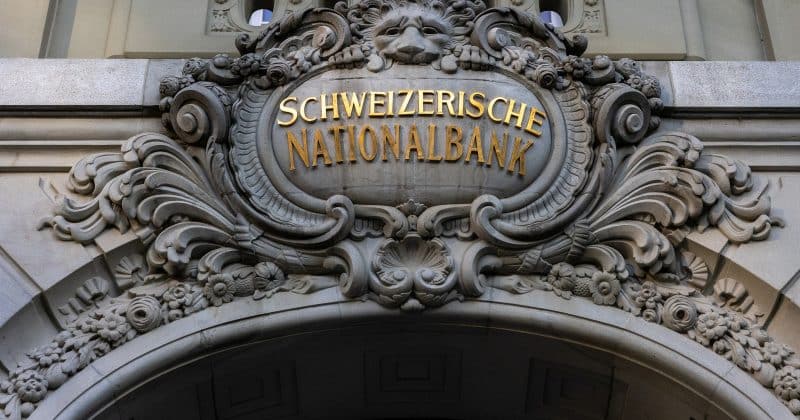
Swiss National Bank to hold policy rate at 0% through 2026 as inflation stays ultra-low
Nearly all economists surveyed expect the SNB to keep rates frozen, with implications rippling into risk assets and crypto markets
The Swiss National Bank isn’t touching the thermostat. A Reuters poll found that 28 out of 29 economists expect the SNB to keep its policy rate pinned at 0% for the entirety of 2026, and the central bank appears happy to oblige.
The SNB confirmed this trajectory at its March 19, 2026 meeting, holding rates unchanged for the second consecutive time.
The numbers behind the freeze
The bank’s conditional inflation forecast projects average inflation of just 0.5% for both 2026 and 2027. That ticks up ever so slightly to 0.6% in 2028. The SNB defines price stability as inflation between 0% and 2%, meaning current readings are hugging the floor of that range.
GDP growth for 2026 is forecast at around 1%. That improves modestly to approximately 1.5% in 2027.
The policy rate has been parked at 0% since at least June 2025, following a series of cuts from higher levels.
The franc problem and geopolitical shadows
As a safe-haven currency, the franc tends to strengthen during periods of geopolitical stress, making Swiss goods more expensive abroad and dragging on an already modest growth outlook.
The SNB has signaled increased readiness to intervene in foreign exchange markets to prevent excessive franc appreciation. Ongoing geopolitical tensions are clearly influencing this posture, and the SNB has indicated it will use direct market intervention rather than rate adjustments to address franc appreciation.
What this means for crypto and risk assets
Ultra-low rates in developed economies create a yield desert. A 0% policy rate with 0.5% inflation means real returns on safe assets are essentially nonexistent.
The SNB’s reluctance to go negative is also worth noting. Negative rates in Switzerland previously caused significant distortions in European money markets.
If the SNB starts actively selling francs and buying foreign currencies, that liquidity injection hits global markets. Central bank balance sheet expansion, regardless of which bank is doing it, tends to be constructive for risk assets.