
Taiwan’s radar system tracks PLA ballistic missile launch, raising fresh geopolitical risks for markets

Taiwan’s radar system tracks PLA ballistic missile launch, raising fresh geopolitical risks for markets

A submarine-launched missile test in the South China Sea rattles the Indo-Pacific, and crypto markets are paying attention to geopolitical risk premiums once again.

Taiwan’s military successfully tracked a Chinese ballistic missile test fired from a nuclear submarine in the South China Sea, using its advanced radar system to monitor the weapon’s full trajectory across the Pacific. The detection, confirmed by Taiwan’s Ministry of National Defense, marks another escalation in cross-strait tensions.

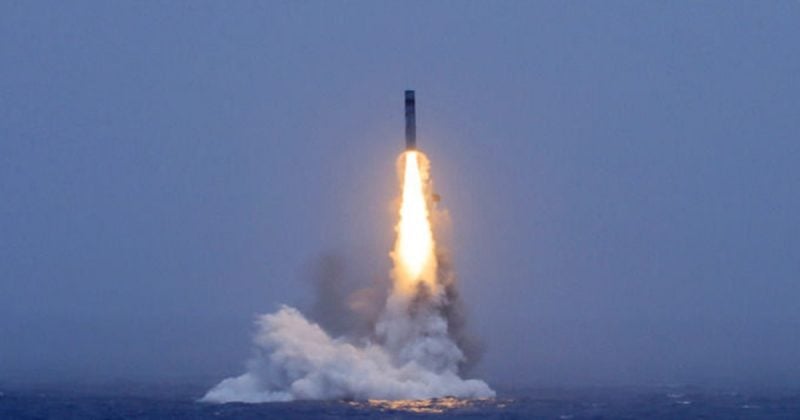
The People’s Liberation Army Navy launched the submarine-launched ballistic missile (SLBM) at approximately 12:01 p.m. local time on July 6, 2026, from a nuclear-powered submarine positioned in the South China Sea. The missile carried a dummy warhead and ultimately splashed down in international waters between Nauru and Tonga in the South Pacific, tracing a path north of the Philippines.

How Taiwan saw it coming

The detection was made possible by Taiwan’s Leshan Radar Station, which operates the AN/FPS-115 PAVE PAWS radar system, capable of detecting ballistic threats up to 5,000 km away. The system, which cost around $1.4 billion and has been operational since 2013, can identify launch points and predict impact zones. It received a $26.2 million upgrade contract in 2016. The fact that Taiwan could track a submarine-launched missile from the South China Sea all the way to the South Pacific demonstrates the system’s range and the island’s investment in early warning infrastructure.

Advertisement

Taiwan’s defense ministry characterized the launch as an attempt to intimidate the broader region.

The diplomatic response

Taiwan coordinated with the United States, Japan, Australia, and New Zealand to issue collective expressions of concern. No immediate military escalation was reported as of July 10, 2026.

The South China Sea is already one of the world’s most disputed waterways, with overlapping territorial claims from China, the Philippines, Vietnam, and others. The missile’s path north of the Philippines is particularly sensitive given the Philippines’ deepening defense ties with the US and ongoing friction with Beijing over maritime boundaries.

Why crypto traders should care about missile tests

During the Russia-Ukraine escalation in early 2022, Bitcoin dropped roughly 8% in a single day as uncertainty spiked. When US-China tensions flared over House Speaker Pelosi’s Taiwan visit in August 2022, crypto markets experienced notable intraday swings as traders repriced risk across asset classes.

Taiwan produces the vast majority of the world’s most advanced semiconductors through TSMC, chips that power everything from AI data centers to crypto mining hardware. Any disruption to Taiwan’s security posture has downstream implications for the entire technology supply chain, and by extension, for the infrastructure underpinning crypto markets.

Disclosure: This article was edited by Editorial Team. For more information on how we create and review content, see our Editorial Policy.

Taiwan’s radar system tracks PLA ballistic missile launch, raising fresh geopolitical risks for markets

Taiwan’s radar system tracks PLA ballistic missile launch, raising fresh geopolitical risks for markets

A submarine-launched missile test in the South China Sea rattles the Indo-Pacific, and crypto markets are paying attention to geopolitical risk premiums once again.

Taiwan’s military successfully tracked a Chinese ballistic missile test fired from a nuclear submarine in the South China Sea, using its advanced radar system to monitor the weapon’s full trajectory across the Pacific. The detection, confirmed by Taiwan’s Ministry of National Defense, marks another escalation in cross-strait tensions.

The People’s Liberation Army Navy launched the submarine-launched ballistic missile (SLBM) at approximately 12:01 p.m. local time on July 6, 2026, from a nuclear-powered submarine positioned in the South China Sea. The missile carried a dummy warhead and ultimately splashed down in international waters between Nauru and Tonga in the South Pacific, tracing a path north of the Philippines.

How Taiwan saw it coming

The detection was made possible by Taiwan’s Leshan Radar Station, which operates the AN/FPS-115 PAVE PAWS radar system, capable of detecting ballistic threats up to 5,000 km away. The system, which cost around $1.4 billion and has been operational since 2013, can identify launch points and predict impact zones. It received a $26.2 million upgrade contract in 2016. The fact that Taiwan could track a submarine-launched missile from the South China Sea all the way to the South Pacific demonstrates the system’s range and the island’s investment in early warning infrastructure.

Advertisement

Taiwan’s defense ministry characterized the launch as an attempt to intimidate the broader region.

The diplomatic response

Taiwan coordinated with the United States, Japan, Australia, and New Zealand to issue collective expressions of concern. No immediate military escalation was reported as of July 10, 2026.

The South China Sea is already one of the world’s most disputed waterways, with overlapping territorial claims from China, the Philippines, Vietnam, and others. The missile’s path north of the Philippines is particularly sensitive given the Philippines’ deepening defense ties with the US and ongoing friction with Beijing over maritime boundaries.

Why crypto traders should care about missile tests

During the Russia-Ukraine escalation in early 2022, Bitcoin dropped roughly 8% in a single day as uncertainty spiked. When US-China tensions flared over House Speaker Pelosi’s Taiwan visit in August 2022, crypto markets experienced notable intraday swings as traders repriced risk across asset classes.

Taiwan produces the vast majority of the world’s most advanced semiconductors through TSMC, chips that power everything from AI data centers to crypto mining hardware. Any disruption to Taiwan’s security posture has downstream implications for the entire technology supply chain, and by extension, for the infrastructure underpinning crypto markets.

Disclosure: This article was edited by Editorial Team. For more information on how we create and review content, see our Editorial Policy.