
Two men charged under Take It Down Act for AI deepfake porn in first federal prosecutions
The arrests mark one of the earliest federal cases under the year-old law criminalizing non-consensual AI-generated intimate imagery.
Federal prosecutors in the Eastern District of New York have charged two men with creating and distributing AI-generated explicit images without the consent of the people depicted. Arturo Hernandez, 20, and Cornelius Shannon, 51, were arrested on May 20, 2026, in what appears to be among the first federal prosecutions under the TAKE IT DOWN Act.
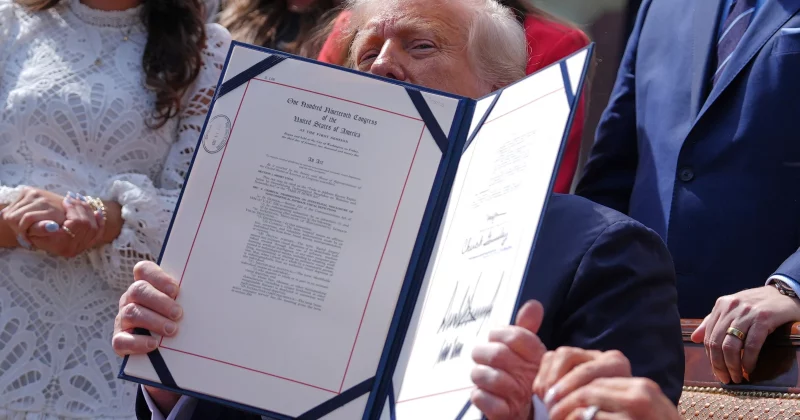
The timing is hard to miss. The law was signed exactly one year and one day before the arrests, on May 19, 2025.
What the TAKE IT DOWN Act actually does
The first prong is criminal: publishing, or threatening to publish, AI-generated explicit depictions of identifiable individuals without their consent is now a federal offense carrying up to two years in prison per violation.
The second prong targets platforms. Starting May 19, 2026, online services that host user content must remove flagged non-consensual intimate imagery within 48 hours of receiving a valid takedown request. Failure to comply opens the door to enforcement actions from the Federal Trade Commission.
The legislation, formally known as S. 146, passed Congress on April 28, 2025, with bipartisan backing from Senators Ted Cruz and Amy Klobuchar. President Trump signed it into law the following month.
The news moving money, markets, and the world—before your day starts.
Daily. Free. Join 34,000+ readers across crypto, finance, and policy.
The charges and what we know
According to federal prosecutors, Hernandez and Shannon allegedly created and distributed AI-generated explicit images depicting identifiable individuals, including celebrities and politicians, without those individuals’ consent. Each defendant faces up to two years in prison.
The arrests did not happen in a vacuum. The first known legal action under the TAKE IT DOWN Act reportedly involved James Strahler II in Ohio back in April 2026. But the Hernandez and Shannon cases represent a clear escalation: federal charges, filed in a major district, targeting defendants who allegedly went after high-profile victims.
Before this law existed, federal prosecutors had limited options. The patchwork of state laws governing non-consensual intimate imagery was wildly inconsistent. Some states had robust revenge porn statutes. Others had nothing at all. And almost none had specific provisions addressing AI-generated or digitally altered content.
Why this matters beyond the courtroom
The 48-hour removal mandate for platforms is arguably as consequential as the criminal provisions. Before this law, takedown requests often languished in support queues for days or weeks. The FTC’s enforcement authority adds real teeth to that requirement.