
Two men charged under Take It Down Act for AI deepfake porn targeting celebrities and politicians
Federal prosecutors in Brooklyn bring some of the earliest charges under the year-old law criminalizing nonconsensual AI-generated intimate imagery.
Two men are now facing federal charges in Brooklyn for allegedly using AI to generate thousands of deepfake pornographic images and videos without consent, marking one of the first major prosecutions under the Take It Down Act.
Cornelius Shannon, 51, and Arturo Hernandez, 20, were arrested and charged in the Eastern District of New York. Their alleged victims include female celebrities, elected officials, and personal acquaintances, with the content reportedly accumulating millions of views across the internet.
What the Take It Down Act actually does
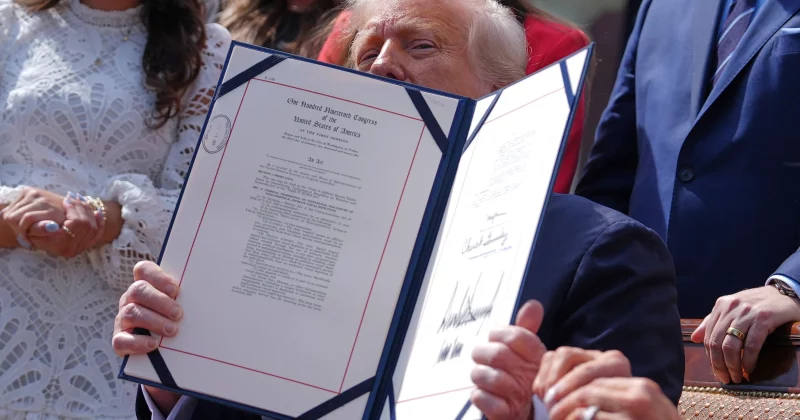
The Take It Down Act was signed into law on May 19, 2025, by President Donald Trump. It was introduced by Senator Ted Cruz and designed to formalize criminal penalties for publishing nonconsensual intimate visual depictions, including those generated entirely by AI.
The law also imposed obligations on platforms. By May 19, 2026, exactly one year after signing, tech companies were required to have removal processes in place for flagged nonconsensual intimate imagery. The Federal Trade Commission began enforcement shortly after that deadline passed.
So the timing here is notable. Shannon and Hernandez were arrested right around the one-year anniversary of the law’s enactment, just as the platform compliance deadlines kicked in and the federal government signaled it was ready to start making examples.
The news moving money, markets, and the world—before your day starts.
Daily. Free. Join 34,000+ readers across crypto, finance, and policy.
The cases in detail
The two defendants appear to have operated independently, though both were charged in the same federal district around the same time. Their alleged conduct shares a common thread: using generative AI tools to fabricate realistic pornographic content depicting real, identifiable people who never consented to any of it.
The content they allegedly produced targeted women across multiple categories. Some were public figures, celebrities, and elected officials. Others were personal acquaintances of the defendants.
These are not the first charges under the Take It Down Act. The first conviction came in April 2026, when an Ohio man was found guilty of creating AI deepfakes involving minors. But the Shannon and Hernandez cases represent a significant escalation in scope, both in the volume of content produced and the prominence of some victims.
Why this matters beyond the courtroom
The Take It Down Act doesn’t just target content creators. It puts platforms on the hook for having functional takedown processes. The FTC is now empowered to enforce those requirements, which means any platform hosting user-generated content needs to be thinking about how it handles nonconsensual intimate imagery.
The next phase to watch is sentencing. The penalties Shannon and Hernandez face will set early benchmarks for how seriously federal judges treat Take It Down Act violations.