
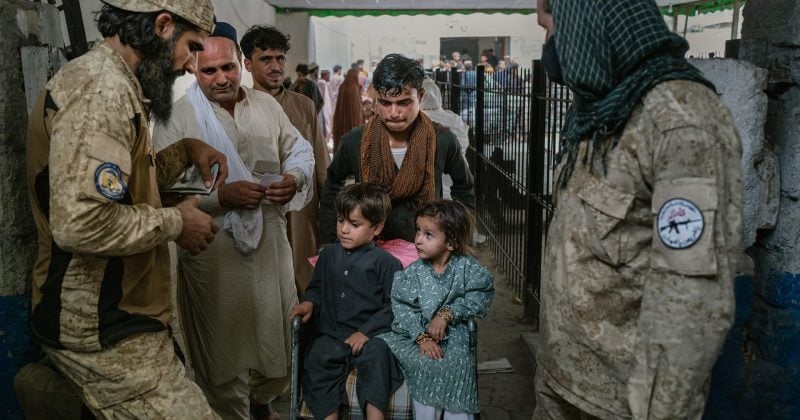
Taliban drone strikes escalate Afghanistan-Pakistan border conflict

https://www.cfr.org/articles/why-are-the-afghan-taliban-and-pakistan-in-an-open-war

Taliban drone strikes escalate Afghanistan-Pakistan border conflict

Strait of Hormuz traffic normality

The Taliban has conducted drone strikes on Pakistani territory, according to a statement from the Afghan group. This development marks a significant escalation in ongoing border conflicts between Afghanistan and Pakistan, primarily over accusations that the Afghan Taliban is providing refuge to the Tehrik-i-Taliban Pakistan (TTP). These tensions have seen an increase in recent years, with both nations engaging in military actions along the Durand Line. The Taliban’s drone attack into Pakistan’s interior indicates a shift from border skirmishes to more direct cross-border operations, raising concerns about a potential broader conflict.

Advertisement

Key Takeaways

  • The reported drone attack by the Taliban on Pakistan appears to suggest an escalation in regional tensions, consistent with scenarios where normalcy in the Strait of Hormuz could be disrupted.
  • Market pricing suggests the likelihood of closure in the Bab el-Mandeb Strait may increase, reflecting concerns about potential retaliatory actions and instability in the region.
  • The development does not appear relevant to markets concerning Masoud Pezeshkian’s political future, as it does not directly relate to his position or actions.

What to Watch

Observers should monitor responses from international actors like Iran, the United States, and Saudi Arabia, as their actions could further influence regional stability. Any military or diplomatic measures taken by these nations could be consistent with either a de-escalation or intensification of tensions, impacting maritime traffic in critical straits. The situation’s evolution may also affect predictions related to broader geopolitical stability in the Middle East.

Get prediction market intelligence as a structured API feed. Early access waitlist.

Disclosure: This article was edited by Estefano Gomez. For more information on how we create and review content, see our Editorial Policy.

Taliban drone strikes escalate Afghanistan-Pakistan border conflict

Taliban drone strikes escalate Afghanistan-Pakistan border conflict

Strait of Hormuz traffic normality

https://www.cfr.org/articles/why-are-the-afghan-taliban-and-pakistan-in-an-open-war

The Taliban has conducted drone strikes on Pakistani territory, according to a statement from the Afghan group. This development marks a significant escalation in ongoing border conflicts between Afghanistan and Pakistan, primarily over accusations that the Afghan Taliban is providing refuge to the Tehrik-i-Taliban Pakistan (TTP). These tensions have seen an increase in recent years, with both nations engaging in military actions along the Durand Line. The Taliban’s drone attack into Pakistan’s interior indicates a shift from border skirmishes to more direct cross-border operations, raising concerns about a potential broader conflict.

Advertisement

Key Takeaways

  • The reported drone attack by the Taliban on Pakistan appears to suggest an escalation in regional tensions, consistent with scenarios where normalcy in the Strait of Hormuz could be disrupted.
  • Market pricing suggests the likelihood of closure in the Bab el-Mandeb Strait may increase, reflecting concerns about potential retaliatory actions and instability in the region.
  • The development does not appear relevant to markets concerning Masoud Pezeshkian’s political future, as it does not directly relate to his position or actions.

What to Watch

Observers should monitor responses from international actors like Iran, the United States, and Saudi Arabia, as their actions could further influence regional stability. Any military or diplomatic measures taken by these nations could be consistent with either a de-escalation or intensification of tensions, impacting maritime traffic in critical straits. The situation’s evolution may also affect predictions related to broader geopolitical stability in the Middle East.

Get prediction market intelligence as a structured API feed. Early access waitlist.

Disclosure: This article was edited by Estefano Gomez. For more information on how we create and review content, see our Editorial Policy.